Automate COI Tracking for Large Vendor Networks in 2026
Managing vendor insurance compliance at scale is one of those problems that looks simple on paper but turns into nightmares in practice. You've got 500, maybe 2,000 vendors, each with their own policies, renewal dates, coverage limits, and endorsements. Somebody in your organization is supposed to keep track of it all, and that person is probably drowning. The reality for most risk teams in 2026 is that their vendor networks have grown faster than their processes can keep pace with. Contracts are signed, work begins, and certificates of insurance sit in email inboxes or shared drives - unverified, expiring, sometimes completely missing. If you're still running this process manually, you're not managing risk. You're performing compliance theater while hoping nothing goes wrong. Automating COI tracking for large vendor networks isn't a nice-to-have anymore. It's the difference between knowing your actual risk exposure and discovering it after a seven-figure claim lands on your desk.
Why COI Tracking Gets Harder as Vendor Networks Grow
The math is brutal. If you have 200 vendors and each one carries three policies, that's 600 certificates to collect, verify, and monitor for expiration. Scale that to 1,000 vendors, and you're staring at 3,000 documents, each with its own renewal cycle, each potentially falling out of compliance on a different day of the year.
But the real problem isn't volume alone. It's fragmented visibility. Your construction division works with one set of subcontractors, your facilities team uses another, and your IT department has its own roster of service providers. Each group manages vendor relationships differently, stores documents in different places, and applies requirements inconsistently. The central risk team often has no idea what's actually happening at the project or site level until an audit forces everyone to scramble.
This is the fire drill model of compliance: everything looks fine until someone checks, and then it's chaos. Certificates are expired, coverage limits don't meet contract requirements, and additional insured endorsements are missing entirely. A COI without the right endorsements is like a car with an engine but no wheels - it looks complete on the surface, but it won't protect you when you need it to move.
The larger your vendor network grows, the more these gaps multiply. And each gap represents real financial exposure that your organization is carrying without knowing it.
What Automated COI Tracking Actually Includes
There's a lot of confusion about what "automated" actually means in the context of certificate of insurance management. Some people think it just means sending email reminders before policies expire. That's a start, but it's barely scratching the surface.
True COI management automation covers the entire lifecycle of a vendor's insurance documentation. It starts by defining the coverage each vendor type needs based on the work they perform and the risks they carry. It includes collecting certificates directly from vendors or their brokers, without your team having to chase people down by phone. It means verifying that what's on the certificate actually matches your contractual requirements, not just confirming that a document exists.
Beyond collection and verification, automated systems track every exception, every gap, and every expiring policy in real time. They generate reports that tell you exactly where your compliance program stands at any given moment, not where it stood three months ago when someone last pulled a spreadsheet together.
The shift here is fundamental. You're moving from periodic, reactive checking to continuous awareness. Your risk team should be able to answer the question "which vendors are out of compliance right now?" in seconds, not days.
Step 1 — Centralize Vendor Insurance Requirements
Before you can automate anything, you need to know what you're automating toward. Most organizations have vendor insurance requirements scattered across dozens of contracts, each negotiated slightly differently and with coverage thresholds that may or may not reflect current risk.
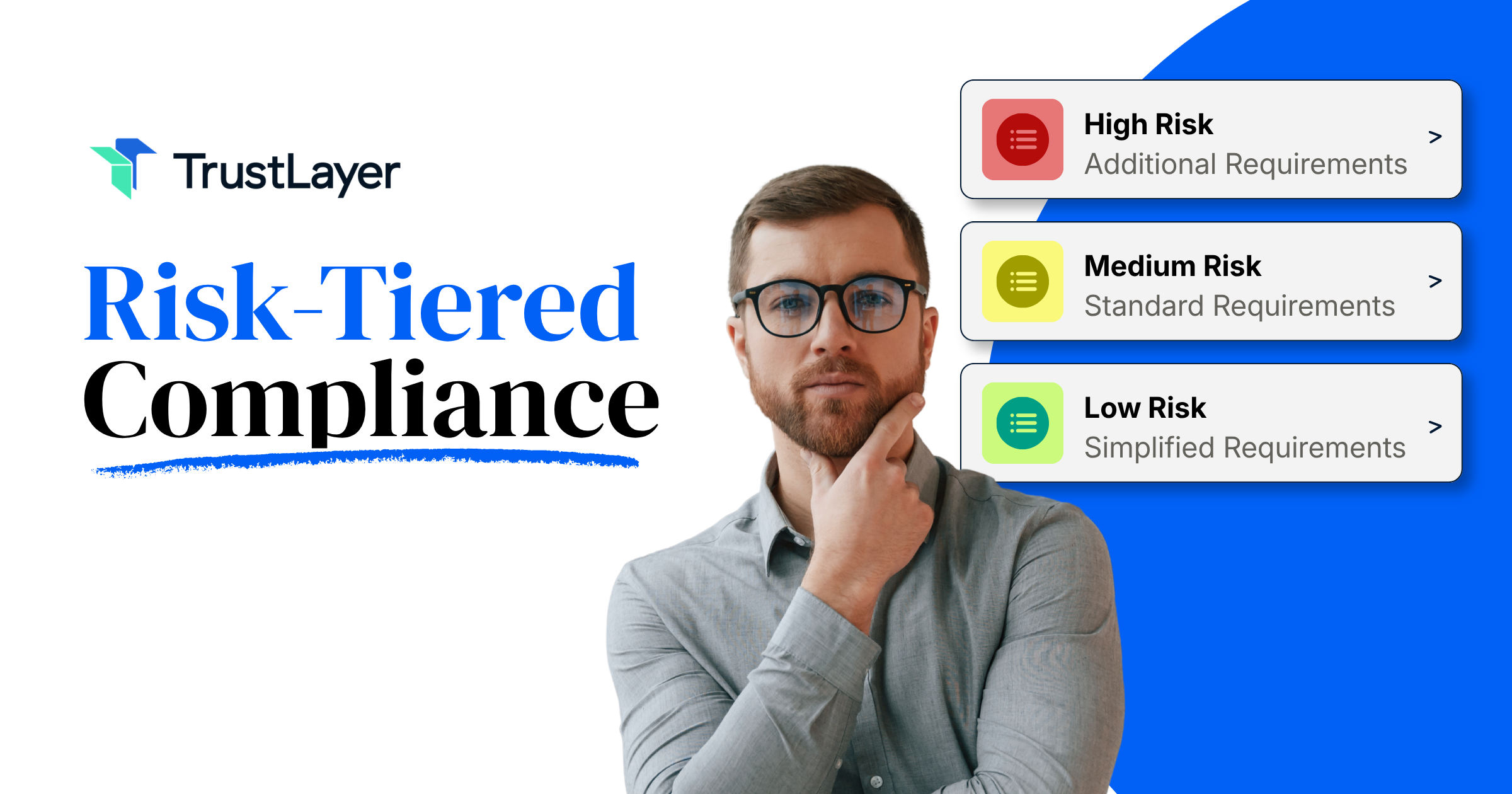
Start by building a single, authoritative matrix of insurance requirements organized by vendor risk tier. A janitorial service doesn't need the same coverage as a structural engineering firm. Your matrix should define minimum limits for general liability, auto liability, workers' compensation, professional liability, and umbrella coverage, based on the type of work being performed and the associated exposure.
This is where the governance model matters. Centralize strategic decisions on required coverage and thresholds. Your risk management team should own these standards. But decentralize execution: let project managers and site leads handle the day-to-day vendor relationships, armed with clear requirements they can communicate without having to call the risk department every time.
Document these requirements in a format that can feed directly into whatever tracking system you adopt. If your requirements are buried in contract language in PDF files, no automation platform can help you. Structure is everything.
Step 2 — Automate COI Collection and Vendor Follow-Up
This is where most organizations burn the most staff hours. Collecting certificates of insurance from vendors is a painfully manual process for most companies, involving rounds of emails, voicemails, and follow-up calls that consume administrative time without adding any strategic value.
An automated collection workflow handles this differently. When a vendor is onboarded or a renewal date approaches, the system sends requests directly to the vendor or their insurance broker. If the certificate doesn't arrive within a specified window, follow-up communications are automatically sent, escalating in urgency as deadlines approach.
The key distinction here is between synchronous and asynchronous request patterns. For high-risk vendors, such as those performing hazardous work or operating on your premises, you want synchronous workflows that require no work to begin until compliant documentation is in hand. For routine, lower-risk vendors, asynchronous collection works fine: send the request, give them a reasonable window, and flag non-compliance if they miss it.
What you're eliminating is the most soul-crushing part of your team's job. Nobody went into risk management to make 40 phone calls a day asking for the same document. Automated collection frees your people to focus on actual risk analysis instead of administrative chasing.
Step 3 — Verify COIs Against Real Requirements
Here's where most compliance programs fall apart, and it's the gap that creates the most expensive illusions of coverage. A certificate of insurance arrives, someone glances at it, confirms it exists, and files it away. Box checked. But nobody actually verified whether the coverage limits match the contract, whether the additional insured endorsement names the right entity, or whether the policy type is correct for the work being performed.
A certificate that doesn't meet your requirements is practically worthless from a risk-transfer perspective. If your contract requires $2 million in general liability and the vendor carries $1 million, you've got a gap that will only become visible when a claim exceeds that lower limit and you're left holding the difference.
Automated verification compares the data on each certificate against your predefined requirements matrix. It flags mismatches immediately: wrong coverage type, insufficient limits, missing endorsements, and incorrect named insureds. Instead of your team reading through thousands of certificates line by line, the system surfaces only the exceptions that need human attention.
This is the difference between compliance theater and actual risk management. One gives you a filing cabinet full of documents. The other tells you whether those documents actually protect your organization.
Step 4 — Track Exceptions, Gaps, and Expiring Coverage
Even with automated collection and verification, you'll have exceptions. A vendor might carry lower limits than required but have a contractual waiver approved by your legal team. Another vendor's policy might have an exclusion that needs to be reviewed before work continues. These exceptions are normal, but they need to be tracked with the same rigor as compliant certificates.
The danger with exceptions is that they become invisible over time. Someone approves a temporary waiver, it gets noted in an email thread, and six months later, nobody remembers it exists. Meanwhile, the vendor is still working, still carrying insufficient coverage, and your organization is still exposed.
An automated tracking system maintains a living record of every exception, every gap, and every expiring policy. Expiration tracking is particularly critical: insurance policies renew on their own schedule, not yours. Without automated monitoring, expired certificates pile up quietly. Your compliance rate might look strong in January and be full of holes by March.
The goal is a constant state of awareness rather than periodic snapshots. Your dashboard should show real-time compliance rates, highlight vendors approaching expiration within 30, 60, and 90 days, and surface any active exceptions that need re-evaluation. This shifts your team from reactive firefighting to proactive management.
Step 5 — Build Audit-Ready Reporting
If your compliance data lives in spreadsheets, email folders, and someone's memory, you're going to have a bad time during an audit. Whether it's an internal review, a client requirement, or a regulatory examination, you need to demonstrate not just that vendors have insurance, but that you've been actively monitoring and enforcing your requirements throughout the engagement.
Audit-ready reporting means every action is documented: when a certificate was requested, when it was received, what was verified, what exceptions were approved, and by whom. This audit trail transforms your compliance program from "we think we're covered" to "here's the evidence."
The business impact of strong reporting extends beyond audits. Leadership wants to know the effectiveness of the compliance program, not just whether it exists. What percentage of vendors are fully compliant? What's the average time to collect a certificate? Which business units have the most gaps? These metrics tell a story about program health that matters to executives and board members.
Build reports that answer questions before they're asked. When a claim comes in, and someone wants to know whether the vendor was properly insured, the answer should be available in seconds with a complete documentation trail.
What to Look for in an Automated COI Tracking Platform
Not every platform that claims to automate vendor insurance tracking actually does the job well. The market has matured significantly, but there's still a wide range in capability and approach.
- Requirement customization by vendor type, risk tier, or project: your matrix should drive the system, not the other way around
- Automated outreach to vendors and brokers with escalation workflows that don't require manual intervention
- Real-time verification against your specific requirements, not just confirmation that a document was uploaded
- Exception management with approval workflows and expiration dates on waivers
- Integration with your vendor management or procurement systems, so data flows without duplicate entry.
- Reporting that serves both operational teams and leadership, with drill-down capability from portfolio-level metrics to individual vendor status
Watch out for platforms that are essentially glorified document storage. If the system collects certificates but doesn't verify them against your requirements, you've just digitized your filing cabinet without solving the fundamental problem.
Ask vendors hard questions during evaluation. How does the platform handle non-standard policies? What happens when a certificate is ambiguous? Can your team configure requirements without needing professional services every time something changes? The answers reveal whether you're buying a tool or buying a dependency.
Final Takeaway
The organizations that get vendor insurance compliance right in 2026 are the ones that stop treating it as an administrative task and start treating it as a risk management function. Automating COI tracking across a large vendor network isn't about buying software and forgetting about it. It's about building a system where compliance is continuous, visible, and measurable throughout your work with every vendor.
The five steps outlined here: centralizing requirements, automating collection, verifying against real standards, tracking exceptions in real time, and building reporting that proves program effectiveness, form the structural foundation for that system. Skip any one of them, and you'll have gaps that only become visible when they're already costing you money.
If you're ready to move past spreadsheets and phone calls, TrustLayer has built a platform specifically for modern risk teams managing insurance compliance at scale. It's worth seeing how their approach to automated certificate of insurance tracking compares to whatever you're currently stitching together. Book a demo and explore the rest of TrustLayer's articles for more on building a compliance program that actually works.
You might also like