Events & Exhibits: An Insurance Requirements Playbook

Every year, thousands of exhibitors show up to trade shows, conventions, and public exhibitions expecting a smooth setup, only to get stopped cold at the loading dock. The reason? Their insurance paperwork doesn't meet the venue's requirements. It happens more often than you'd think, and the financial fallout can be brutal: wasted booth fees, lost sales opportunities, and a team standing around with nothing to do. Whether you're a first-time exhibitor at a regional expo or a seasoned company rolling into CES, having the right insurance playbook for events and exhibits is non-negotiable. The stakes are real, the deadlines are unforgiving, and the rules vary wildly from one venue to the next. This guide breaks down exactly what coverage you need, what documentation you should have ready, and how to avoid the expensive mistakes that catch exhibitors off guard every show season. Think of it as your insurance requirements playbook: the one resource you'll wish you'd read before your last event.
Navigating the Compliance Landscape for Modern Events
The world of event insurance isn't just about protecting yourself from a slip-and-fall lawsuit. It's a tangled web of venue mandates, organizer requirements, city regulations, and sometimes even union rules that dictate what coverage you carry and how you prove it. Miss one detail, and you're out. Understanding why these requirements exist and what happens when you fail to meet them is the first step toward building a reliable compliance strategy.
Why Venue and Organizer Mandates Exist
Venues and event organizers aren't asking for insurance documentation because they enjoy paperwork. They're transferring risk. A convention center hosting 500 exhibitors and 40,000 attendees faces enormous liability exposure. If an exhibitor's booth collapses and injures someone, the venue doesn't want to be the one holding the bag.
Organizer mandates exist to create a liability firewall. By requiring each exhibitor to carry specific coverage and name the venue as an additional insured, the organizer ensures that claims flow to the responsible party's policy first. This isn't theoretical: venues have been sued for millions over incidents caused by third-party exhibitors who lacked adequate coverage.
City and municipal regulations add another layer. Many jurisdictions require specific permits and insurance minimums for public gatherings. A venue that fails to enforce these requirements risks losing its operating license. So when an event organizer sends you a 30-page exhibitor manual with detailed insurance specifications, they're not being difficult. They're protecting their ability to host events at all.
The Risks of Non-Compliance and Entry Denial
Here's what actually happens when your insurance doesn't check out: you don't get in. It's that simple and that devastating. Most large trade shows have compliance checkpoints during load-in. If your certificate of insurance doesn't match the exhibitor manual requirements, security will turn your freight away at the door.
The financial damage compounds fast. You've already paid for booth space (often $5,000 to $50,000 or more), travel, hotels, printed materials, and product shipping. All of that investment evaporates. And there's no refund policy for exhibitors who fail to meet the insurance requirements they agreed to in the contract.
Beyond the immediate loss, non-compliance can lead to being blocked. Organizers talk to each other, and a reputation for sloppy paperwork follows you. Some exhibitors scramble for last-minute coverage at the venue, but rush policies are expensive, often incomplete, and may not meet the specific endorsements the organizer requires.
Standard Trade Show Insurance Requirements for Exhibitors
Most exhibitor manuals spell out minimum coverage requirements, but the language can be dense, and the specifics vary. Knowing the standard trade show insurance requirements helps you prepare well in advance, rather than scrambling two weeks before setup.
General Liability and Property Damage Limits
General liability is the baseline. Nearly every event requires exhibitors to carry commercial general liability (CGL) insurance with minimum limits of $1,000,000 per occurrence and $2,000,000 aggregate. Some high-profile events push those numbers higher, particularly if you're demonstrating products that involve heat, electricity, or moving parts.
Your CGL policy should cover bodily injury, property damage, personal injury, and advertising injury. Pay close attention to exclusions. Many standard policies exclude damage to property in your care, custody, or control, which means if you damage the venue's flooring or electrical systems during setup, your basic CGL might not respond. You may need an inland marine or installation floater to fill that gap.
Property damage limits matter more than most exhibitors realize. Convention center floors, for example, are expensive to repair. One exhibitor who drove a forklift through a section of carpet at McCormick Place faced a $75,000 repair bill, with inadequate property damage coverage, which came straight out of the pocket.
Workers' Compensation and Employers' Liability
If you're bringing employees to staff your booth, workers' compensation insurance is required in virtually every state. The rules don't change just because your employees are working at a trade show rather than in your office. Injuries during setup, teardown, and the event itself are covered workplace incidents.
Most venues require proof of workers' comp with statutory limits for the state where the event takes place, not your home state. This catches out-of-state exhibitors constantly. If your company is based in Texas (which doesn't mandate workers' comp for most private employers) but you're exhibiting in California, you need California-compliant coverage.
Employers' liability, which is typically bundled with workers' comp, should carry limits of at least $500,000/$500,000/$500,000. Some organizers specify $1,000,000. If you're using temporary labor or hiring local staff for the event, confirm whether your policy extends to them or whether the staffing agency carries its own coverage.
Automobile Liability for Load-in and Load-out
This is the requirement that blindsides exhibitors most often. If any vehicle, whether owned, rented, or hired, will be on venue property during load-in or load-out, you need automobile liability insurance. Standard minimums are $1,000,000 combined single limit.
Renting a box truck to haul your display? Your personal auto policy won't cover it. Using a shipping company? Their policy might, but the venue wants to see your name on the certificate. Hired and non-owned auto coverage fills this gap for companies that don't own fleet vehicles but rent them for events.
Even if you're shipping everything via a freight carrier and never driving onto the property yourself, some exhibitor manuals still require auto liability. Read the manual carefully. The requirement might seem irrelevant to your situation, but arguing with a compliance officer at the loading dock is a losing battle.
Essential Documentation and Proof of Coverage
Having the right insurance means nothing if you can't prove it. Documentation is where the rubber meets the road, and it's where most compliance failures actually occur. Your coverage could be perfect, but a certificate with the wrong name or a missing endorsement will get you rejected just as fast as having no insurance at all.
Understanding the Certificate of Insurance (COI)
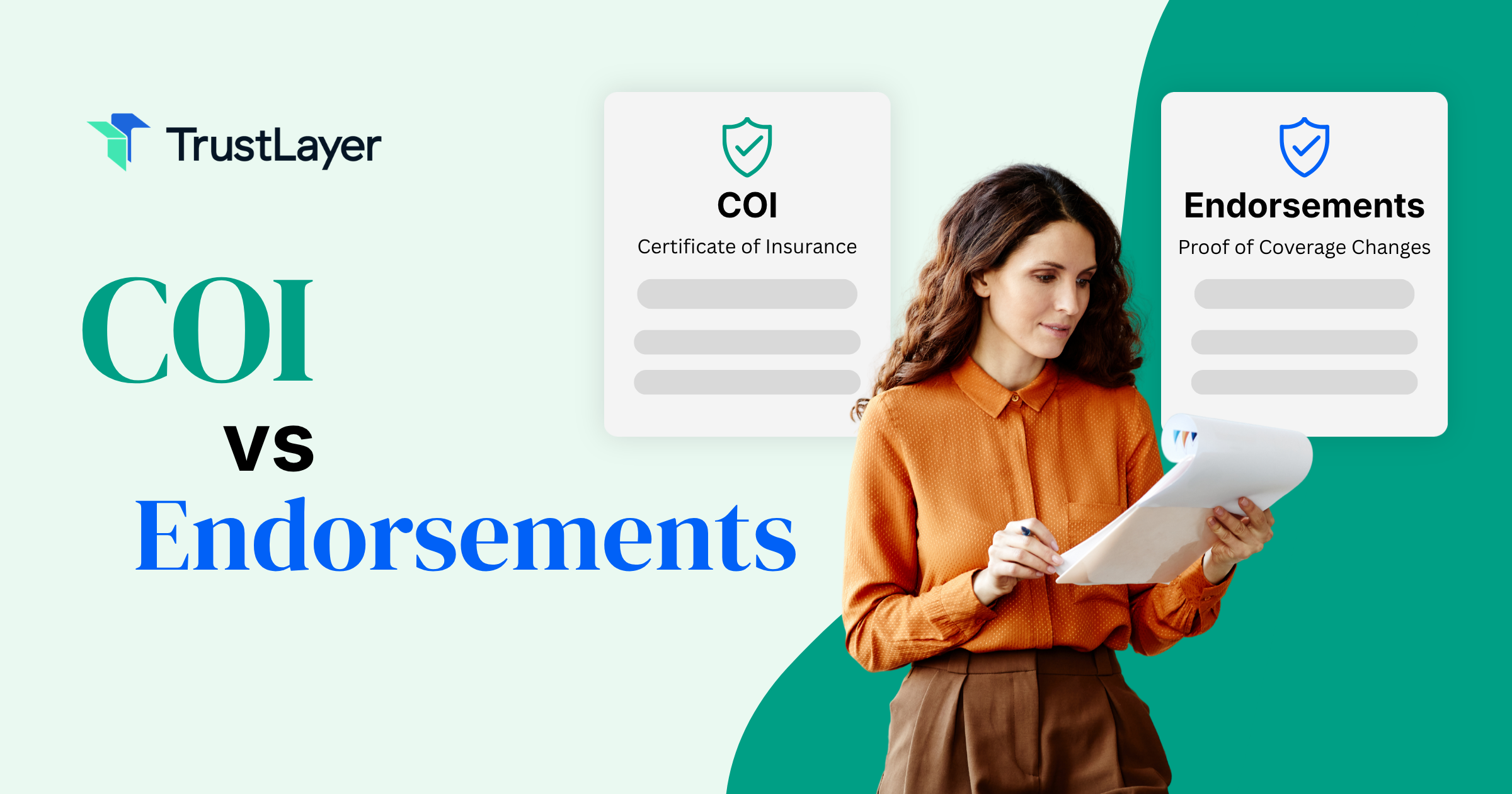
A COI is a snapshot of your coverage on a specific date. It's not the policy itself: it's a summary document issued by your insurance carrier or broker that confirms what coverage you carry, your policy limits, and your policy's effective dates. Think of it as a receipt that proves you bought the right coverage.
Here's the problem: a COI with the right numbers but the wrong details is practically worthless. The certificate holder's name must match exactly what the exhibitor manual specifies. If the manual lists the certificate holder as "ABC Convention Center, LLC" and your COI lists "ABC Convention Center," some compliance reviewers will reject it. That level of precision matters.
Request your COI at least 30 days before the event. This gives your broker time to get it right and gives you time to resolve discrepancies. Waiting until the week before the show is asking for trouble, especially during busy convention seasons when brokers are processing hundreds of similar requests.
Naming Additional Insureds Correctly
The additional insured requirement is where things get genuinely complicated. Most venues and organizers require that they be named as additional insureds on your CGL policy. This means your policy extends coverage to them for claims arising from your activities at their event.
Getting this wrong is one of the most common compliance failures. The additional insured endorsement must list the exact legal entities specified in the exhibitor manual. Some events require you to name the venue, the organizer, the management company, and sometimes even the city or landlord. Missing one entity means your COI gets bounced back.
Your broker needs the exact language from the exhibitor manual to issue the correct endorsement. Don't paraphrase: send them the actual document. Some carriers charge a fee for additional insured endorsements, typically $25 to $50 each, so factor that into your event budget. And remember that the endorsement must appear on the actual policy, not just the COI. A COI that lists additional insureds without a corresponding endorsement on the policy is a house of cards.
Specialized Coverage for High-Value Exhibits
Standard CGL and workers' comp cover the basics, but many exhibitors carry equipment, prototypes, or demonstrations that demand specialized insurance. If your booth includes anything worth more than a few thousand dollars or involves live product demonstrations, you need to think beyond the minimum requirements.
In-Transit and Shipping Insurance
Your display materials, product samples, and technology equipment face their greatest risk during shipping. Standard carrier liability, governed by the Carmack Amendment for domestic shipments, caps at laughably low amounts: often pennies per pound. A $50,000 prototype that weighs 20 pounds might only be covered for $100 under basic carrier liability.
Inland marine insurance, sometimes called transit insurance, covers your property while it's being transported to and from events. Policies can be written on an all-risk basis, covering theft, damage, and even temperature-related losses for sensitive equipment. The cost is typically 1-2% of the declared value per shipment.
For international exhibitions, you'll need a marine cargo policy that covers ocean and air transit, customs storage, and foreign inland transit. Don't forget about return shipping: your coverage should be round-trip. One exhibitor learned this the hard way when their booth materials were destroyed during return shipping from a European trade show, and their one-way transit policy had already expired.
Professional Liability for Live Demonstrations
Live product demonstrations create a unique liability exposure that general liability may not fully address. If you're demonstrating software and it malfunctions, causing a client to make a business decision based on what they saw, that's a professional liability claim, not a general liability one.
Products liability, a subset of your CGL, covers bodily injury or property damage caused by your product. But if your demonstration involves giving advice, making recommendations, or showing capabilities that don't materialize, you're in errors-and-omissions territory. Technology companies, consultants, and service providers should carry professional liability (E&O) insurance with limits of at least $1,000,000.
Some demonstrations involve physical risk: think power tools, cooking equipment, drones, or robotics. These may require additional endorsements or standalone policies. Check with your broker about whether your CGL has exclusions for the specific activities you're planning. A drone demonstration, for instance, requires aviation liability coverage that a standard CGL policy does not include.
Streamlining Your Event Insurance Strategy
Managing insurance for one trade show is annoying. Managing it for 15 events per year across multiple states and countries is a full-time job. The difference between companies that handle this well and those that don't usually comes down to strategy and systems, not luck.
Annual vs. Single-Event Policies
If your company exhibits at more than three events per year, an annual policy almost always makes more financial sense than buying single-event coverage each time. Single-event policies typically cost $500 to $2,000 per show, while an annual policy with broader coverage might cost $3,000 to $8,000.
Beyond cost savings, annual policies eliminate the scramble of securing new coverage before each event. Your COI process becomes standardized: your broker knows your coverage, your limits are consistent, and adding additional insureds is a routine request rather than a new policy negotiation.
The exception is companies that exhibit at one or two niche events annually. For them, a single-event policy is simpler and avoids paying for coverage during months when they have zero event exposure. Talk to your broker about your annual event calendar and let the math guide the decision.
Audit Checklist for Exhibitor Manuals
Every exhibitor manual is different, but the insurance requirements follow predictable patterns. Having a standardized audit checklist prevents you from missing critical details that vary from show to show.
Your checklist should capture these specifics from each exhibitor's manual:
- CGL minimum limits (per occurrence and aggregate)
- Workers' comp requirements and applicable state
- Auto liability minimums and whether hired/non-owned auto is required
- Exact legal names for certificate holders
- Exact legal names for all additional insured entities
- Waiver of subrogation requirements
- Primary and non-contributory endorsement language
- Deadline for COI submission
- Required format or submission portal
Build this checklist into a spreadsheet that your team updates for every event. Centralizing this information prevents fragmented visibility, which can lead to compliance gaps. When your marketing team books a new show, the insurance requirements should flow to whoever manages your COI process immediately, not surface as a crisis two days before load-in.
Building a Sustainable Compliance Practice
The companies that never get turned away at the loading dock aren't the ones with the most expensive insurance. They're the ones with a system. They treat insurance compliance as a continuous practice rather than a fire drill before each event. They read exhibitor manuals the day they register, not the week before setup. They maintain relationships with brokers who understand event-specific coverage and can quickly turn around COI requests.
Your insurance requirements playbook for events and exhibits should be a living document, updated after every show with lessons learned and refined as your event schedule evolves. The goal is to shift from reactive scrambling to proactive readiness, where compliance is a known quantity rather than a last-minute gamble.
If managing COIs, tracking additional insured requirements, and chasing down documentation across dozens of events sounds like exactly the kind of problem you'd rather automate, TrustLayer is worth a serious look. Their platform handles the collection, verification, and tracking of certificates of insurance at scale, which is precisely what high-volume exhibitors need. Book a demo to see how it works, and check out other TrustLayer articles for more on modern approaches to risk management and compliance.
You might also like