The Connected Risk Ecosystem: Escaping the Spreadsheet Trap by Combining COI and RMIS
Insurance and risk management is living in a weird contradiction.
We generate more data than ever. But a lot of the most important risk decisions in the world still happen inside a spreadsheet that was last “cleaned up” three quarters ago.
That gap isn’t a nuisance. It’s a tax. A quiet one that shows up as claim leakage, lag time, duplicate effort, and the classic “we’re covered… I think?” moment.
Here’s the punchline: the disconnect between Risk Management Information Systems (RMIS) and Compliance (COI tracking) is no longer tolerable if you care about cost of risk, speed, or even basic confidence in your own data.
Over time, most organizations move through the same maturity curve: from spreadsheet chaos to a connected ecosystem that behaves like a real operating system for risk.
And the shift is not “buy a tool.” It’s “stop treating risk like a set of unrelated chores.”
Phase I: The Spreadsheet Stranglehold (and the Cost of Lag)
This is where most teams start. Manual entry. High latency. Siloed data. A false sense of control because, technically, everything is “in one place.”
A Director of Safety at a large multi-state staffing firm described it perfectly: a massive spreadsheet that just kept growing. When she wanted reporting, it was sort, cut, paste, pray.
That’s the spreadsheet trap. It’s not that spreadsheets are evil. It’s that they are fragile at the exact moment you need certainty.
And the consequences aren’t theoretical:
- Spreadsheets routinely contain errors. (Some studies put this number uncomfortably high.)
- In risk, one wrong cell is not a typo. It’s a denied claim, a missed tender, or a lawsuit you didn’t budget for.
Lag time is the silent multiplier
If you want one metric that explains why “manual” is expensive, it’s lag time.
Lag time is the delay between an incident happening and it getting reported, triaged, and pushed down the right path. And claim cost is allergic to delay.
NCCI has published data showing how quickly costs rise when reporting slips from days to weeks. The mechanism is obvious once you see it:
- No early intervention
- More worker frustration
- Higher probability of litigation
- Higher total claim cost
When a claim lives in a spreadsheet waiting for a batch process, you’re paying for a delay you can’t see.
A modern RMIS changes this immediately: incidents become real-time events, not month-end chores.
Phase II: The Build vs. Buy Moment (and the Expiration Date on “Custom”)
After enough spreadsheet pain, a lot of organizations hit the same fork in the road:
“Should we build our own portal?”
They try. And honestly, the first version usually works. Especially for one or two workflows.
A VP of Client Experience at a top 100 insurance agency shared a common story. In 2009, they built a proprietary portal so clients could file workers’ comp claims directly. At the time, that was forward-thinking. It also included safety content, handbooks, policies. A mini ecosystem.
Then reality shows up with a calendar.
Technical debt is just a bill that arrives later
A portal built in 2015 might feel fine in 2016. It feels ancient in 2020 unless you keep investing.
Eventually, you inherit a platform you now have to maintain, secure, integrate, and rebuild every time the world changes. (And the world always changes.)
The VP’s turning point was simple and honest:
“We’re not IT people.”
That’s not a knock. It’s clarity. Because the modern bar isn’t “a portal.” The bar is:
- mobile-first workflows
- API connectivity
- SOC 2 Type II expectations
- clean integrations with carriers and partners
- and increasingly, AI-assisted analysis
That’s why purpose-built RMIS platforms like Aclaimant exist: you’re not buying a static database. You’re buying an evolving product with a roadmap, a security posture, and a team whose whole job is… this.
Phase III: The Connected Ecosystem
This is the mature state. The point where an organization stops thinking in tasks (“collect a COI,” “file a claim”) and starts thinking in systems.
Risk becomes a unified data stream.
This is where RMIS and COI management stop being adjacent tools and start behaving like one operational layer.
1. Break the carrier data silo
Carrier portals are fine… until you change carriers.
Then what happens? Your history fractures. Loss runs are scattered. Logins multiply. Formats differ. Continuity disappears.
One agency leader said it plainly: carriers are not great about sharing data once you leave.
A connected RMIS solves this by acting as a carrier-agnostic single source of truth. Your analytics don’t reset when your policy renews with a different carrier. Your story stays intact, which is kind of the whole point of data.
2. Fix the third-party blind spot (COI is not paperwork, it’s leverage)
Here’s where most “risk stacks” quietly fail: they manage their risk, but not the risk they contract out.
In construction and staffing, a huge portion of work is performed by third parties. When something happens, the first question is not “what do we do?”
It’s: whose liability is this?
If your COIs are sitting in a binder, or in someone’s inbox, or in a spreadsheet that says “received,” you don’t actually know.
And this is where the RMIS + COI connection becomes a power move.
In the connected ecosystem:
- The incident gets recorded in RMIS
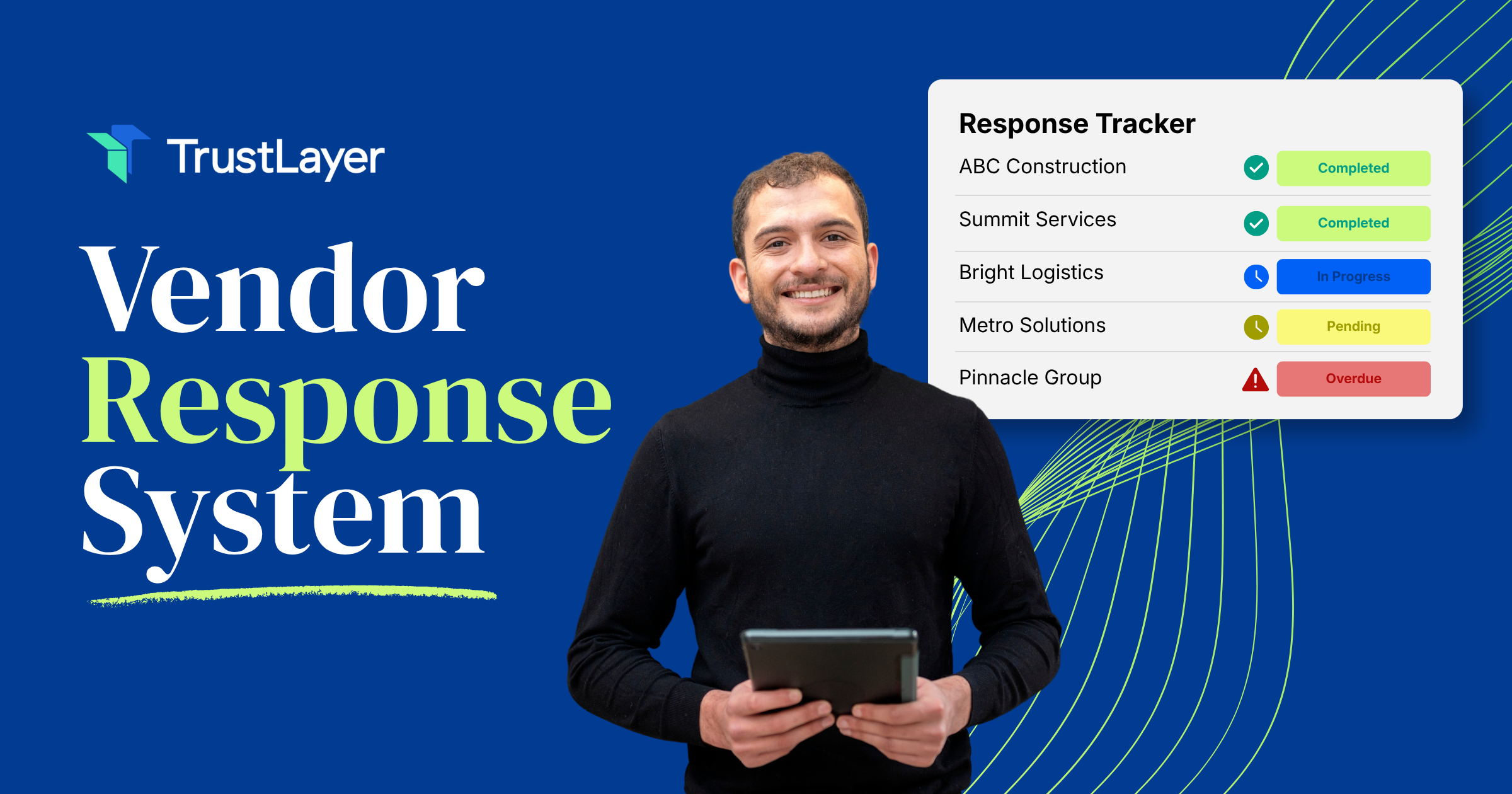
- The vendor’s compliance status is verified via COI, in real time
- Tender potential is assessed immediately, not months later
That’s not “administration.” That’s contractual risk transfer doing its job before the evidence goes cold.
3. Connect the field to the system (without asking the field to become insurance experts)
Risk does not happen behind a desk. It happens on the jobsite, plant floor, warehouse dock.
A staffing risk executive described integrating nurse triage into their RMIS so field managers could click a name and auto-populate the right details. That’s the magic: reduce friction, standardize data, and make “doing the right thing” the easiest option.
Two outcomes:
- The field stops improvising.
- The data stops arriving as garbage.
Phase IV: From Data Entry to White Glove Advisory
The real payoff of a connected ecosystem isn’t prettier dashboards.
It’s what it does to the role of the risk leader.
When you’re not spending your week reconciling spreadsheets and chasing COIs, you can finally do the work that actually moves the business:
- identify patterns
- intervene early
- build safety programs that prevent recurrence
- walk into a meeting with evidence, not anecdotes
One leader framed it as “white glove service” for internal stakeholders and clients: start with the data, then go look at the operation with the data in hand.
That’s the future. Not “we tracked it.” More like “we changed outcomes.”
Conclusion: Integrated is the new baseline
If you’re looking toward 2026 and beyond, the expectations don’t get easier.
AI and predictive analytics will keep coming. But here’s the catch: AI doesn’t fix broken inputs. It amplifies them.
If your data lives in spreadsheets, with stale updates and unclear ownership, you’re not “behind on AI.” You’re behind on reality.
A connected risk ecosystem is how you get to the basics that actually matter:
- Visibility across carriers, lines, and time
- Velocity in reporting and resolution, shrinking lag-time cost
- Validation of compliance and tender opportunities, reducing leakage
The era of siloed risk is ending. The ecosystem is the strategy.
Read our full paper on the topic here.
You might also like