Lending Operations Risk Guide: Collateral, COIs, and Three Traps That Stall Closings

A loan that should close in 30 days stretches to 60. Then 90. The borrower gets antsy, the deal economics shift, and everyone starts pointing fingers. I've watched this scenario unfold dozens of times, and the culprit is rarely anything dramatic like fraud or a market collapse. It's almost always operational friction: a missing certificate of insurance, a lien that wasn't properly perfected, or a compliance requirement that surfaced at the eleventh hour.
The frustrating part? These problems are entirely preventable. They stem from gaps in collateral management, sloppy COI tracking, and process breakdowns that compound under pressure. Lending operations teams know this intuitively, yet the same traps keep claiming victims because the fixes require upfront investment that's hard to justify until you're hemorrhaging money on delayed closings.
This guide breaks down the operational risks that actually matter in lending: how to manage collateral without creating bottlenecks, why COI verification deserves more attention than it gets, and the three specific traps that stall closings with alarming regularity. Whether you're running a community bank's loan operations or managing risk for a specialty finance company, these are the issues that separate efficient shops from chaotic ones.
The Evolving Landscape of Lending Operations Risk
Balancing Speed and Security in Modern Closings
The pressure to close faster has never been more intense. Borrowers expect Amazon-speed transactions, and competitors who can deliver quick decisions win the business. But speed without controls is just recklessness with a deadline.
The tension shows up everywhere. Underwriters want more documentation; sales teams want fewer friction points. Compliance needs thorough reviews; borrowers need answers yesterday. Risk managers see potential problems; relationship managers see potential revenue walking out the door.
Smart operations teams no longer treat this as an either-or choice. They've identified which controls actually prevent losses versus which ones exist because "we've always done it that way." A bank I worked with discovered they were requiring notarized copies of documents that could be verified electronically in seconds. Eliminating that single requirement reduced their average closing time by four days without adding any meaningful risk.
The Hidden Costs of Operational Inefficiencies
Most lenders can tell you their charge-off rates and delinquency trends. Far fewer can quantify the annual cost of operational inefficiency. The number is almost always shocking when someone finally calculates it.
Consider the fully loaded cost of a loan officer's time spent chasing missing documents: salary, benefits, opportunity cost of deals not being worked. Add the cost of extended rate locks when closings slip—factor in the borrowers who walk away entirely because the process took too long. One regional lender tracked these costs for a quarter and found operational friction was costing them $2.3 million annually, more than their entire technology budget.
The hidden costs extend beyond dollars. Staff turnover increases when employees spend their days on administrative firefighting rather than meaningful work. Reputation suffers when borrowers share their frustrating experiences. Regulatory relationships strain when examiners find the same documentation gaps they flagged last cycle.
Mastering Collateral Management and Valuation
Standardizing Due Diligence for Diverse Asset Classes
Real estate, equipment, inventory, accounts receivable, and intellectual property: each collateral type requires different expertise, documentation, and monitoring. The lenders who struggle most are those applying a one-size-fits-all approach to inherently different assets.
Standardization doesn't mean treating everything identically. It means having clear, documented procedures for each collateral category that every team member follows consistently. For real estate, that might include specific appraisal requirements by property type and loan size. For equipment, it could mean defined depreciation schedules and inspection frequencies. For receivables, it should specify aging report formats and concentration limits.
The documentation matters as much as the process itself. When a loan officer can pull up the collateral checklist for a manufacturing equipment loan and know exactly what's required, closings accelerate. When they have to reinvent the wheel each time or track down a senior colleague who "knows how we handle these," delays multiply.
Mitigating Perfection and Lien Priority Risks
A security interest that isn't properly perfected is barely a security interest at all. I've seen lenders discover, after a borrower's bankruptcy filing, that their supposedly secured position was actually unsecured because someone filed a UCC-1 in the wrong jurisdiction or let a continuation statement lapse.
Lien priority presents equally treacherous territory. That first-position lien you thought you had might actually sit behind a tax lien, a mechanics lien, or a prior filing that didn't show up in your initial search. The consequences range from reduced recovery in default scenarios to complete loss of collateral value.
Prevention requires systematic verification at origination and ongoing monitoring throughout the life of the loan. UCC searches should cover all relevant jurisdictions, not just the obvious ones. Real property liens need title insurance with appropriate endorsements. Continuation statements need calendaring systems that trigger action well before expiration. These aren't glamorous tasks, but they're the difference between secured and unsecured lending, with additional paperwork.
The Critical Role of Certificates of Insurance (COIs)
Verifying Endorsements and Policy Limits
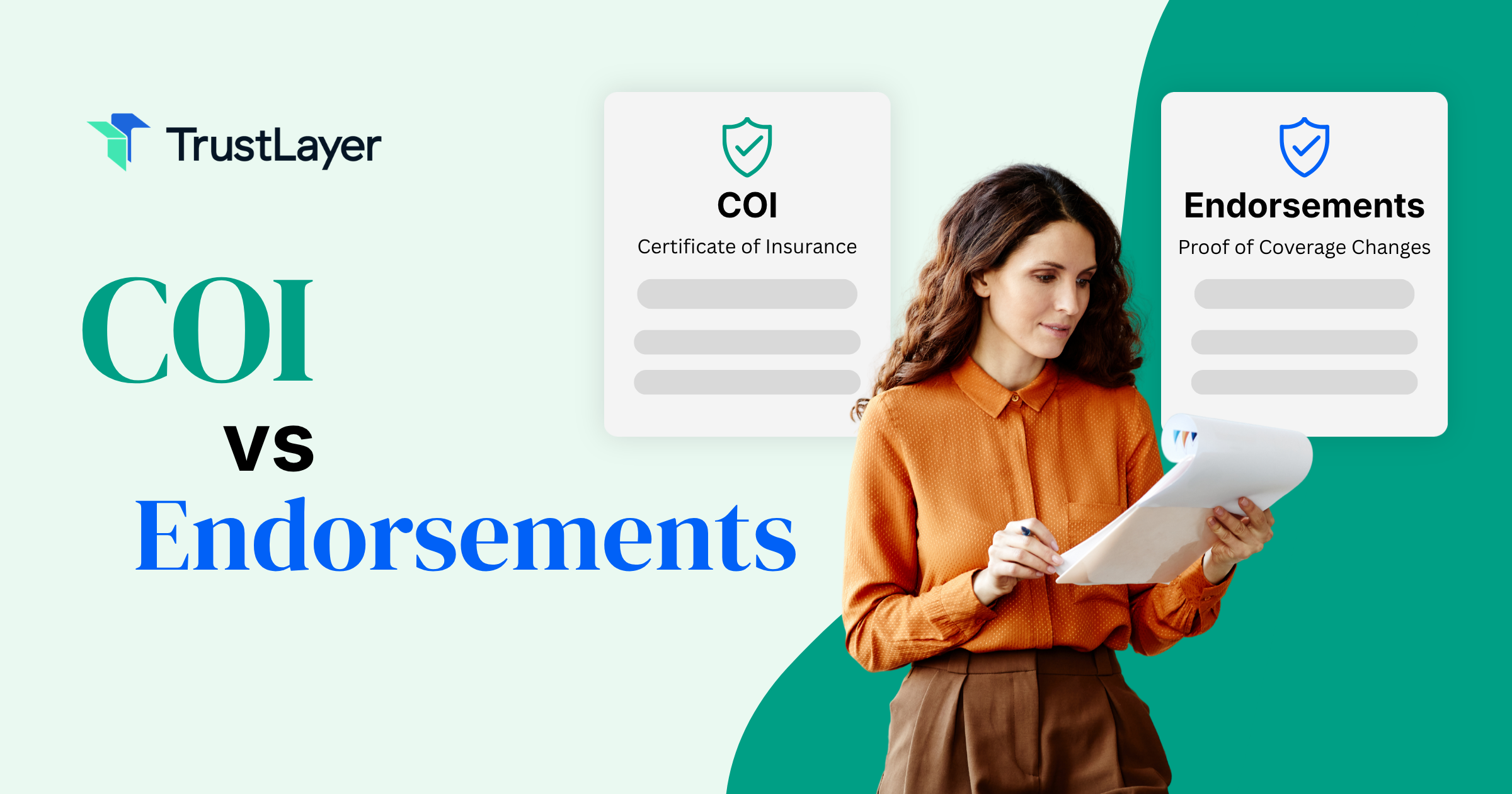
Insurance verification ranks among the most neglected aspects of lending operations, which is remarkable given how much exposure it creates. A COI that looks complete at first glance might have inadequate limits, missing endorsements, or policy terms that don't actually protect the lender's interest.
The details matter enormously. A lender's loss payee endorsement must be the correct type: standard versus lender's loss payable makes a significant difference in how claims are handled. Policy limits need to cover the collateral value, not just meet some arbitrary minimum. Deductibles shouldn't be so high that the borrower couldn't afford to file a claim.
Beyond initial verification, someone needs to confirm that the policy exists and hasn't been cancelled. COIs are issued by agents, not carriers, and a certificate can be generated for a policy that was cancelled the previous week. Direct verification with carriers, while time-consuming, eliminates this risk.
Automating Renewal Tracking to Prevent Coverage Gaps
Insurance policies expire. This is not news. Yet lenders routinely discover coverage gaps months after they occur, typically when they need to file a claim and can't.
Manual tracking systems fail for predictable reasons. Spreadsheets get outdated. Calendar reminders get dismissed during busy periods. Staff turnover means institutional knowledge walks out the door. The borrower promised to send the renewal certificate, but never did, and no one followed up because the task fell through the cracks.
Automated tracking transforms COI management from a reactive scramble to a proactive system. Expiration dates trigger automatic outreach to borrowers well before coverage lapses. Escalation workflows ensure non-responses get attention. Dashboards show exactly which loans have current coverage and which need action. The technology exists; the question is whether operations leaders prioritize implementing it.
Three Operational Traps That Stall Loan Closings
Trap 1: The Documentation Disconnect and Data Silos
Information exists within the organization, but no one can find it when they need it. The borrower's financial statements are in one system, the appraisal is in another, the title commitment is in someone's email, and the COI is in a physical file somewhere. When the closer needs to assemble the package, they spend hours hunting instead of minutes clicking.
Data silos create more than inefficiency; they create risk. When information isn't centralized, version control becomes impossible. Which financial statement is current? Is this the final appraisal or the draft? Have we received the corrected title commitment? These questions shouldn't require investigation, but they do when documentation lives in disconnected locations.
The fix requires both technology and discipline. A centralized document repository helps, but only if people actually use it. Clear naming conventions matter. Defined workflows for document intake prevent the "I'll just save this to my desktop for now" behavior that creates silos.
Trap 2: Last-Minute Compliance and Regulatory Hurdles
The loan is ready to close. The borrower is scheduled to sign tomorrow. Then someone realizes the flood determination was never completed, that the HMDA data contains an error, or that the disclosure timing doesn't work. The closing is pushed back, the borrower becomes frustrated, and the operations team scrambles to fix something that should have been caught weeks earlier.
Compliance requirements aren't surprises. They're documented, predictable, and knowable at the start of every loan. The problem isn't that regulations are complex; it's that compliance checks occur too late in the process to allow corrections without delay.
Front-loading compliance verification changes everything. When regulatory requirements are checked at application rather than at closing, issues arise because there's still time to address them. This requires building compliance checkpoints into the workflow, not as final hurdles but as early gates that prevent wasted effort on loans that can't close as structured.
Trap 3: Ineffective Communication with Third-Party Vendors
Appraisers, title companies, attorneys, insurance agents: loan closings depend on parties outside your organization, and you can't control their priorities. What you can control is how you communicate with them and how you manage the relationship.
The most common failure mode is passive waiting. The appraisal was ordered two weeks ago; surely it'll show up soon. The title company said they'd commit by Friday; it's now Tuesday, and no one has followed up. Third parties have multiple clients with competing demands, and lenders who follow up consistently are prioritized over those who wait silently.
Effective vendor management includes clear expectations at engagement, defined timelines with consequences, and systematic follow-up protocols. It also means building relationships that create accountability. When the same appraiser knows you'll give them consistent business if they deliver reliably, they have an incentive to prioritize your orders.
Strategies for Streamlining the Closing Pipeline
Implementing Real-Time Risk Dashboards
You can't manage what you can't see, and most lending operations run partially blind. Loan officers know their own pipelines; managers get periodic reports; executives see monthly summaries. Nobody has a real-time view of where deals stand and where problems are brewing.
Dashboards change the dynamic by making risk visible before it becomes a crisis. A well-designed dashboard shows which loans are on track and which are at risk of delay. It highlights COI expirations approaching without renewal documentation. It flags loans where documentation has been outstanding for longer than acceptable timeframes.
The key is actionability. A dashboard that shows problems without enabling response is just a worry generator. Effective dashboards link directly to the systems where action occurs, allowing users to drill down from the alert to the specific loan and the task that needs completion.
Standardizing Checklists for Scalable Operations
Checklists seem almost insultingly simple, which is probably why sophisticated organizations resist them. But aviation, surgery, and other high-stakes fields have proven that standardized checklists reduce errors even among highly trained experts. Lending operations are no different.
A closing checklist ensures nothing gets missed, regardless of who's handling the file. It creates consistency across team members with different experience levels. It provides a training tool for new staff and a verification mechanism for quality control. When problems occur, the checklist helps identify where the process broke down.
The checklist needs to be living documentation, updated as requirements change and refined based on actual closing experience. What started as a regulatory requirement might have been eliminated; what wasn't on the original list might now be essential. Regular review keeps the checklist relevant and prevents it from becoming bureaucratic overhead.
Building Resilient Lending Operations
The lenders who close loans efficiently and profitably share common traits. They've invested in systems that centralize information and automate routine tasks. They've built processes that catch problems early rather than late. They've created accountability for third-party performance. They treat operational excellence as a competitive advantage rather than a cost center.
The path forward starts with an honest assessment. Where are your closings actually getting stuck? What's the real cost of those delays? Which of the three traps described here sounds most familiar? The answers point toward priorities.
For organizations serious about modernizing their risk management approach, particularly in COI tracking and compliance document verification, TrustLayer offers purpose-built solutions that eliminate manual processes that cause delays. Book a demo to see how automation can transform your operations, and explore other TrustLayer articles for deeper insights into specific aspects of risk management.
You might also like