Compliance KPIs That Matter (and How to Improve Them)

Most compliance programs share the same dirty secret: they measure activity, not outcomes. Teams track how many certificates of insurance were collected, how many training modules were completed, how many audits were scheduled. But none of that tells you whether your organization is actually protected. A binder full of COIs is practically worthless if half of them contain outdated coverage limits or expired policies. The compliance KPIs that matter are the ones tied to real risk reduction, not paperwork volume. And improving them requires a shift from periodic fire drills to a constant state of awareness, where your team knows the compliance status of every vendor at any given moment, not just the week before an audit. That shift is what separates organizations that manage risk from those that merely perform compliance theater.
The Evolution of Compliance Monitoring
A decade ago, compliance monitoring meant a spreadsheet, a filing cabinet, and a lot of phone calls. Risk managers would collect certificates of insurance from vendors, glance at the coverage limits, file them away, and hope nothing went wrong before renewal season. The process was almost entirely reactive: you checked compliance when a contract was signed, maybe again at renewal, and otherwise assumed everything was fine.
That assumption has become increasingly expensive. As vendor ecosystems have grown more complex, with companies now managing hundreds or thousands of third-party relationships, the old model has created a fundamental gap between perceived compliance and actual coverage. Think of it like a car with an engine but no wheels: you have the documentation, but it's not actually getting you anywhere.
The shift toward continuous monitoring started gaining momentum around 2020, accelerated by remote work and the explosion of digital vendor relationships. By 2026, the expectation from regulators, insurers, and internal stakeholders has changed dramatically. Periodic spot-checks are no longer sufficient. Organizations need real-time visibility into their compliance posture, and the KPIs they track need to reflect that new reality.
This evolution has also exposed how fragmented most compliance data actually is. Project teams maintain their own vendor files. Site managers track insurance separately from corporate risk. The result is data silos that hide coverage gaps until a claim forces them into the open. The organizations that have adapted fastest are those that recognized this fragmented visibility as the primary failure mode and rebuilt their measurement systems around it.
Core KPIs for Vendor Risk and Insurance Compliance
If you're only tracking three things in your vendor compliance program, these are the ones worth your attention. They connect directly to business impact and program effectiveness, which is what leadership actually cares about when they ask how the compliance program is performing.
Certificate of Insurance (COI) Accuracy Rates
This is the metric most compliance teams think they have under control, and it's usually the one hiding the biggest problems. COI accuracy isn't just about whether you have a certificate on file. It measures whether the coverage listed on that certificate actually matches your contractual requirements: correct named insureds, adequate limits, proper additional insured endorsements, and active policy dates.
Industry benchmarks suggest that organizations relying on manual review processes see COI accuracy rates between 60% and 75%. That means up to 40% of your vendor certificates might contain errors or gaps that would leave you exposed in a claim scenario. The gap between "we have a COI" and "we have a COI that actually protects us" is where risk lives.
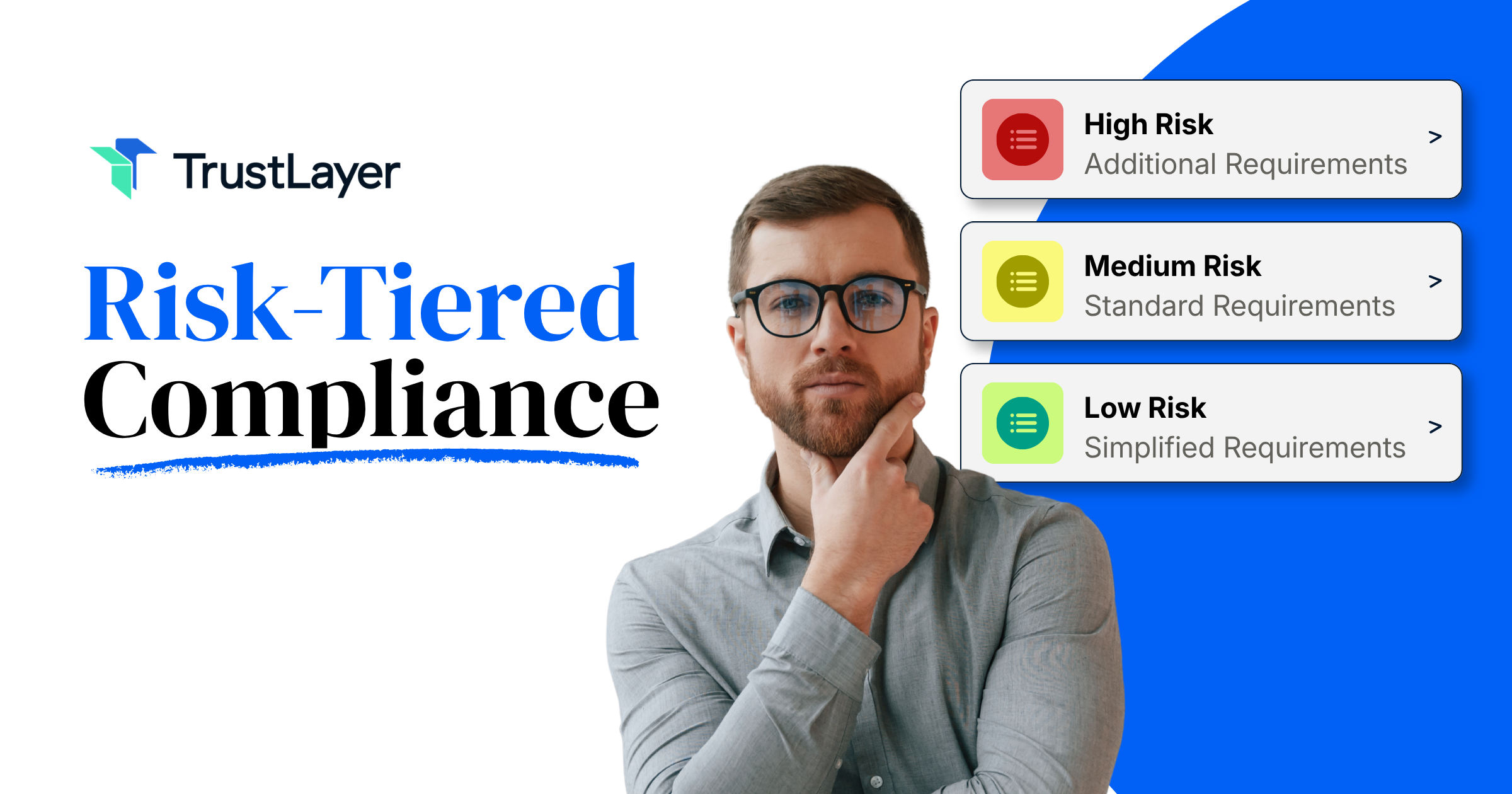
To improve this metric, start by standardizing your insurance requirements by vendor tier. High-risk vendors (those doing physical work on your premises, handling sensitive data, or operating heavy equipment) should have stricter requirements and more frequent verification. Lower-risk vendors can follow a lighter protocol. The goal is making accuracy measurable and specific rather than a vague "we check these when they come in."
Mean Time to Remediate Non-Compliance
When a vendor falls out of compliance, whether through an expired policy, insufficient limits, or a missing endorsement, how long does it take to fix? This KPI is the difference between a manageable gap and an expensive illusion of coverage.
Best-in-class programs aim for remediation within 5 to 10 business days. Many organizations, especially those relying on email chains and manual follow-ups, see averages of 30 to 60 days. During that window, you're carrying uninsured risk on your books, often without anyone at the leadership level knowing about it.
Tracking this metric over time also reveals patterns. If certain vendors consistently take weeks to remediate, that's a relationship management conversation. If certain types of non-compliance (like missing additional insured endorsements) recur across your portfolio, that's a process design problem. Either way, the data gives you something concrete to act on.
Vendor Onboarding Cycle Time
How long does it take to bring a new vendor from initial engagement to full compliance? This metric matters because slow onboarding creates pressure to cut corners. When a project team needs a contractor on-site next week and the compliance review takes three weeks, guess what gets skipped.
Tracking onboarding cycle time by vendor category helps you identify bottlenecks. Are delays happening because your requirements are unclear? Because vendors don't know what documents to submit? Because your internal review process has too many handoffs? Each of these root causes has a different solution, and you can't fix what you can't see.
A reasonable target for standard vendor onboarding is 5 to 7 business days from document submission to compliance confirmation. If you're consistently above 15 days, the process itself is likely creating risk by incentivizing workarounds.
Operational Metrics for Internal Efficiency
The KPIs above measure compliance outcomes. These next metrics measure how efficiently your team is producing those outcomes. They're the operational indicators that tell you whether your compliance program can scale or whether it's going to collapse under its own weight as your vendor count grows.
Manual Intervention vs. Automated Tracking
This is a ratio, and it should be trending in one direction. For every compliance task your team handles, how many require a human to manually review, follow up, or data-enter information versus how many are handled through automated workflows?
Organizations early in their compliance maturity might see 80% manual and 20% automated. Mature programs flip that ratio. The reason this matters isn't just efficiency: manual processes introduce error. Every time someone re-keys a policy number or eyeballs an expiration date, there's a chance they get it wrong. And those errors compound across hundreds of vendor relationships.
Track this ratio quarterly. If it's not improving, your technology investments aren't delivering the returns they should. If it is improving, you can start redirecting staff time from data entry toward higher-value activities like vendor relationship management and risk analysis.
Renewal Success and Expiration Oversight
What percentage of your vendor insurance policies get renewed before they expire? And when they do expire, how quickly does your team catch it?
This is where compliance programs most commonly fail. A vendor's policy expires on a Friday. Nobody notices until the following month's report. Meanwhile, that vendor has been working on your site, driving your vehicles, or accessing your systems with zero coverage. The claim that happens during that gap is entirely on you.
A strong renewal success rate means 95% or more of vendor policies are renewed or replaced before expiration, with no gap in coverage. Getting there requires proactive outreach starting 30 to 60 days before expiration, not a panicked email the day a policy lapses. The best programs treat expiration oversight as a continuous process rather than a monthly report, shifting from a fire drill mentality to sustained awareness.
Strategies to Improve Your Compliance Scores
Knowing which compliance KPIs matter is only half the equation. The other half is building systems that move those numbers in the right direction. Here are two structural changes that consistently produce measurable improvement.
Centralizing Document Workflows
The most common pattern in struggling compliance programs is fragmented execution. The corporate risk team sets the standards, but individual project managers, site leads, or procurement teams collect and store documents in their own systems: local drives, email folders, separate spreadsheets. Nobody has a complete picture.
The fix is a governance model that centralizes control while decentralizing execution. Your risk team should own the standards, the technology platform, and the reporting. But the tactical work of collecting and managing documents can live with site or project leads who have direct vendor relationships. This prevents the bottleneck that occurs when everything flows through a single compliance analyst, while still maintaining visibility across the entire organization.
Centralizing document workflows typically reduces onboarding cycle time by 30% to 50% and improves COI accuracy rates by eliminating version control issues. When everyone is working from the same system, you stop finding out about coverage gaps six months after the fact.
Implementing Real-Time Verification Tools
The traditional compliance verification model is synchronous: a vendor submits a document, someone reviews it, approves or rejects it, and the vendor responds. Each step requires both parties to be engaged at the same time, which is why the process takes so long.
Real-time verification tools shift the model toward continuous monitoring. Instead of checking a COI once at onboarding and once at renewal, the system monitors policy status continuously and flags changes as they occur. This is particularly valuable for high-risk vendor categories where a coverage gap could result in significant liability.
The distinction between synchronous and asynchronous workflows matters here. High-risk, regulated activities (like construction or healthcare services) may still warrant synchronous review, where work doesn't proceed until compliance is confirmed. But for routine vendor relationships, asynchronous patterns work better: the vendor operates normally, and the system flags issues for resolution without creating delays that cause more damage than the potential gap itself.
Leveraging Compliance Data for Better Risk Management
Once you're tracking the right KPIs, something interesting happens: your compliance data becomes a risk intelligence asset. Patterns emerge that would be invisible in a manual, spreadsheet-based process.
For example, if your data shows that vendors in a specific industry category consistently have lower COI accuracy rates, that tells you something about the insurance practices in that sector. You can adjust your requirements, provide clearer guidance, or build additional verification steps for that category. If remediation times spike during certain months, you can staff accordingly or adjust your outreach timeline.
This is where compliance stops being a cost center and starts informing strategic decisions. Leadership cares about compliance data when it connects to business outcomes: reduced claim frequency, faster project starts, lower insurance costs through better risk profiles. The KPIs themselves become the language you use to communicate program value to the C-suite.
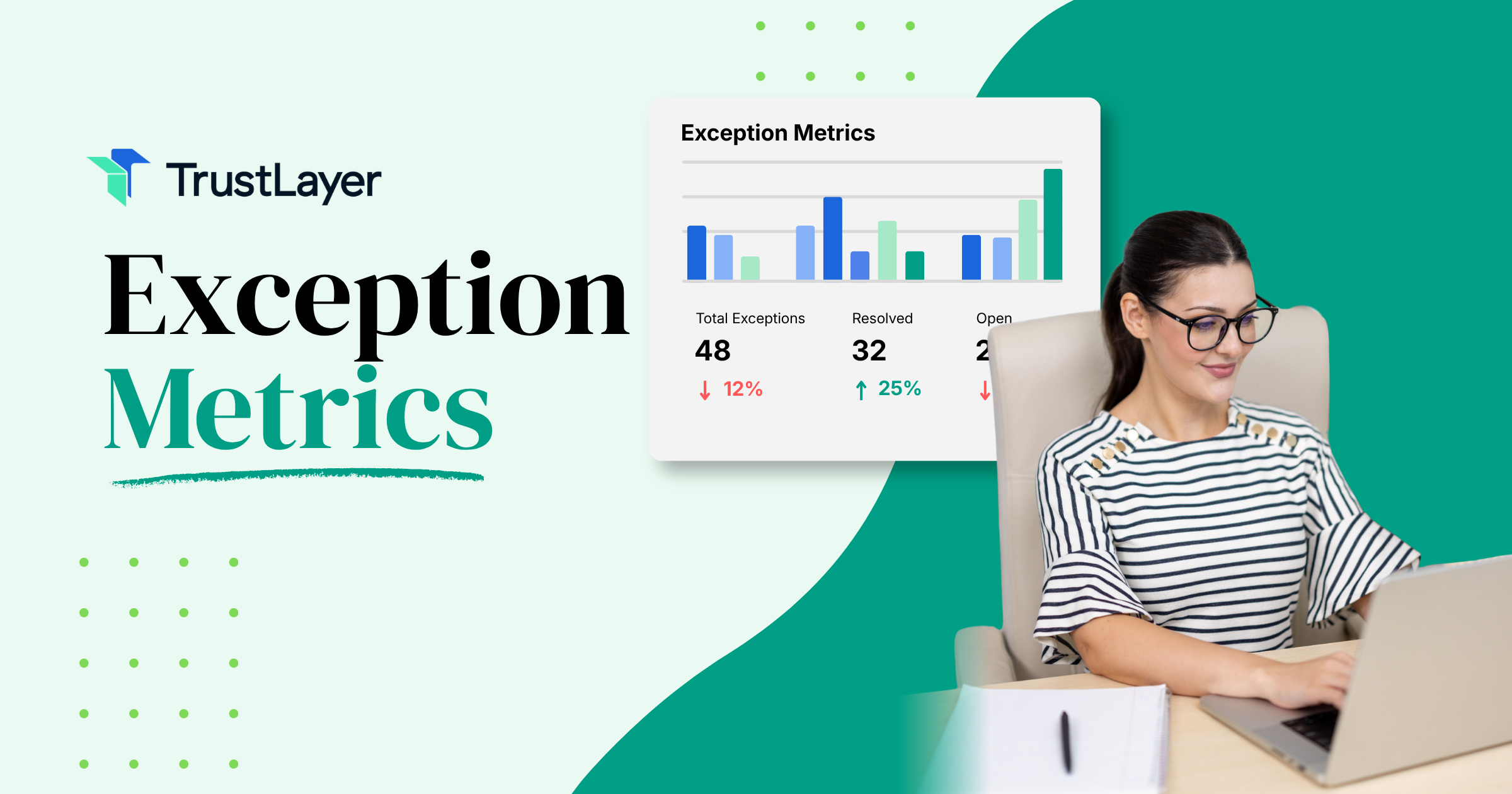
Automated dashboards play a critical role here. They shift the institutional mindset from periodic reporting to continuous awareness. Your team shouldn't be compiling compliance reports for quarterly board meetings. They should be looking at a live dashboard that shows compliance posture across the entire vendor portfolio at any moment. That's the difference between knowing your risk and guessing at it.
The organizations getting the most value from their compliance data are also using it to improve vendor relationships. When you can show a vendor their compliance history, their average remediation time, and how they compare to peers, you create a constructive conversation rather than an adversarial one. Compliance becomes a shared objective rather than an administrative burden imposed from above.
Advance Your Strategy with TrustLayer
The compliance KPIs that genuinely matter all point in the same direction: away from manual, reactive processes and toward continuous, data-driven risk management. Tracking COI accuracy, remediation time, onboarding speed, and renewal success gives you the foundation. But improving those numbers requires the structural systems to support them: centralized workflows, real-time verification, and dashboards that keep your team in a constant state of awareness rather than scrambling before the next audit.
If your current process still involves chasing vendors over email and manually reviewing certificates, you already know it doesn't scale. TrustLayer was built specifically for this problem, helping risk managers automate the collection, verification, and tracking of certificates of insurance and other compliance documents. Hundreds of thousands of companies already use it to replace the phone calls, paper trails, and spreadsheet chaos that make compliance so painful.
If you're ready to move from compliance theater to a program that actually reduces risk, set up a time to talk with our team. And while you're at it, check out the other articles on the TrustLayer blog for more practical guidance on building a compliance program that works in the real world, not just on paper.
You might also like
.png)