ResourcesShifting from Function to Mindset: Robert Hudson Jr. on Human Nature and the Fallacy of the One-Page COI
Shifting from Function to Mindset: Robert Hudson Jr. on Human Nature and the Fallacy of the One-Page COI
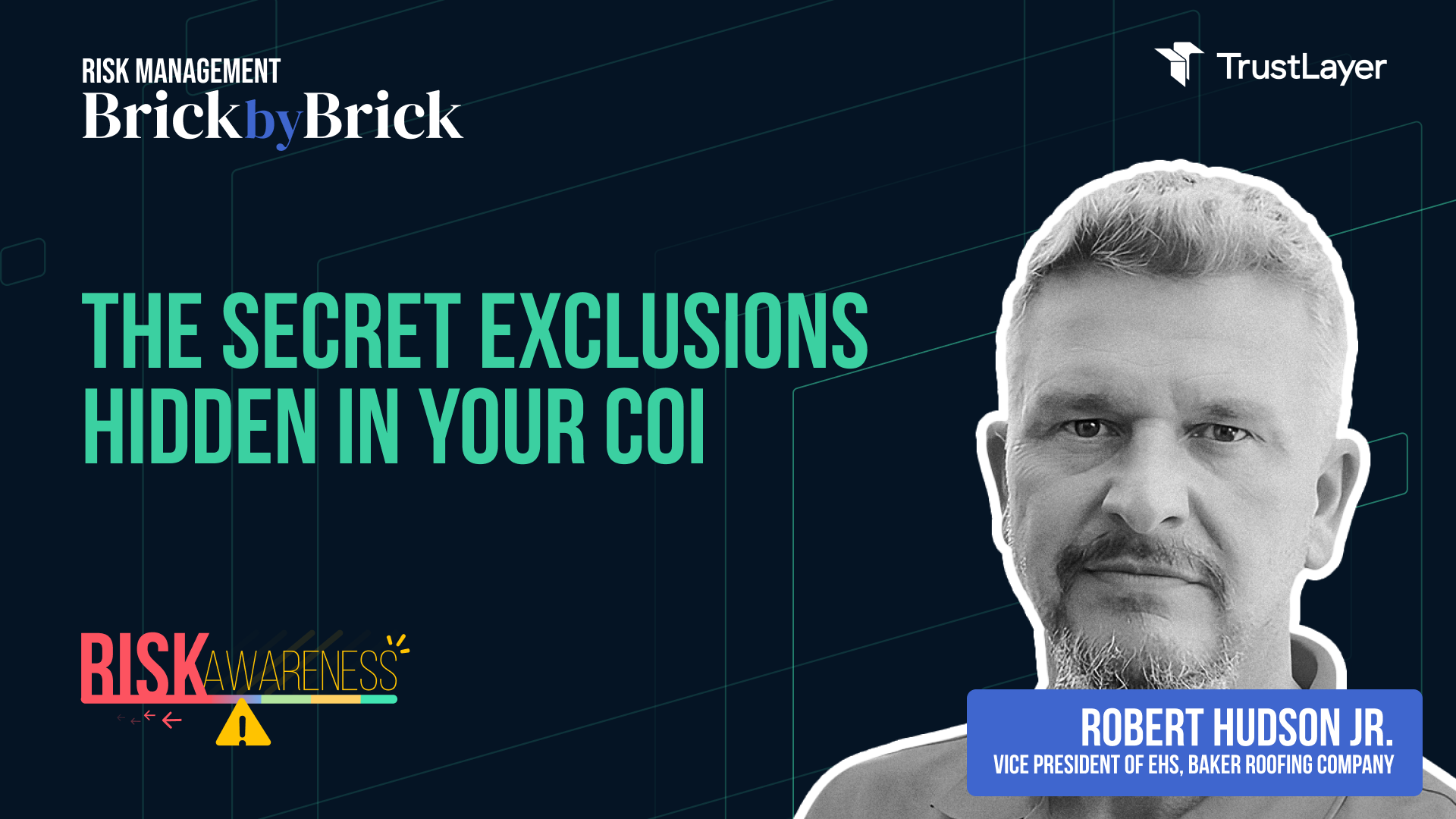
In an insightful episode of Risk Management: Brick by Brick, host Jason Reichl sits down with Robert Hudson Jr., Vice President of EHS at Baker Roofing Company, to discuss how to manage risk effectively where safety, craftsmanship, and operational pressures collide.
With a career spanning nearly two decades at one of the nation's largest commercial roofing contractors, Hudson provides a unique perspective on bridging the gap between historical corporate values and modern operational risk safety.
To find out how TrustLayer manages risk so that people can build the physical world around us, head to TrustLayer.io.
The Human Risk: Transparency and Predictability
Hudson warns that a major hurdle in corporate safety is navigating natural human instincts when mistakes happen on the job.
- Confronting Human Nature: Hudson notes that when things go wrong, human nature dictates an instinct to hide errors rather than report them.
- The Discipline Backfire: Rigid or overly punitive disciplinary actions run the risk of driving incident reporting underground, severely limiting corporate visibility.
- Rewarding Integrity: Building true workplace transparency requires actively bragging on employees' honesty and rewarding integrity rather than penalizing mistakes.
Bridging the Gap: Culture vs. Production Speed
While production metrics and safety goals can sometimes feel like clashing priorities, Hudson structures safety as an foundational mindset rather than a rigid rulebook.
- The Production Blind Spot: Prioritizing production speed creates an environment where teams are highly incentivized to cut corners on critical risk procedures.
- Values-Driven Leadership: Baker Roofing utilizes "Corporate Fundamentals," dedicating the first ten to fifteen minutes of every operational meeting across all 27 locations to discuss a core company value.
- Ground Floor Involvement: Lasting risk programs require active engagement from every single level of the organization—from day-one new hires to the most tenured personnel.
The Cascading Model of Risk Mitigation
For Hudson, operational resilience across a sweeping geographic footprint stems from structured training and shared accountability.
- Cascading Committees: Baker Roofing runs a 75-member corporate safety committee that branches down into 35 localized regional committees to address unique field challenges.
- The "Risk Mitigation" Blueprint: By implementing a custom internal risk course, the organization successfully trained field leaders and sales professionals to actively evaluate liability, recently catching an exposure that prevented a potential catastrophic roof collapse.
- Shared Skin in the Game: Transitioning into a 100% employee-owned (ESOP) company transformed risk management by making every loss a shared business outcome.
Vendor Awareness and Evolving Exposures
Despite advancements in administrative technology, Hudson emphasizes that checking basic boxes leaves companies widely exposed.
- The Fallacy of the COI: Hudson explicitly targets standard Certificates of Insurance, labeling them "basically useless" due to hidden endorsements and exclusions buried in the background paperwork.
- Full-Length Policy Audits: To mitigate downstream vendor liability, risk managers must review the entire backend Commercial General Liability (CGL) document every single time.
- The Spousal Accountability Strategy: During subcontractor summits, the team invites the spouses of independent contractors to reinforce the high stakes of falling safety protocols in the field.
- AI as a Time Saver: While AI is highly effective at reducing administrative labor and saving time, human intuition remains irreplaceable in managing the physical field environment.
Monday Morning Action Plan: Ditch the Armchair Dictatorship
For risk managers looking to strengthen their safety culture while maintaining operational speed, Hudson offers a straightforward blueprint:
- Lead by Example: Leaders must hold themselves to the exact same safety expectations dictated to their staff, noting that separating yourself from field rules destroys executive credibility.
- Build and Reassess: Build a trusted team, empower them to speak into your life, and be completely willing to admit when a strategy isn't working so you can actively pivot.
To hear the full discussion on shifting safety from a function to a mindset, tune in to this episode of Risk Management: Brick by Brick.
👉 Apple:https://tinyurl.com/5n8but9n
👉 Spotify: ttps://tinyurl.com/ap479d6y
👉 YouTube: https://youtu.be/fZqlonxHeTs
Podcast Host: Jason Reichl
Executive Producer: Don Halliwell
You might also like