How to Remove Bottlenecks in Enterprise COI Reviews

Every enterprise risk manager has lived through the same frustrating scenario: a critical vendor is ready to start work, the contract is signed, the purchase order is approved, and then everything stalls because a certificate of insurance is sitting in someone's inbox, unreviewed. The vendor calls to ask what's taking so long. The project manager sends a "gentle nudge" email. Meanwhile, the risk team is buried under a pile of 200 other COIs that arrived this week, each requiring manual comparison against contract requirements that vary by vendor type, project scope, and jurisdiction.
This bottleneck isn't a minor inconvenience. It's an expensive drag on revenue, vendor relationships, and the credibility of compliance programs. A 2025 Deloitte survey found that 61% of procurement leaders cited insurance compliance verification as one of the top three delays in vendor onboarding. That number hasn't improved much heading into 2026, largely because the underlying workflows haven't changed. Most enterprises still rely on email chains, shared drives, and spreadsheets to manage processes that involve legal, procurement, risk, and operations teams simultaneously.
The good news: removing bottlenecks from enterprise COI reviews doesn't require ripping everything out and starting over. It requires clearly seeing the problem, understanding where friction accumulates, and making targeted changes. Here's a practical, step-by-step approach that actually works.
Where Enterprise COI Review Bottlenecks Usually Start
The instinct is to blame volume. Enterprises managing hundreds or thousands of vendor relationships receive a constant stream of certificates, endorsements, and policy documents. But volume alone isn't the real culprit. The bottleneck lives in the gap between how COI reviews should work and how they actually work on a Tuesday afternoon when three people are out sick.
Most enterprises have a version of this problem: the risk management team sets insurance requirements, but those requirements live in a contract addendum that procurement drafted two years ago. The person reviewing the COI may not have easy access to those requirements, or the requirements are written in legal language that doesn't map cleanly to what appears on a standard ACORD form. So the reviewer has to interpret, cross-reference, and sometimes call the broker to ask whether a $2 million umbrella policy satisfies a $5 million general liability requirement when combined with the primary policy.
That single review might take 15 minutes. Multiply it by 50 reviews a week, add in the back-and-forth emails when something is deficient, and you've got a team spending most of its time on administrative tasks rather than actual risk analysis. The bottleneck isn't just slow: it's structurally embedded in how the workflow was designed (or, more accurately, how it evolved without anyone designing it).
Fragmented visibility makes it worse. When project managers in different offices maintain their own vendor files, the central risk team has no reliable way to know which vendors are compliant now versus which were compliant six months ago when someone last checked.
Step 1 — Map the Current COI Review Workflow
Before you fix anything, you need to see what you're actually dealing with. Most risk teams have not formally mapped their COI review process end-to-end. They know they're part of it. They don't always know what happens before the certificate reaches them or after they flag a deficiency.
Start by documenting every step from the moment a new vendor is identified through final compliance confirmation. Who initiates the insurance requirement? Where is the requirement documented? How does the vendor receive the request? What format do certificates arrive in? Who reviews them first? What happens when a certificate is deficient? Who follows up, and how? What triggers a renewal review?
You'll likely discover that the "process" is actually several informal processes running in parallel. The construction division might handle things differently from IT vendor management. One office might use a shared inbox while another relies on individual email accounts. These inconsistencies aren't just inefficient; they create coverage gaps that only surface when a claim arises.
A useful exercise is to time-stamp each step for 20 recent COI reviews. Track how long the certificate sat in each queue, how many touches it required, and where the longest delays occurred. This data is gold. It transforms the conversation from "we feel overwhelmed" to "certificates sit in the procurement inbox for an average of 4.2 days before anyone looks at them."
Step 2 — Identify Every Manual Handoff
Once you've mapped the workflow, circle every point where a document or task passes from one person or team to another. These handoffs are where delays breed. Each one introduces a queue, a potential miscommunication, and a chance for the task to fall through the cracks entirely.
A typical enterprise COI review involves at least five handoffs: procurement sends requirements to the vendor, the vendor sends the certificate to a general inbox, someone routes it to the reviewer, the reviewer flags deficiencies back to the vendor (often through procurement), and the vendor's broker responds with a corrected certificate that starts the cycle again. Each handoff adds one to three business days. A single deficiency can add two full weeks to the process.
The goal isn't to eliminate all handoffs: some are necessary for proper oversight. The goal is to eliminate unnecessary ones and reduce friction in the ones that remain. Ask yourself which handoffs are driven by organizational structure rather than genuine risk-management need. Does procurement really need to be the intermediary for every vendor communication about insurance, or could vendors submit certificates directly to a centralized system?
Think about this like a relay race. You can't eliminate the baton passes, but you can make sure runners aren't standing around waiting for someone to find the baton, figure out who gets it next, and then walk it over instead of running.
Step 3 — Standardize Insurance Requirements by Vendor Type
One of the biggest time sinks in COI reviews is the constant need to look up what's actually required for each vendor. When every contract has slightly different insurance language, reviewers spend as much time figuring out the standard as they do reviewing the certificate. This is compliance theater at its worst: it looks rigorous, but it's really just slow.
Create a tiered system that groups vendors by risk profile. A janitorial service and a structural engineering firm don't need the same insurance requirements, but two janitorial services working in similar facilities probably do. Most enterprises can get by with three to five tiers:
- Tier 1: Low-risk vendors (office supplies, SaaS tools with no data access) with minimal insurance requirements
- Tier 2: Moderate-risk vendors (professional services, non-hazardous on-site work) with standard GL and professional liability requirements
- Tier 3: High-risk vendors (construction, hazardous materials, heavy equipment) with elevated limits, additional insured endorsements, and waiver of subrogation
- Tier 4: Critical or specialty vendors requiring custom requirements reviewed by legal
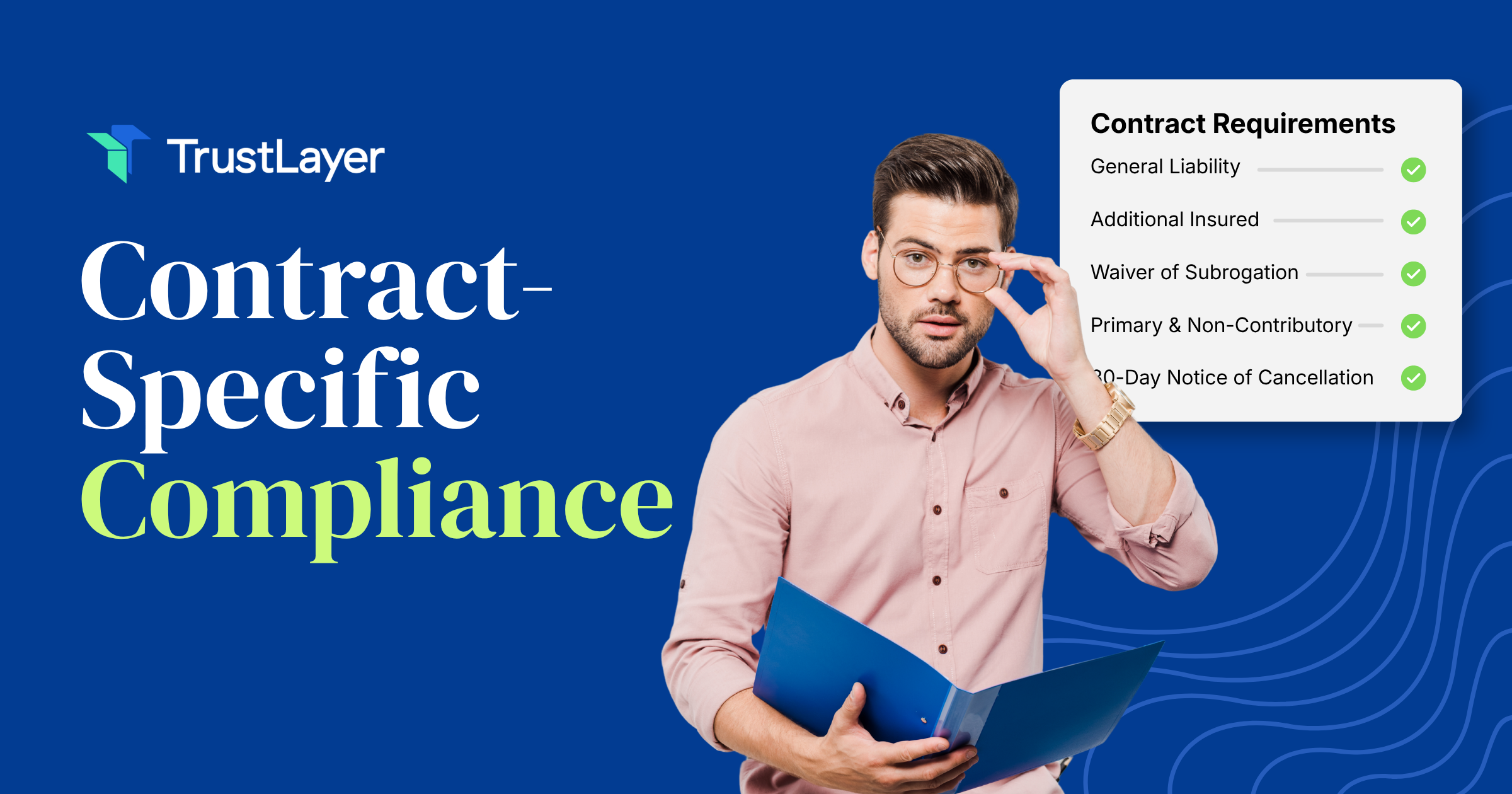
This approach centralizes control at the strategic level, with the risk team setting tier definitions and requirements, while decentralizing execution so project managers and procurement staff can quickly identify which tier applies without calling the risk team each time. The reviewer no longer needs to dig through contract language. They check the tier, pull up the standard, and compare the two.
Step 4 — Automate Vendor Requests and Renewal Reminders
Here's where most enterprises leave the biggest gains on the table. The request-and-reminder cycle for certificates is almost entirely manual at most organizations, and it's a massive time drain. Someone has to remember that a policy expires in 30 days, draft an email, send it to the right contact, follow up when they don't respond, follow up again, and then escalate when the vendor goes dark.
Automating this correspondence is one of the highest-impact changes you can make. Automated systems can send initial requests with the correct requirements already attached, trigger renewal reminders at 60, 30, and 14 days before expiration, escalate non-responses to procurement or project managers, and maintain an audit trail of every communication.
This isn't about replacing human judgment. The risk team continues to review certificates and make compliance decisions. But the administrative machinery of requesting, reminding, and chasing should run on its own. Think of it as shifting from a fire-drill mentality, where someone realizes a policy expired last week and scrambles to get a new one, to a constant state of awareness where the system surfaces what needs attention before it becomes urgent.
The distinction between synchronous and asynchronous workflows matters here. High-risk vendor onboarding might require real-time, hands-on review before any work begins. But routine renewals for established, low-risk vendors can follow an asynchronous pattern, with automated reminders and vendor self-service handling 80% of the volume, freeing reviewers to focus on the 20% that actually require expertise.
Step 5 — Create a Clear Exception Process
Standardization works beautifully until it doesn't. There will always be vendors who can't meet your standard requirements: the small specialty contractor whose broker says a $5 million umbrella policy simply isn't available in their market, or the international consultant whose country doesn't use ACORD forms. Without a defined exception process, these situations either stall indefinitely or get resolved through informal workarounds that no one documents.
A good exception process has four elements. First, clear criteria for what qualifies as an exception versus what's simply a deficiency that needs correction. A vendor who submits a certificate with the wrong additional insured language has a deficiency. A vendor who genuinely cannot obtain the required coverage type in their market may qualify for an exception.
Second, a defined approval authority. Exceptions shouldn't be approved by the same person who reviews routine certificates. They should escalate to a risk manager or to a risk management committee with the authority to accept alternative coverage arrangements or risk-based waivers.
Third, documentation requirements. Every exception should include a business justification, a risk assessment, any alternative mitigation (if any), and an expiration date. An exception granted in 2026 shouldn't still be in effect in 2029 without re-evaluation.
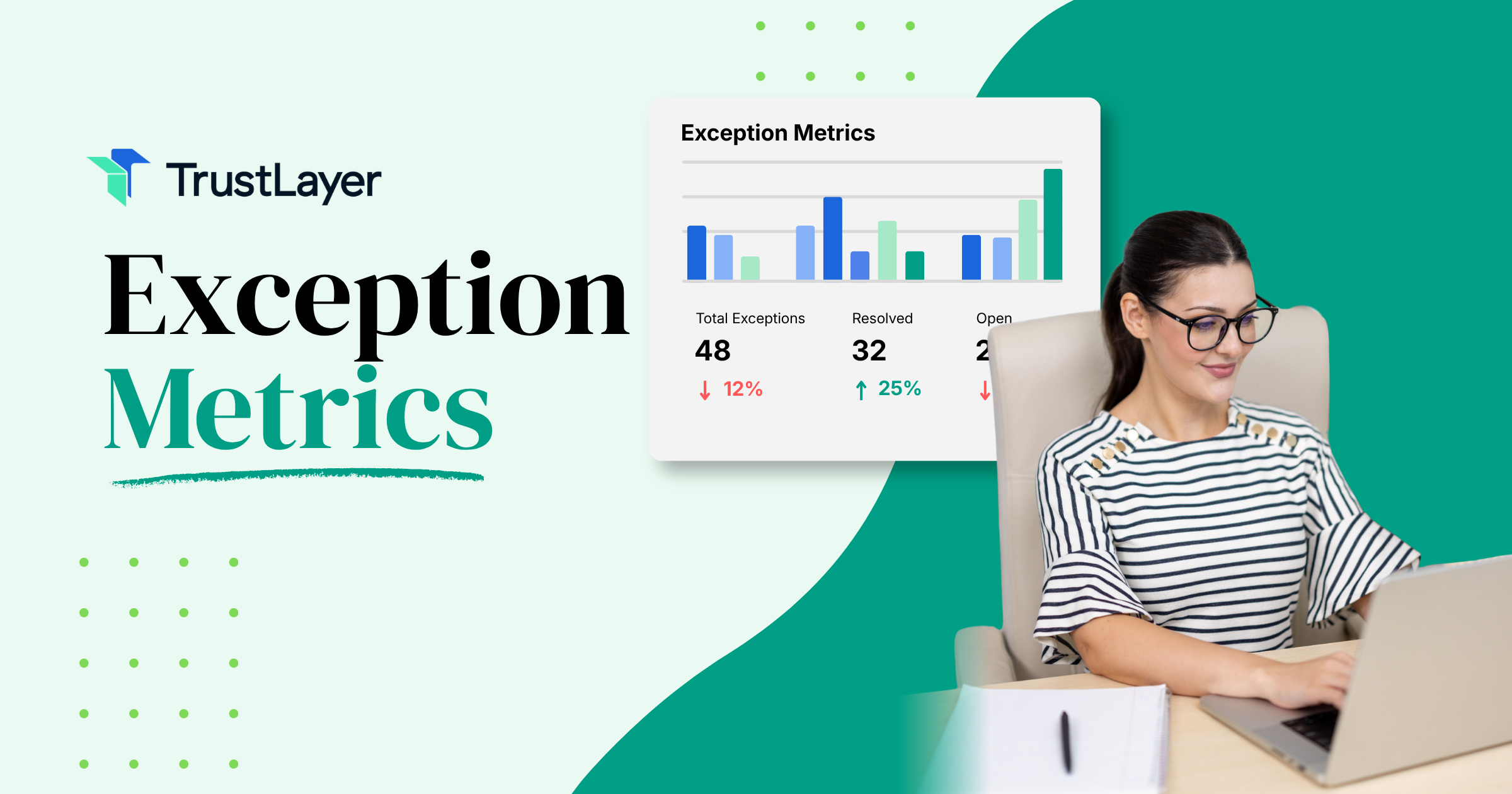
Fourth, visibility. Exceptions should be tracked in the same system as standard compliance, not buried in email threads. When leadership asks, "How many vendors are operating under exceptions right now?" the answer should take seconds, not days.
Step 6 — Build Reporting Around Action, Not Just Storage
Most enterprises can tell you how many certificates they have on file. Very few can tell you, right now, what percentage of their active vendors are fully compliant, which vendors have policies expiring in the next 30 days with no renewal in progress, or which business units have the highest rates of non-compliance.
The difference matters enormously. A filing cabinet full of certificates, whether physical or digital, is practically worthless if no one can extract meaning from it. It's like having a car with an engine but no wheels: the critical component exists, but it can't take you anywhere.
Shift your reporting from storage metrics to action metrics. Instead of "we processed 400 certificates this quarter," track "average time from vendor onboarding to full insurance compliance," "percentage of vendors with current, verified coverage," "number of vendors operating with expired policies," and "deficiency resolution time by type." These metrics tell you whether your program is actually reducing risk or just generating paperwork.
Dashboards should provide continuous awareness rather than periodic snapshots. The goal is for any stakeholder, from a project manager to the CFO, to check compliance status at any moment without requesting a special report. This eliminates the cycle of frantic audit preparation and replaces it with a sustainable practice of ongoing visibility.
Final Takeaway
Removing bottlenecks from your COI review process isn't a single project with a finish line. It's a structural shift in how your organization thinks about vendor insurance compliance. The steps above, mapping workflows, eliminating unnecessary handoffs, standardizing requirements, automating correspondence, defining exceptions, and building real reporting, work together as a system. Skip one, and the others lose much of their impact.
The enterprises that get this right share a common trait: they stop treating certificate of insurance management as a clerical task and start treating it as a risk management function that deserves proper infrastructure. The difference between those two mindsets shows up in every metric that matters, from onboarding speed to claims outcomes.
If your team is still spending most of its time chasing documents instead of analyzing risk, that's a signal worth paying attention to. TrustLayer has built its platform specifically for organizations ready to move past manual compliance workflows and into a more sustainable model. Book a demo to see how it works for your setup, and check out the TrustLayer blog for more practical guidance on modern certificate of insurance management.
You might also like




.png)