ResourcesDesigning Safe Magic: Annie Quaile on Human Behavior and the Future of Live Event Safety
Designing Safe Magic: Annie Quaile on Human Behavior and the Future of Live Event Safety
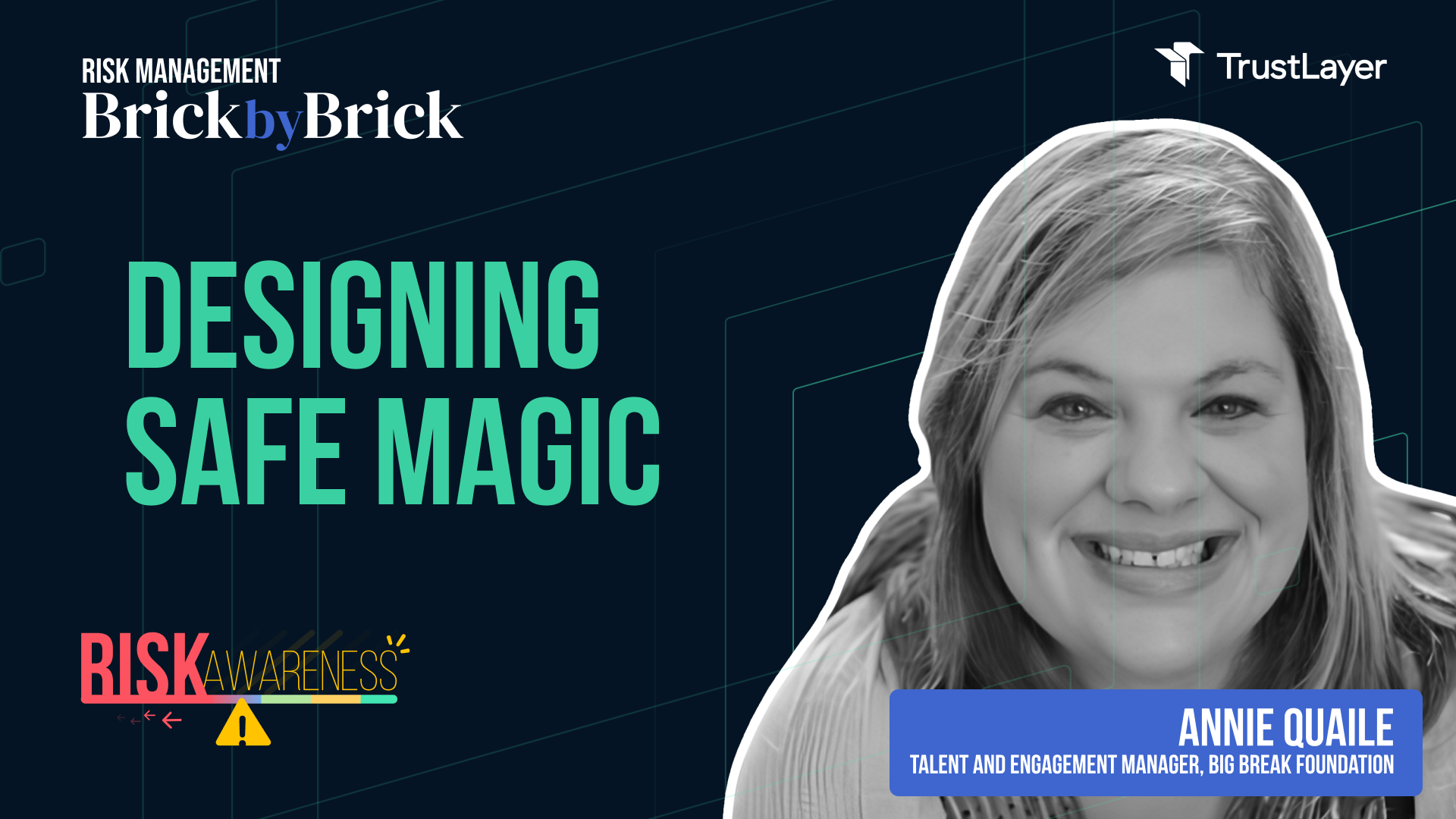
In an insightful episode of Risk Management: Brick by Brick, host Jason Reichl sits down with Annie Quaile, an Emmy-nominated entertainment producer and event manager with over two decades of experience, to discuss how to design for human behavior without killing the creative magic.
With a career spanning from live events at major theme parks to award-winning film production, Quaile provides a unique perspective on bridging the gap between high-level creative vision and rigorous operational safety.
To find out how TrustLayer manages risk so that people can build the physical world around us, head to TrustLayer.io.
The Human Risk: Movement Patterns and Predictability
Quaile warns that the greatest risk in live events is often a failure to account for innate human behaviors and movement patterns.
- The Power of Observation: Quaile advocates for the "bench-sitting" method—spending time in facilities simply watching how people move—noting that everyone, regardless of background, tends to behave in predictable ways.
- The "Blinders" Phenomenon: Even in well-marked environments, guests often experience situational "blinders," such as asking for directions to a facility they are already standing directly in front of.
- Anticipating Panic: Effective risk management requires planning for how a crowd will react when scared or unexpected situations arise, ensuring they have clear paths to safety.
Bridging the Gap: Safety vs. Creative
While safety and creative teams can sometimes feel like "oil and vinegar," Quaile reframes safety as a partner to the creative process.
- Relationship Management: Success depends on building rapport and empathy between departments, ensuring that the creative objective is understood before proposing safety pivots.
- Early Integration: Safety managers should be "in the room" from the very beginning of the conversation to flag concerns early, preventing costly and difficult changes later in the production cycle.
- Safe by Design: The goal is not to mitigate the "fun," but to find creative ways to keep the experience as safe as possible while maintaining the original intent.
The "Queen of Contingency"
For Quaile, resilience in live events comes from exhaustive preparation for when things inevitably go off-script.
- Multiple Pivot Plans: Rather than one backup plan, Quaile develops five or six different ways to navigate a situation if things go sideways.
- Communication as the Foundation: Seamless pivots rely on clear communication across the entire organization, from the back-of-house crew to the staff at the front gate.
- Empowering the First Line: Volunteers and front-line staff—often the least confident members of a team—are actually the most critical line of defense and must be empowered to act and communicate during a crisis.
Situational Awareness and Emerging Risks
Despite the rise of predictive technology, Quaile emphasizes that the industry must move from a reactionary mindset to a proactive one.
- Extreme Weather Protocols: Drawing from experiences in Florida water parks, Quaile highlights the importance of definitive shutdown protocols for weather risks like lightning.
- Traditional vs. Non-Traditional Venues: As events move into unique, non-traditional spaces, risk managers must "widen the aperture" to identify access point vulnerabilities and accessibility barriers.
- AI as a Support Tool: While AI-based crowd density data is becoming reliable, human intuition and "seeing the place yourself" remain essential for true risk awareness.
Monday Morning Action Plan: Get in the Room
For those looking to improve crowd safety without slowing down operations, Quaile offers a simple directive:
- Inclusive Conversations: Ensure the safety person is in every single meeting, even if the team doesn't think they need to be there.
- Contextual Clarity: Don't just tell staff what the plan is, but why it exists, giving them the foresight to ask questions before a problem occurs.
To hear the full discussion on designing for human behavior and the art of "Safe Magic," tune in to this episode of Risk Management: Brick by Brick.
👉 Apple: https://tinyurl.com/yc2j87bt
👉 Spotify: https://tinyurl.com/hujunyru
👉YouTube: https://youtu.be/yV5xVsr9wQU
Podcast Host: Jason Reichl
Executive Producer: Don Halliwell
You might also like

.png)