Board-Ready Compliance Reporting Templates

Most compliance teams spend weeks pulling together reports that board members skim for three minutes before moving on to the next agenda item. That's not a failure of the board's attention span: it's a failure of the report itself. If your compliance data doesn't speak the language of business risk, revenue exposure, and strategic priority, it's going to land with a thud every single time. The real challenge isn't collecting compliance data. Organizations are drowning in it. The challenge is distilling that data into something a board member can absorb quickly and act on confidently.
Compliance reporting templates designed for board consumption solve this problem by forcing structure, consistency, and clarity into what is often a chaotic mess of spreadsheets and email threads. But not all templates are created equal. A report that works for an internal audit team will confuse a board member who needs to understand exposure in plain terms. The gap between operational detail and strategic insight is where most reporting falls apart, and it's exactly where the right template makes a difference.
What follows is a practical breakdown of what goes into a compliance report that actually earns attention in the boardroom, from the structural components to the specific templates that work for insurance and regulatory tracking, along with the habits that keep your data trustworthy over time.
Core Components of a Board-Ready Compliance Report
A compliance report headed for the boardroom needs to function like a well-designed briefing document, not an encyclopedia. Board members are making decisions across dozens of domains: finance, operations, legal, and strategy. Your compliance report is competing for cognitive bandwidth with all of those. The components you include need to earn their place on the page.
Three elements consistently separate reports that drive action from reports that collect dust: a sharp executive summary, well-chosen metrics, and visual storytelling that reveals trends rather than burying them.
Executive Summaries for High-Level Oversight
The executive summary is where 80% of board members will spend their time. If it doesn't land, the rest of the report is irrelevant. A strong executive summary answers three questions in under one page: What is our current compliance posture? What has changed since the last report? What decisions need board attention?
Skip the temptation to front-load the summary with methodology or background context. Board members don't need to know how you collected the data. They need to know what it means. Lead with the conclusion, not the process.
A practical format: start with a one-sentence compliance status statement (green, yellow, red), follow with two to three bullet points on material changes, and close with a specific ask or recommendation. If you can't write the summary in 150 words, you haven't distilled the information enough.
Key Performance Indicators and Risk Metrics
Metrics are the backbone of any board-ready report, but choosing the wrong ones is worse than having none at all. A common mistake is reporting activity metrics (number of audits completed, number of policies reviewed) instead of outcome metrics (percentage of third parties with verified coverage, average time to remediate a compliance gap).
Board members care about exposure. Pick four to six KPIs that directly map to organizational risk: compliance rate across vendor populations, number of open exceptions and their dollar exposure, trend in policy violations quarter over quarter, and average days to resolve critical findings. Each KPI should include a target, current value, and directional trend. If a metric doesn't change the way someone thinks about risk, drop it.
Visual Data Representation and Trend Analysis
A wall of numbers is not a report. It's a spreadsheet someone forgot to format. Boards respond to visuals that reveal patterns: heat maps showing risk concentration by business unit, trend lines tracking compliance rates over 12-month periods, and bar charts comparing current performance against benchmarks.
The key principle here is that every visual should answer a question without requiring explanation. If a board member has to ask what a chart means, the chart has failed. Use color coding consistently (red, yellow, green), label axes clearly, and always include a one-sentence caption that states the takeaway. A trend line showing certificate of insurance compliance dropping from 94% to 81% over three quarters tells a more urgent story than any paragraph could.
Essential Templates for Regulatory and Insurance Compliance
Generic compliance templates rarely withstand the scrutiny of real board expectations. The most effective organizations build purpose-specific templates for their highest-risk compliance domains. For companies managing large vendor networks or complex insurance requirements, two template categories consistently prove their worth.
Third-Party Risk Management Dashboards
Third-party risk is where most compliance programs have their biggest blind spots. Fragmented visibility across project teams, site managers, and central risk management creates data silos that hide coverage gaps until a claim surfaces. A third-party risk dashboard template should give the board a single view of the entire vendor population's compliance status.
An effective dashboard template includes these elements:
- Total number of active third parties, segmented by risk tier
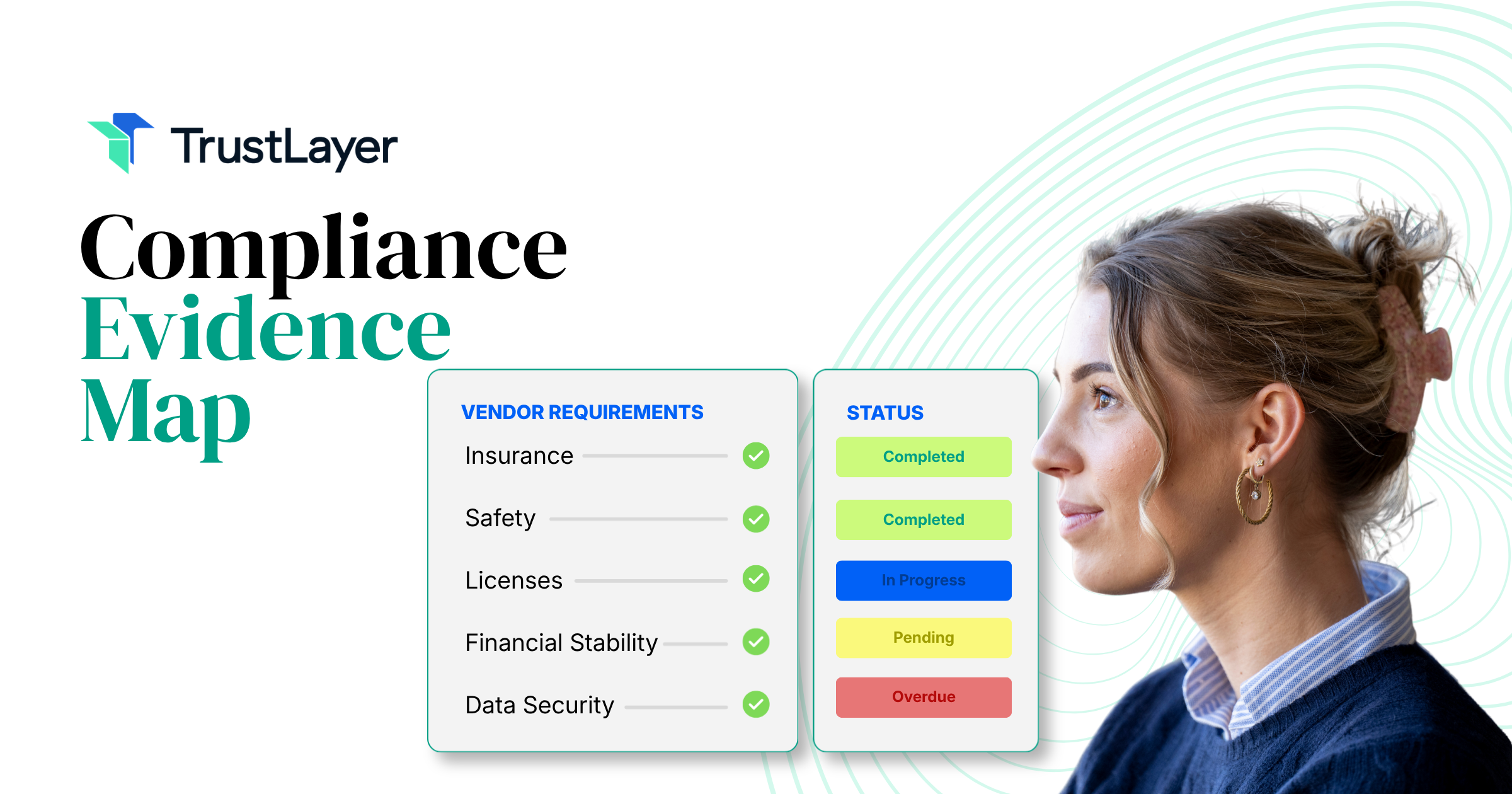
- Percentage of vendors with current, verified compliance documentation
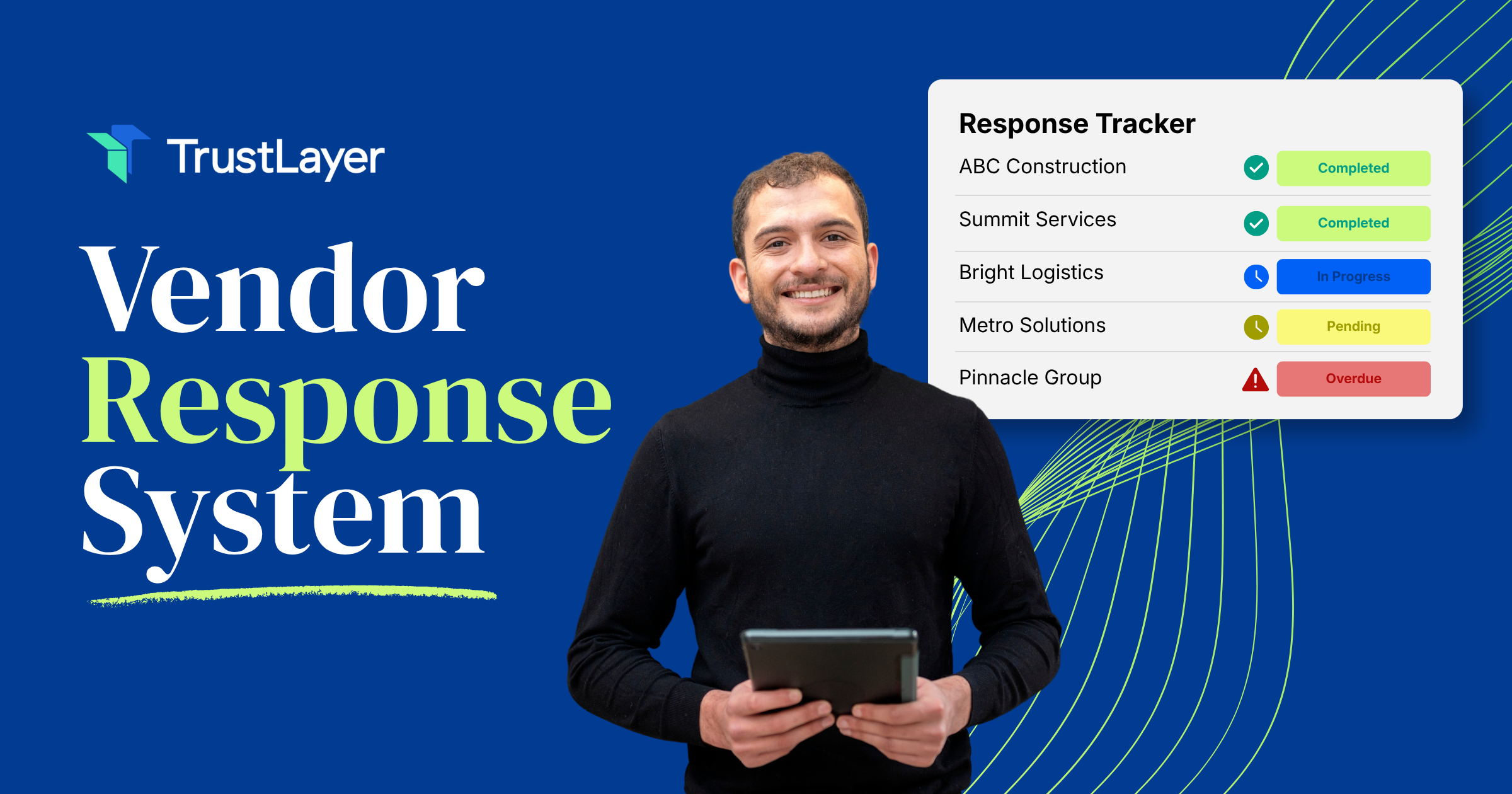
- List of high-risk vendors with outstanding compliance gaps
- Trend data showing whether the vendor population is becoming more or less compliant over time
- Escalation items requiring board awareness or approval
The goal is continuous awareness, not periodic snapshots. If your dashboard is updated only for quarterly board meetings, you're performing compliance theater rather than managing actual risk. The template should be designed to pull data from live sources so the numbers reflect reality, not a snapshot frozen in time three weeks before the meeting.
Certificate of Insurance (COI) Tracking Reports
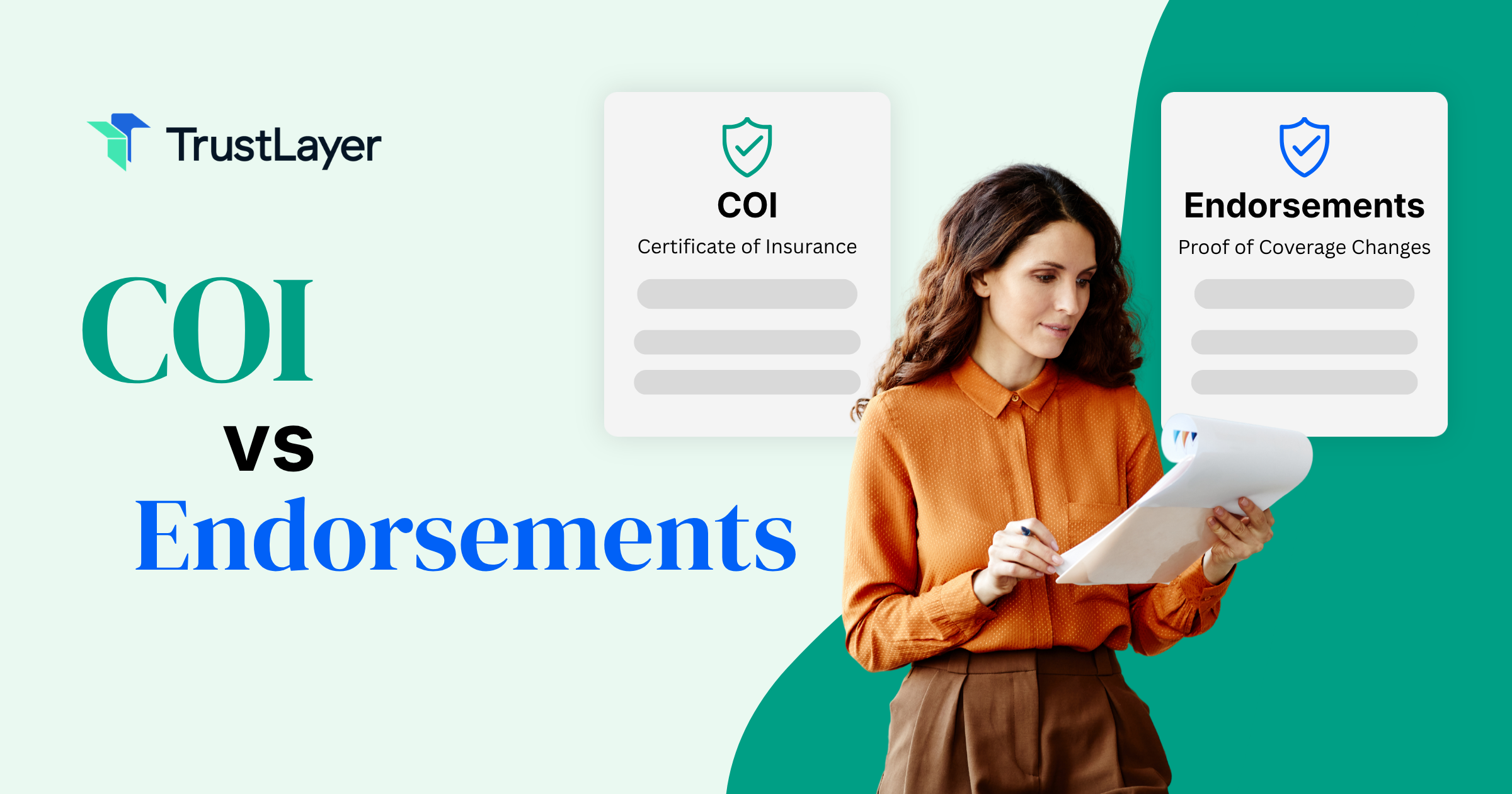
COI tracking is one of those areas where surface-level documentation creates an expensive illusion of protection. Having a certificate on file means almost nothing if the policy behind it has lapsed, the coverage limits are insufficient, or the named insured doesn't match the contracting entity. Think of it like a car with an engine but no wheels: it looks complete until you actually need it to work.
A board-level COI tracking report template should include:
- Total certificates on file versus total required
- Percentage of certificates currently verified and active
- Number of expired or non-compliant certificates, broken down by business unit or project
- The dollar value of contracts operating without adequate insurance verification
- Timeline for remediation of outstanding gaps
That last point matters more than most teams realize. Telling a board that 12% of your vendor certificates are expired is concerning. Telling them that 12% are expired and the remediation plan will close all gaps within 30 days is a fundamentally different conversation. Templates that build in remediation timelines shift the discussion from blame to action.
Tailoring Reports to Board Member Expectations
Even the best template fails if it doesn't account for the audience. Board members are not compliance professionals. They're business leaders, financial experts, and governance specialists who need compliance information translated into terms they already understand: dollars, risk probability, strategic impact, and competitive positioning.
Translating Technical Compliance into Business Impact
The single biggest mistake compliance teams make in board reporting is leading with technical language. A statement like "14 vendors are non-compliant with our minimum GL coverage requirements" means nothing to a board member who doesn't know what GL coverage is or why it matters. Reframe it: "14 vendors representing $8.2 million in active contracts are operating without sufficient liability insurance, exposing the organization to uninsured loss in the event of a claim."
Same data. Completely different impact. Every data point in your report should pass a simple test: Does this tell the board what could go wrong and how much it could cost? If the answer is no, either reframe it or remove it. Compliance teams often resist this translation exercise because it feels like oversimplification. It's not. It's communication.
Build a "business impact" column into your templates. Next to every compliance metric, include a brief statement of what non-compliance means in financial or operational terms. This single addition transforms a compliance report from a technical document into a strategic briefing.
Prioritizing Critical Vulnerabilities and Mitigation Plans
Boards don't want a list of everything wrong. They want to know what's most likely to hurt the organization and what's being done about it. A compliance report that presents 47 findings with equal weight is practically worthless because it forces board members to do the prioritization work themselves.
Your template should include a "top five risks" section that ranks vulnerabilities by a combination of likelihood and potential impact. For each risk, include the current status, the mitigation plan, the responsible owner, and the expected resolution date. This format mirrors how boards already approach strategic risks, making it immediately accessible.
One approach that works well is to use a simple matrix that plots compliance gaps on two axes: probability and financial exposure. Gaps in the upper-right quadrant (high probability, high exposure) get board attention. Everything else goes into an appendix. This isn't about hiding problems. It's about respecting the board's time and focusing their energy where it matters most.
Best Practices for Maintaining Reporting Accuracy
A beautiful template filled with bad data is worse than no template at all. It creates false confidence, which is the most dangerous state a compliance program can occupy. The practices that keep your reporting honest are less glamorous than template design, but they're more important.
Automating Data Collection for Real-Time Insights
Manual data collection is the enemy of accuracy. Every time a human copies a number from one system to another, there's a chance of error. Every time someone updates a spreadsheet by hand, there's a chance the update gets missed. The shift from periodic, manual reporting to continuous, automated data collection is the difference between a fire drill mentality and a sustainable practice.
Automated dashboards should pull directly from your source systems: your insurance tracking platform, your vendor management database, your policy management tools. The goal is to create a reporting pipeline where the data in your board template reflects the actual state of your compliance program at any given moment, not the state it was in when someone last remembered to update the spreadsheet.
This doesn't mean automation replaces human judgment. Someone still needs to interpret the data, write the executive summary, and make recommendations. But the underlying numbers should flow automatically, so your team spends its time on analysis rather than data entry.
Establishing a Consistent Reporting Cadence
Reporting cadence matters more than most teams appreciate. If you only report to the board annually, you're giving them a single data point with no context. They can't see trends, assess whether mitigation plans are working, or make informed decisions about resource allocation.
Quarterly reporting is the minimum for most organizations. Monthly internal reports that feed into quarterly board reports create a rhythm that keeps compliance visible and prevents the scramble that happens when teams try to assemble six months of data in a week. The cadence should match the pace of change in your risk environment. If you're onboarding vendors rapidly or operating in a heavily regulated industry, monthly board updates may be appropriate.
Consistency also means using the same template structure every quarter. When board members see the same format repeatedly, they learn where to look for the information they care about. They can spot changes faster because the layout is familiar. Changing your template every quarter forces the board to relearn how to read your report, which wastes the limited attention you've been given.
A governance model that centralizes strategic oversight with the risk team while decentralizing tactical execution to site or project leads prevents bottlenecks without sacrificing visibility. Your reporting templates should reflect this structure, rolling up site-level data into enterprise views that the board can consume without getting lost in operational detail.
Strengthen Your Compliance Strategy with TrustLayer
The gap between knowing what a good compliance report looks like and consistently producing one comes down to the underlying systems. If your team is still chasing certificates of insurance through email threads, manually verifying coverage details over the phone, and assembling board reports from disconnected spreadsheets, even the best template in the world won't save you. The foundation has to be solid before the reporting can be trustworthy.
Building board-ready compliance reports starts with having clean, verified, up-to-date compliance data. That means moving away from the manual correspondence, collection, and verification processes that consume hours of staff time and introduce errors at every step. The organizations that report confidently to their boards are the ones that have first solved the data problem.
If you're ready to move from reactive audit preparation to a continuous awareness model, TrustLayer can help you build that foundation. As a purpose-built platform for COI tracking and vendor compliance document management, TrustLayer automates the painful manual work so your team can focus on the analysis and strategy that boards actually care about. Set up a time to talk with our team and see how it works. And while you're at it, check out other TrustLayer articles on risk management and compliance best practices to keep sharpening your approach.
You might also like