Compliance Evidence Map: What to Request and Why
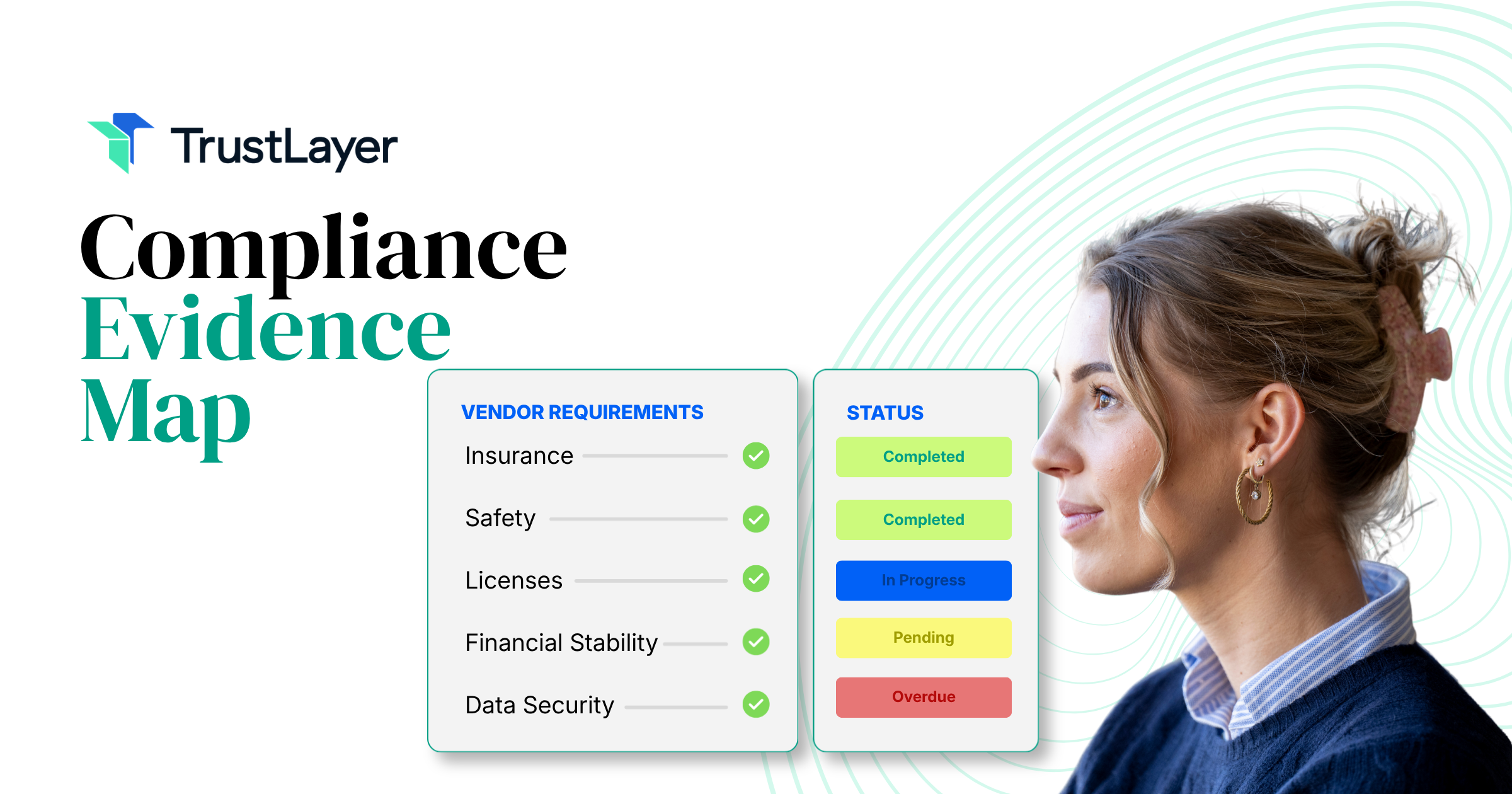
Every year, companies lose millions in claims that could have been avoided if someone had simply verified the right documents at the right time. A compliance evidence map is the structured approach that tells your team exactly what to request from vendors, subcontractors, and partners, and why each piece of documentation matters. Think of it as your risk management playbook: without one, you're essentially trusting that everyone in your supply chain is telling the truth, carrying the right coverage, and staying current on their obligations. That trust, without verification, is an expensive illusion. The organizations that get this right don't just collect documents for the sake of filing cabinets or digital folders. They build a deliberate framework that connects each requested artifact to a specific risk, a regulatory requirement, or a contractual obligation. The difference between a company that survives a major claim and one that gets buried by it often comes down to whether someone mapped out the evidence they needed before the crisis hit, not after.
The Strategic Importance of a Compliance Evidence Map
A compliance evidence map isn't a checklist you download from a template library and forget about. It's a living document that connects your organization's risk profile to the specific proof you need from every third party you work with. The strategic value here is straightforward: you can't manage risks you can't see, and you can't see risks if you're not asking for the right evidence.
Most organizations collect certificates of insurance and call it a day. But a COI without the right endorsements is like a car with an engine and no wheels: it looks like it should work, but it won't get you anywhere when you actually need it. The map forces your team to think beyond the surface and ask harder questions about what's actually covered, what's excluded, and where the gaps hide.
Defining Evidence-Based Risk Management
Evidence-based risk management means every decision about vendor approval, contract renewal, or project authorization is backed by verified documentation, not assumptions. You're not relying on a vendor's word that they carry general liability coverage. You're holding the declaration page that proves it, confirming the limits match your contract requirements, and checking that the policy hasn't lapsed since you last checked.
This approach treats compliance artifacts as data points, not paperwork. When you aggregate evidence across your vendor portfolio, patterns emerge: which industries consistently underinsure, which contractors let policies lapse between renewals, which partners carry exclusions that could leave you exposed. That data becomes the foundation for smarter underwriting decisions and tighter contract language.
The Shift from Passive to Proactive Verification
The old model was reactive. You'd request a COI at the start of a contract, file it somewhere, and never look at it again until a claim forced you to dig it out. By then, the policy might have been canceled six months ago. This is compliance theater: it looks like you're managing risk, but you're really just performing for auditors.
Proactive verification flips this entirely. Instead of a fire drill every time an audit or incident occurs, your team maintains a constant awareness of compliance status across your entire vendor ecosystem. You know, at any given moment, which vendors are compliant, which are expiring, and which have gaps that need attention. The shift isn't just operational: it's cultural. It moves risk management from a periodic exercise to a sustainable practice embedded in daily workflows.
Core Insurance Documentation to Request
Insurance documentation forms the backbone of any compliance evidence map. But not all documents carry equal weight, and knowing what to request and what each document actually proves separates effective risk programs from ones that just generate paper.
Standard ACORD Certificates of Insurance
The ACORD certificate is the most commonly requested compliance document in business relationships, and it's also the most commonly misunderstood. An ACORD 25 (for liability) or ACORD 28 (for property) provides a snapshot of a vendor's insurance coverage at a specific moment in time. It lists the carrier, policy number, effective dates, and coverage limits.
Here's what most people miss: a COI is informational only. It doesn't grant you any rights, doesn't guarantee coverage will remain in force, and can be outdated the day after it's issued. That's why your evidence map needs to specify not just the COI itself but the frequency of renewal verification. Requesting a certificate once at contract signing and never again is a fundamental gap in your risk program.
Your map should specify minimum acceptable limits by vendor category. A janitorial service and a structural engineering firm carry very different risk profiles, and your required limits should reflect that. A blanket $1 million requirement across all vendors is lazy risk management.
Endorsements and Policy Declarations
Endorsements are where the real story lives. A COI might show $2 million in general liability. Still, without reviewing the actual endorsements, you won't know if the policy excludes the exact type of work your vendor is performing for you. Common exclusions that catch companies off guard include pollution liability, professional errors, and work performed at heights.
Policy declaration pages confirm the actual terms of coverage. They show deductibles, retroactive dates on claims-made policies, and any coverage modifications. Your evidence map should flag which vendor categories require endorsement review, not just certificate collection. For high-risk vendors like construction subcontractors, environmental services, or technology providers handling sensitive data, requesting and reviewing endorsements isn't optional. It's essential.
Waivers of Subrogation and Additional Insured Status
These two items are among the most frequently requested and most frequently botched elements of insurance compliance. A waiver of subrogation prevents a vendor's insurance carrier from coming after your company to recover claim payments. Additional insured status extends a vendor's liability policy to cover your organization for claims arising from the vendor's work.
Both need to appear as endorsements on the actual policy, not just checked boxes on a COI. I've seen companies assume they were protected as additional insureds because a box was checked on a certificate, only to discover during a claim that no endorsement was ever added to the policy. The certificate was practically worthless.
Your evidence map should require copies of the actual additional insured and waiver of subrogation endorsements for any vendor whose work could generate liability claims against your organization. This is non-negotiable for construction, facilities management, and professional services vendors.
Operational and Regulatory Compliance Artifacts
Insurance is only one layer of the compliance picture. Operational and regulatory documents verify that your vendors are legally authorized, properly trained, and maintaining the safety standards your contracts require.
Professional Licenses and Certifications
Every state has licensing requirements for specific trades and professions. Electricians, plumbers, engineers, architects, medical professionals, environmental consultants: the list varies by jurisdiction and industry. Your evidence map should identify which vendor categories require license verification and specify the issuing authority for each.
Don't just collect a photocopy of a license and move on. Verify it against the issuing body's database. License numbers can be fabricated, and licenses can be suspended or revoked between the time they're copied and the time you file them. Several states now offer real-time verification APIs, and your process should use them where available.
Certifications like LEED accreditation, ISO 9001, or industry-specific safety certifications serve a different purpose than licenses. They demonstrate competency and commitment to standards, and they can be relevant to your contractual requirements. Map each certification to the specific contract clause that requires it so your team knows exactly why they're collecting it.
Safety Records and OSHA Logs
For any vendor performing physical work on your premises or job sites, safety records are critical evidence. OSHA 300 logs document workplace injuries and illnesses. Experience Modification Rates (EMR) compare a company's claims history to the industry average: an EMR above 1.0 signals higher-than-average risk.
Your evidence map should specify acceptable EMR thresholds by vendor category. Many organizations draw the line at 1.0, but high-risk industries like heavy construction or manufacturing may warrant stricter thresholds. Request three years of OSHA logs to identify trends, not just a single year's snapshot.
Safety training records, toolbox talk documentation, and drug testing programs round out the safety evidence picture. These documents demonstrate that a vendor isn't just lucky with their injury numbers but is actively investing in prevention.
Why Specificity Matters: The Risks of Incomplete Data
Collecting some documents is not the same as collecting the right documents. The gap between "we have a file" and "we have verified, specific evidence" is where most compliance programs fail, and where most claims find their opening.
Identifying Coverage Gaps and Exclusions
Coverage gaps hide in the details. A vendor might carry general liability but exclude completed operations coverage, meaning any claim arising after their work is finished falls outside the policy. Another might have professional liability but with a retroactive date that doesn't cover the period when they performed your project.
Your compliance evidence map should include a gap analysis checklist for each vendor category. This checklist identifies the required coverages, the unacceptable exclusions, and the minimum limits for each line. Without this level of specificity, your team is collecting documents without actually reading them, which is arguably worse than not collecting them at all because it creates a false sense of security.
Fragmented visibility between project teams, site managers, and central risk management is the primary failure mode here. A site manager might approve a subcontractor based on a COI that looks fine at first glance, while the central risk team would immediately spot the missing pollution exclusion buyback. Centralizing control over compliance standards while decentralizing the tactical execution of document collection prevents these gaps from hiding until a claim reveals them.
The Legal Implications of Fraudulent Documents
Fraudulent COIs are more common than most risk managers want to admit. Altered dates, fabricated policy numbers, inflated coverage limits: these aren't theoretical risks. Insurance fraud investigators regularly encounter doctored certificates, and the consequences for the requesting party can be severe if they fail to verify.
If your organization accepts a fraudulent COI without verification and a claim occurs, you may face allegations of negligent vendor management. Courts have held companies liable for failing to verify insurance documents when reasonable verification methods were available. Your evidence map should include verification steps for each document type, whether that's calling the carrier directly, using a verification platform, or checking against state databases.
The legal exposure extends beyond individual claims. Patterns of accepting unverified documents can trigger regulatory scrutiny, increase your own insurance premiums, and damage your reputation with carriers and brokers. Building verification into your evidence map isn't just good practice: it's legal self-defense.
Building a Scalable Evidence Collection Process
Knowing what to request is only half the equation. The other half is building a process that can handle the volume without drowning your team in manual work.
Automating Requests and Renewals
Manual compliance tracking breaks down at scale. If you're managing 50 vendors, spreadsheets and email reminders might work. At 500 vendors, they absolutely won't. The math is simple: if each vendor requires annual renewal verification across three to five document types, a 500-vendor portfolio generates 1,500 to 2,500 individual verification tasks per year. No team can sustain that manually without errors and delays.
Automation should handle the repetitive parts: sending renewal requests at predetermined intervals, flagging expiring documents, and escalating non-responses. The key distinction is between synchronous and asynchronous request patterns. High-risk or regulated activities warrant synchronous verification, meaning work doesn't begin until compliance is confirmed. Routine operations can follow asynchronous patterns where requests go out on schedule, and exceptions are flagged for human review.
Your evidence map should specify which vendor categories fall into each pattern. A roofing subcontractor starting work tomorrow needs synchronous verification. A janitorial service on a multi-year contract can follow an asynchronous renewal cycle.
Establishing a Centralized Source of Truth
Data silos are where compliance programs go to die. When project managers keep their own vendor files, site supervisors maintain separate spreadsheets, and the risk team has yet another system, nobody has a complete picture. A vendor might be fully compliant in one system and flagged as expired in another.
A centralized repository doesn't mean one person controls everything. The governance model centralizes strategic oversight with the risk team while decentralizing tactical management to site or project leads. The risk team sets the standards, defines the evidence map, and monitors aggregate compliance metrics. Local teams handle day-to-day collection and vendor communication within those standards.
This structure prevents administrative bottlenecks while maintaining consistency. The risk team shouldn't be chasing down individual COIs from subcontractors on a job site in another state. But they absolutely should be setting the requirements for what those COIs must contain and monitoring whether the local team is enforcing them.
Enhance Your Risk Strategy with TrustLayer
Mapping your compliance evidence requirements is the foundation, but executing that map across hundreds or thousands of vendor relationships is where most organizations hit a wall. The gap between knowing what to request and actually collecting, verifying, and maintaining that evidence is where risk lives.
If your team is still managing compliance documents through email chains, shared drives, and manual follow-ups, you're spending time and money on a process that technology has already solved. TrustLayer helps risk teams automate the collection, storage, and verification of compliance documents like COIs, so your people can focus on analysis and strategy instead of chasing paperwork.
Building a compliance evidence map gives you the blueprint. The next step is making sure you have the tools to execute it consistently, at scale, without the manual burden that leads to gaps and errors. Set up a time to talk with our team to see how TrustLayer can support your compliance program, and explore other TrustLayer articles for more practical guidance on modern risk management.
You might also like