Compliance Profile Reset: Requirements Vendors Complete

Every vendor relationship carries a shelf life on its compliance documentation. Certificates expire, policies change, regulations shift, and the data your organization collected twelve months ago may no longer reflect reality. That gap between what you think you know about a vendor and what's actually true is where real risk lives. A compliance profile reset is the structured process that closes that gap: it forces vendors to re-verify their insurance, legal standing, safety credentials, and tax documentation on a defined schedule or after specific trigger events. Organizations that treat this as a mere administrative chore tend to discover the hard way that an outdated certificate of insurance is about as useful as a smoke detector without batteries. It looks like protection, but it won't save you when things go wrong. The requirements vendors must complete during a reset vary by industry, contract size, and risk tier, but the fundamentals are remarkably consistent. Getting them right is the difference between genuine risk coverage and expensive paperwork theater.
Understanding the Compliance Profile Reset Process
A compliance profile reset is not the same thing as an annual renewal reminder. It's a full re-evaluation of a vendor's standing across every compliance dimension your organization tracks: insurance coverage, legal documentation, safety records, certifications, and financial disclosures. Think of it less like hitting "refresh" on a browser and more like a vehicle inspection. You're not just checking that the car starts; you're verifying brakes, tires, emissions, and structural integrity all at once.
The reset process typically begins when your risk or procurement team flags a vendor for re-verification, either on a scheduled cycle or because something triggered an early review. The vendor then receives a checklist of documents and attestations they need to submit, often through a digital portal. Your team reviews each submission against current requirements, flags deficiencies, and either approves the vendor for continued work or places them in a hold status until gaps are resolved.
What makes this different from piecemeal document collection is the comprehensiveness. Instead of chasing a single expired COI, you're evaluating the entire vendor profile at once. This approach catches problems that slip through when you're only looking at one document at a time, like a vendor whose general liability policy renewed but whose workers' compensation lapsed two months earlier.
Why Organizations Require Periodic Profile Resets
Vendor compliance isn't static. A subcontractor who was fully insured and certified in January might have let a policy lapse by June. A supplier's safety record might have deteriorated after a workplace incident. Regulatory requirements themselves change: new state laws, updated OSHA standards, revised contractual minimums from your own insurance carrier.
Periodic resets prevent your organization from operating on stale assumptions. I've seen companies discover during a reset that a vendor's insurance carrier had gone into receivership, meaning the policy listed on the COI was technically backed by nothing. That's the kind of thing you don't catch with a passive "let us know if anything changes" approach.
The financial exposure is real. If a vendor causes property damage or an employee injury and their coverage has lapsed, your organization's own policies may be on the hook. Periodic resets also satisfy audit requirements from regulators, insurance underwriters, and internal governance boards who want documented proof that your vendor management program is active, not just theoretical.
Trigger Events for Compliance Re-Verification
Beyond scheduled annual or semi-annual resets, certain events should automatically initiate a re-verification cycle. Contract renewals are the most obvious: any time you extend or modify a vendor agreement, their compliance profile should be reviewed from scratch.
Other common triggers include:
- A change in the vendor's scope of work, especially if it introduces new risk categories (e.g., a cleaning company adding hazardous waste disposal services)
- Mergers, acquisitions, or ownership changes at the vendor's organization
- A reported safety incident, OSHA citation, or regulatory enforcement action
- Notification from the vendor's insurance carrier of a policy cancellation or material change
- Changes to your own organization's insurance requirements or regulatory obligations
- A claim filed against the vendor under a project connected to your organization
The key principle is simple: any event that could change the relationship's risk profile should prompt a fresh look at the vendor's compliance documentation. Waiting for the next scheduled reset after a trigger event is like waiting for your next physical after you've already broken your arm.
Essential Insurance Documentation for Vendors
Insurance documentation sits at the center of most compliance resets because it represents the most direct financial protection for your organization. A vendor's insurance status can change rapidly: policies cancel, limits adjust, endorsements get dropped, and carriers shift coverage terms at renewal. The documents vendors need to provide during a reset go well beyond simply forwarding last year's certificate with a new date stamped on it.
Updating Certificates of Insurance (COI)
The certificate of insurance is the foundational document in any vendor compliance profile, but it's also one of the most misunderstood. A COI is a snapshot, not a guarantee. It summarizes coverage as of the issue date, but it doesn't bind the insurer to maintain that coverage. That's why resets matter: the COI your vendor submitted eight months ago might describe a policy that no longer exists in its original form.
During a reset, vendors should provide a freshly issued COI that reflects their current coverage. Your team should verify several specific elements:
- The named insured matches the legal entity you've contracted with (not a parent company, not a DBA that isn't covered)
- Your organization is listed as an additional insured where required by contract
- Policy effective dates confirm active coverage through the anticipated work period
- Coverage types match your contractual requirements: general liability, auto liability, umbrella/excess, professional liability, and workers' compensation as applicable.
- Policy numbers are current, not recycled from a prior term
One pattern I've seen repeatedly: a vendor submits a COI showing adequate limits, but the policy number is from a prior term. The certificate looks valid at a glance, but the actual current policy has different terms or lower sublimits. Automated verification catches this; manual review often doesn't.
Verifying Policy Endorsements and Limits
A COI tells you coverage exists. Endorsements tell you whether that coverage actually protects your organization the way your contract requires. This distinction matters enormously, and it's where many compliance programs fall short.
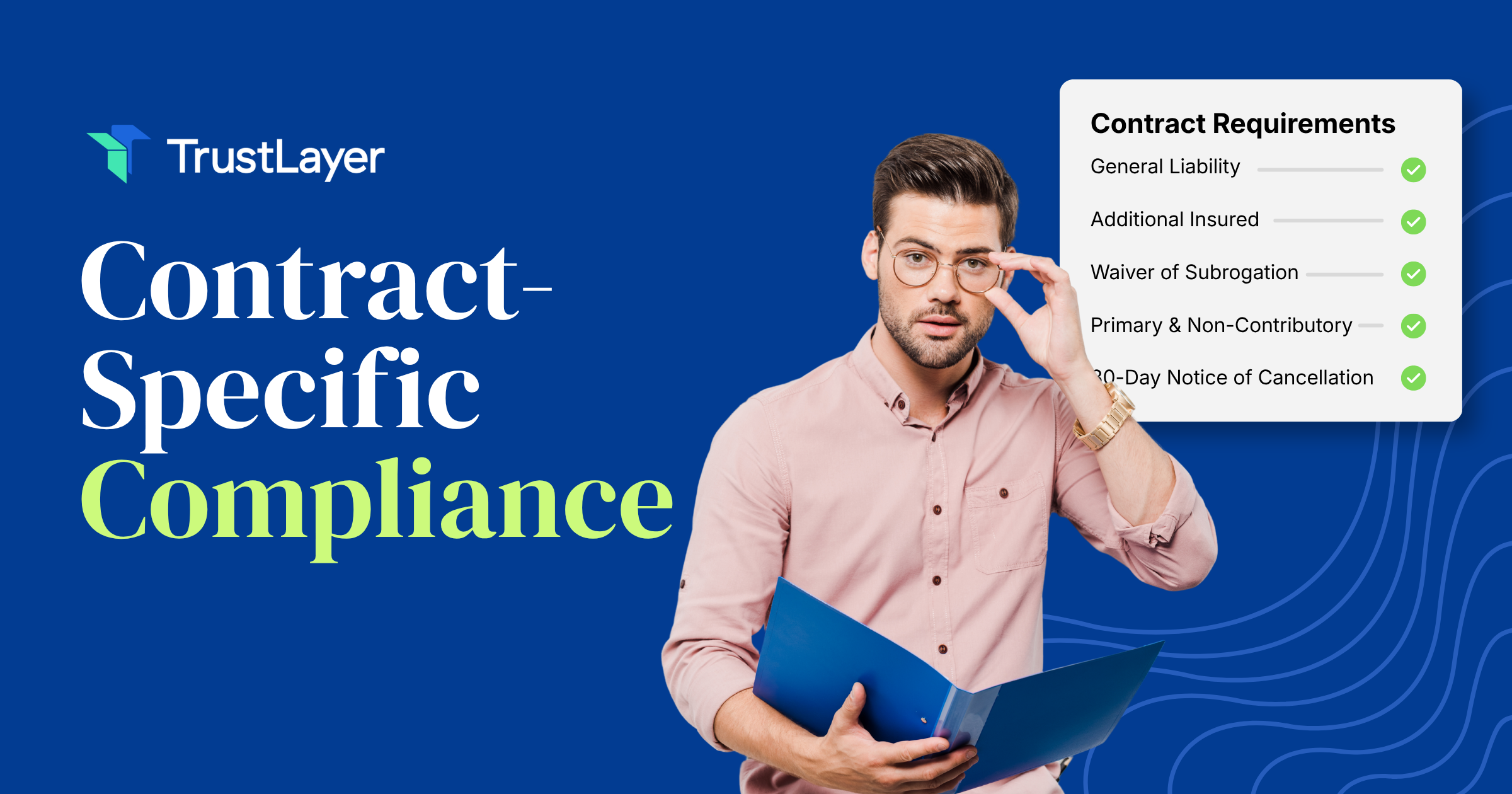
Common endorsements to verify during a reset include additional insured status (both ongoing and completed operations), waiver of subrogation in your favor, and primary and non-contributory language. Without these endorsements actually attached to the vendor's policy, the promises on the COI are practically worthless in a claims scenario. It's like having a car with an engine but no wheels: the core component is there, but it won't get you anywhere when you need it.
Limits verification is equally critical. Your contracts likely specify minimum coverage amounts, and those minimums may have changed since the vendor was last onboarded. A reset is the right time to confirm that the vendor's per-occurrence limits, aggregate limits, and any applicable sublimits still meet your current thresholds. If your organization raised its general liability minimum from $1 million to $2 million per occurrence since the last review cycle, every vendor in the affected risk tier needs to demonstrate compliance with the new standard.
Administrative and Legal Requirement Checklists
Insurance is the headline item, but a thorough compliance profile reset extends into administrative and legal territory. Tax documentation, safety records, and industry certifications all have expiration dates and update requirements that can create exposure if they're overlooked.
Tax Documentation and W-9 Renewals
The IRS doesn't technically require annual W-9 renewals from vendors, but best practice and many organizational policies call for re-verification during a compliance reset. Why? Because vendor information changes. Companies restructure, change their tax classification, update their EIN, or shift from sole proprietorship to LLC status. An outdated W-9 can cause incorrect information in your 1099 filings, creating tax reporting headaches and potential penalties.
During a reset, request a current W-9 from each vendor and compare it against what's on file. Watch for:
- Changes in legal name or business name
- Updated taxpayer identification numbers
- Shifts in tax classification (e.g., from S-Corp to C-Corp)
- New addresses that might affect state tax withholding requirements
Some organizations also use the reset as an opportunity to verify that vendors aren't on any federal debarment or exclusion lists, particularly in government contracting, healthcare, and financial services. A quick check against the SAM.gov exclusion database takes minutes and can prevent a serious compliance violation.
Safety Records and Industry-Specific Certifications
For vendors performing physical work on your premises or in your supply chain, safety documentation is non-negotiable. A compliance reset should include updated OSHA 300 logs (or the equivalent in your jurisdiction), current Experience Modification Rate (EMR) data from the vendor's workers' compensation carrier, and any site-specific safety certifications your contracts require.
EMR data is particularly telling. An EMR above 1.0 indicates a vendor's claims history is worse than the industry average. If a vendor's EMR has climbed significantly since their last compliance review, that's a red flag worth investigating before authorizing continued work.
Industry-specific certifications vary widely. A roofing contractor might need a current fall protection certification. An IT services vendor might need SOC 2 Type II attestation. An environmental services company might require hazardous waste handler credentials. The reset checklist should be tailored to each vendor's scope of work, not applied as a one-size-fits-all template. Generic checklists miss the specific certifications that actually matter for each vendor's risk profile.
Best Practices for a Seamless Reset Experience
Running compliance resets across dozens or hundreds of vendors can feel like herding cats if the process isn't well-designed. The organizations that handle this well share a few common traits: they centralize strategic oversight while distributing tactical execution, they use technology to eliminate manual bottlenecks, and treat compliance data as a living system rather than a filing cabinet.
Utilizing Digital Compliance Platforms
Paper-based compliance tracking died a quiet death years ago, but plenty of organizations are still running their vendor compliance programs on spreadsheets, email chains, and shared drives. This creates exactly the kind of fragmented visibility that hides coverage gaps until a claim forces them into the open.
Digital compliance platforms consolidate the entire reset workflow into a single system. Vendors receive automated notifications when a reset is due, upload their documents to a central portal, and receive real-time feedback on whether their submissions meet requirements. Your risk team gets a dashboard view of compliance status across the entire vendor population instead of piecing together information from six different inboxes.
The shift from periodic reporting to continuous awareness changes the institutional mindset around compliance. Instead of performing a "fire drill" before an audit, your team operates in a constant state of knowing where things stand. Staff can answer the question "Is Vendor X compliant right now?" at any moment, without pulling files or making phone calls.
Maintaining Real-Time Data Accuracy
A compliance platform is only as good as the data inside it. Real-time accuracy requires two things: automated data feeds where possible, and clear accountability for manual updates where automation isn't available.
For insurance data specifically, some platforms can pull policy status information directly from carrier databases, flagging cancellations or material changes as they happen rather than waiting for the next reset cycle. This turns the reset from a catch-up exercise into a confirmation step: you're verifying what you already know rather than discovering surprises.
On the vendor side, the most effective programs make it easy for vendors to keep their profiles current between resets. If updating a document requires logging into an unfamiliar system, navigating five menus, and uploading in a specific file format, vendors will procrastinate. If it's as simple as responding to an email with an attachment, compliance rates climb dramatically. The goal is to make the right behavior the easy behavior, both for your internal team and for the vendors you depend on.
Centralizing control of compliance standards at the risk management level while letting project managers or site leads handle day-to-day vendor interactions prevents bottlenecks. Your risk team sets the rules; the people closest to the work enforce them. This governance model scales in a way that fully centralized programs simply can't.
Next Steps: Explore Resources and Expert Consultations
A well-executed compliance reset protects your organization from the slow accumulation of risk that happens when vendor documentation goes stale. The requirements vendors complete during this process- updated COIs, verified endorsements, current tax forms, safety records, and industry certifications- form a comprehensive picture of whether each vendor relationship is still adequately covered. Skip any piece, and you're operating with blind spots.
The organizations that do this best have moved beyond manual tracking and periodic scrambles. They've built systems that provide continuous visibility into vendor compliance status, turning what used to be an annual headache into an ongoing, sustainable practice. If your current process still relies on spreadsheets and email reminders, you're almost certainly carrying more uninsured risk than you realize.
If you're looking to move from reactive compliance management to something more proactive, TrustLayer is worth a serious look. It automates the collection, storage, and verification of compliance documents like COIs, removing the manual burden that makes resets so painful for both your team and your vendors. Set up a time to talk with our team and see how a purpose-built platform handles the process. And while you're at it, check out other TrustLayer articles for deeper guidance on vendor risk management, insurance tracking, and building a compliance program that actually holds up when it matters.
You might also like

.png)