Exception Governance: Accept With Conditions Without Silent Risk

Every organization has exceptions. A vendor can't meet the exact insurance threshold. A contractor's policy lapses for two weeks during renewal. A project timeline forces you to onboard a subcontractor before their updated certificate of insurance arrives. These situations happen constantly, and the typical response is either a blanket waiver or a quiet look-the-other-way approval that lives in someone's inbox and nowhere else. That's where silent risk takes root: not in the exceptions themselves, but in how they're handled. The real danger isn't that you accepted a deviation from your standards. It's that six months later, nobody remembers the deviation existed, the conditions attached to it were never enforced, and a claim lands on your desk with no documentation trail to explain why you allowed it. Exception governance, done right, means accepting conditions with full visibility, not pretending the risk doesn't exist. This is the difference between a calculated business decision and an expensive surprise. What follows is a practical framework for building that kind of governance into your risk program: one that acknowledges reality without letting silent exposures pile up unnoticed.
The Anatomy of Silent Risk in Manual Exception Handling
Most risk managers understand that exceptions are inevitable. The problem isn't the exception itself. It's the gap between granting an exception and tracking what happens afterward. Manual exception handling, whether it lives in spreadsheets, email threads, or sticky notes on a desk, creates conditions where risk goes quiet. Not gone, just invisible.
Think of it like approving a tenant to move in before their renter's insurance activates. You know the gap exists. You might even have a verbal agreement that they'll provide proof of coverage within 30 days. But if nobody follows up, that 30-day window stretches into six months, and you're carrying uninsured exposure without realizing it. That's silent risk in its most common form.
Why Standard Waivers Create Insurance Gaps
A standard waiver is a blunt instrument. It says "we acknowledge this party doesn't meet our requirements, and we're proceeding anyway." What it typically doesn't say is under what conditions, for how long, with what compensating controls, or who's responsible for closing the gap. The result is an insurance gap hiding behind a piece of paper that looks like due diligence.
Consider a general contractor who requires $2 million in general liability from all subcontractors. A sub comes in at $1 million. Someone issues a waiver. That waiver rarely specifies whether the sub needs to increase coverage by a certain date, whether the GC is self-insuring the delta, or whether the project scope should be restricted to limit exposure. The waiver becomes a permission slip with no expiration date and no follow-through mechanism.
The Hidden Cost of Inconsistent Approval Workflows
When different project managers, site leads, or regional offices each handle exceptions their own way, you get a patchwork of risk decisions with no central visibility. One office might require VP sign-off for any coverage shortfall. Another might let a project coordinator approve exceptions under $500,000 in exposure. A third might not even have a formal process.
This inconsistency creates two problems. First, it's nearly impossible to aggregate your actual risk exposure across the organization. Second, when a claim hits, your legal team has to reconstruct the decision-making process from scattered emails and conflicting records. The cost isn't just the claim itself: it's the legal fees, the regulatory scrutiny, and the reputational damage that comes from looking like you didn't have your house in order.
Establishing a Conditional Acceptance Framework
The alternative to blanket waivers is a conditional acceptance model. Instead of a binary yes-or-no decision, you create a structured middle ground: yes, but only under these specific conditions, for this specific period, with these specific people accountable for resolution.
This framework turns exceptions from quiet liabilities into documented, time-bound business decisions. The key word is "conditions." Every approved exception should carry explicit requirements for what needs to happen next, when it needs to happen, and what occurs if those conditions aren't met. Without conditions, an exception is just a waiver with a nicer name.
Defining Thresholds for Acceptable Deviations
Not every exception carries the same weight. A vendor whose auto liability is $50,000 below your threshold on a low-risk service contract is a different conversation than a subcontractor with no workers' compensation coverage on a construction site. Your framework needs clear tiers.
A practical approach breaks deviations into three categories:
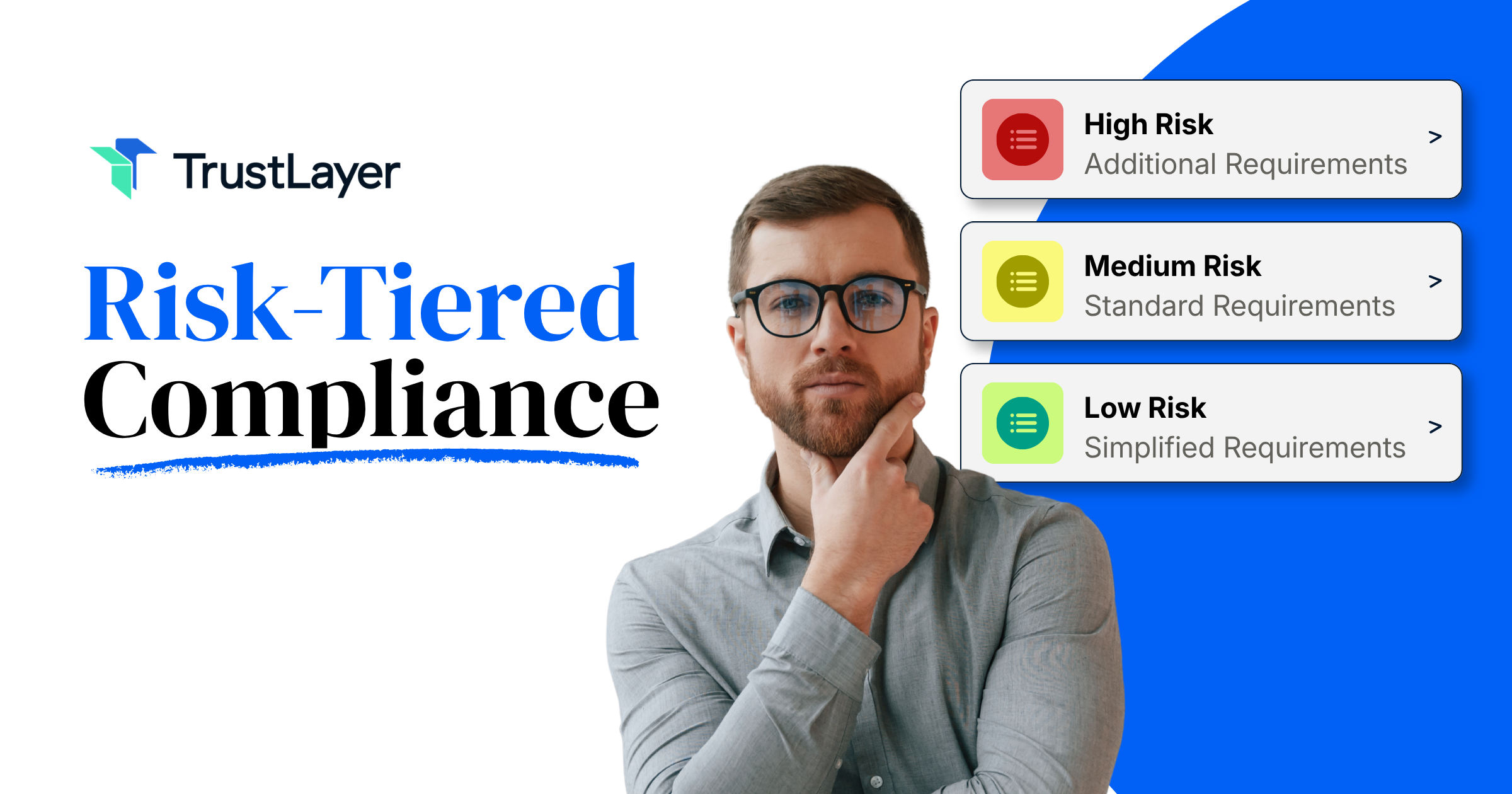
- Minor deviations (less than 10% below required limits on non-critical coverage lines) can be approved at the project level with documentation and a 30-day cure period.
- Moderate deviations (10-25% below requirements or gaps in secondary coverage) require risk manager approval, compensating controls, and a 15-day cure period.
- Major deviations (more than 25% below requirements, gaps in primary coverage, or missing policies entirely) require executive sign-off, may require hold-harmless agreements or additional indemnification, and should trigger immediate remediation plans.
These thresholds will vary by industry and risk appetite, but the principle stays the same: categorize the severity, match it to an approval authority, and attach specific conditions.
Implementing Time-Bound Compliance Grace Periods
Grace periods are where most exception programs fall apart. Organizations grant them but don't enforce them. A 30-day grace period means nothing if nobody checks on day 31.
Every grace period needs three elements: a hard deadline, an assigned owner responsible for follow-up, and a defined consequence for non-compliance. That consequence might be contract suspension, scope restriction, or escalation to senior leadership. The point isn't to be punitive: it's to make the grace period real rather than theoretical.
Some organizations have found success with staggered check-ins rather than a single deadline. For a 30-day grace period, you might set automated reminders at day 10, day 20, and day 28. This gives the vendor or contractor multiple opportunities to comply and gives your team early warning if resolution isn't tracking.
Operationalizing Governance Through Automation
A governance framework only works if it's actually followed. And the honest truth is that manual processes break down at scale. When you're tracking dozens or hundreds of exceptions across multiple projects, locations, or business units, relying on human memory and calendar reminders is a recipe for gaps.
Automation doesn't replace judgment. It replaces the administrative burden that causes good governance policies to collect dust. The goal is to make the right process the easiest process: so that documenting an exception, attaching conditions, and following up on deadlines takes less effort than ignoring the problem.
Digital Documentation and The Audit Trail
Paper waivers and email approvals create a documentation problem that surfaces at the worst possible time: during a claim, an audit, or a regulatory review. Digital documentation solves this by creating a single, searchable record of every exception decision.
A proper audit trail captures who requested the exception, who approved it, what conditions were attached, when the deadline falls, and what the current status is. It should also capture any communications related to the exception, so you're not reconstructing conversations from memory two years later. This isn't about bureaucracy. It's about being able to answer a straightforward question: "Why did you allow this, and what did you do about it?"
The difference between an organization that can answer that question clearly and one that can't is often the difference between a defensible position and a costly settlement. Think of your audit trail as the engine of your governance program: without it, everything else is just a nice-looking shell.
Triggering Automated Notifications for Expiring Exceptions
Expiring exceptions are where silent risk loves to hide. An exception was granted six months ago with a 90-day cure period. The cure period passed. Nobody noticed. The exception is still active in practice, but the conditions were never met.
Automated notifications solve this by removing the reliance on individual memory. When an exception is logged with a deadline, the system should trigger alerts at predefined intervals: well before expiration, at expiration, and after expiration if the exception remains unresolved. These notifications should go to the exception owner, their manager, and the central risk team.
The post-expiration notification is critical. It shifts the conversation from "did we follow up?" to "this is now an unresolved risk that requires immediate attention." That escalation mechanism is what separates a governance program from a filing system.
Mitigating Liability with Multi-Stakeholder Approval
Single-point approval for exceptions is a liability problem waiting to surface. When one person can approve a deviation from your insurance requirements without any additional review, you're concentrating risk decision-making in a way that's both fragile and hard to defend.
Multi-stakeholder approval doesn't mean creating a bureaucratic bottleneck. It means matching the approval authority to the risk level. Minor deviations might need one signature. Moderate deviations might need the project lead and the risk manager. Major deviations should involve legal, risk management, and a senior executive. The structure ensures that no single individual carries the full weight of a decision that could expose the organization to significant loss.
This approach also creates natural checks. A project manager who's under pressure to onboard a vendor quickly might overlook a coverage gap. A risk manager reviewing the same exception brings a different perspective and different priorities. That friction is productive: it forces a conversation about whether the conditions attached to the exception are actually sufficient.
Document who approved what and why. If a claim arises, you want to show that the decision was deliberate, informed, and made by people with appropriate authority. That documentation is your best defense against allegations of negligence.
Transitioning from Reactive Waivers to Proactive Governance
Most organizations start with reactive exception handling. Something comes up, someone makes a call, and life moves on. The shift to proactive governance doesn't happen overnight, and it doesn't require a massive technology overhaul. It requires a change in mindset: from treating exceptions as one-off problems to treating them as a category of risk that deserves its own management discipline.
Start by auditing your current exceptions. How many are active right now? How many have expired conditions that were never enforced? How many lack any documentation at all? This baseline assessment is usually sobering, and that's the point. It creates urgency.
From there, the transition follows a predictable path. First, standardize your exception categories and approval tiers. Second, implement documentation requirements so every exception has a record. Third, assign ownership for follow-up on every conditional acceptance. Fourth, automate reminders and escalations so that expired exceptions don't go unnoticed.
The goal isn't perfection on day one. It's moving from a state where exceptions are invisible to a state where they're visible, tracked, and managed. That shift alone, from reactive fire drills to a continuous awareness model, dramatically reduces your silent risk exposure. Organizations that make this transition report not just fewer coverage gaps, but faster vendor onboarding, cleaner audits, and more defensible risk positions when claims do arise.
The real measure of success isn't whether you have zero exceptions. It's whether you can account for every one of them.
Optimize Your Risk Strategy with TrustLayer Experts
Exception governance isn't optional anymore. The organizations getting this right are the ones that treat conditional acceptances as documented business decisions rather than quiet workarounds. They build frameworks with clear thresholds, time-bound conditions, multi-stakeholder accountability, and automated follow-up. They can answer the question "why did you allow this?" at any point, with receipts.
The organizations getting it wrong are still relying on email chains, informal approvals, and the hope that nothing goes sideways before someone remembers to follow up. That's not risk management. That's risk avoidance theater.
If your COI tracking and exception management still runs on manual processes and good intentions, TrustLayer can help you build the infrastructure for real governance. Their platform is purpose-built for modern risk teams who need to track, verify, and manage compliance documents at scale, without the administrative drag that makes good processes unsustainable. Set up a time to talk with their team and see what a structured approach to exception governance looks like in practice. And while you're at it, explore other TrustLayer articles for more on building a risk program that actually holds up under pressure.
You might also like