What Claims Reveal About Compliance Evidence

Every claims file tells a story, and it's rarely the one anyone expected. When a loss occurs and the paperwork comes out, the real condition of your compliance program is laid bare. Certificates of insurance that looked fine in a filing cabinet suddenly reveal expired dates, missing endorsements, or limits that fall short of what the contract required. The gap between what organizations think their compliance evidence shows and what it actually proves under pressure is often enormous.
This is where claims become the most honest audit you'll ever face. A $2 million water damage claim doesn't care that someone filed a certificate of insurance two years ago. It cares whether coverage was active, whether limits were sufficient, and whether the right parties were named. What claims reveal about your compliance evidence isn't just a risk management concern: it's a financial survival question. And most organizations don't get the answer they were hoping for.
The Relationship Between Claims and Compliance Evidence
Claims are the stress test that no compliance program can fake its way through. While routine audits and quarterly reviews can be managed, massaged, and occasionally fudged, a claim strips away every layer of administrative theater. The moment a loss triggers a claim, the compliance evidence you've collected either holds up, or it doesn't. There's no middle ground.
Think of your compliance documentation like a parachute. You can fold it, inspect it, and store it properly for years. But the only moment that truly matters is the one where you pull the cord. Claims are that moment for your compliance program, and the results are binary: you're either covered, or you're exposed.
Why Claims Documentation is the Ultimate Litmus Test
A certificate of insurance sitting in a file is a snapshot, not a guarantee. It tells you what coverage looked like on one particular day, but policies lapse, get canceled, or have their terms modified constantly. The average mid-size company manages relationships with dozens or hundreds of vendors, subcontractors, and service providers. Each one carries its own insurance, and each policy has its own renewal cycle, exclusion list, and endorsement structure.
When a claim hits, the insurer doesn't check your filing system: they check the actual policy. If the vendor's general liability expired three months before the incident, that COI in your drawer is practically worthless. Claims documentation forces you to confront whether you were tracking live coverage or simply collecting paper at the start of a relationship and never looking at it again.
The organizations that handle claims well are the ones that treat compliance evidence as a living system rather than a one-time checkbox. They know that the COI collected during onboarding is only the beginning of the story, not the whole book.
The Financial Impact of Evidence Gaps
The numbers here aren't abstract. A single uninsured subcontractor incident can generate six- or seven-figure losses that land squarely on the hiring company's balance sheet. According to industry data, construction firms alone face an estimated $2 billion annually in losses tied to uninsured or underinsured subcontractors. And construction is just one sector where this problem is acute.
When compliance evidence has gaps, the financial consequences cascade. First, there's the direct cost of the claim itself. Then come the legal fees to sort out who's actually responsible. After that, expect premium increases on your own policies, since your insurer now views you as a higher risk. Some companies have seen their premiums jump 20-40% after a single incident exposed systemic compliance failures.
The cruelest part is that these losses are almost entirely preventable. The evidence gap isn't usually a matter of missing information: it's a matter of information that was never verified, never updated, or never connected to the actual contract requirements. The financial damage comes not from the unknown, but from what everyone assumed was handled.
Common Discrepancies in Certificate of Insurance Claims
If you've ever pulled a random sample of COIs from your files and compared them against your contract requirements, you know the sinking feeling. Discrepancies aren't the exception: they're the norm. Industry estimates suggest that somewhere between 30% and 50% of certificates of insurance contain at least one material error or gap when measured against the underlying contract.
These aren't always dramatic failures. Sometimes it's a policy number transposed. Sometimes it's a coverage type listed generically when the contract called for something specific. But small discrepancies become massive problems when a claim arrives and the coverage you thought you had simply isn't there.
Expired Coverage and Lapsed Policies
This is the most common and most dangerous gap. A vendor provides a valid COI during onboarding, the relationship continues for years, and nobody checks whether the policy was renewed. Policies lapse for all sorts of reasons: the vendor switched carriers, forgot to pay a premium, or decided to reduce coverage to save money.
The problem is invisible until a claim surfaces. You might have a vendor who's been working on your properties for 18 months with no active general liability coverage, and you'd never know unless you had a system that tracked renewal dates and flagged expirations automatically. Manual tracking with spreadsheets catches some of these. Still, the error rate on manual COI tracking is staggeringly high: one study found that organizations relying on spreadsheets missed over 60% of policy expirations.
Inadequate Limits and Excluded Activities
Even when coverage is active, the limits might not match what your contract specified. A contract might require $2 million in general liability, but the vendor's policy only carries $1 million. Or the policy might exclude the specific type of work the vendor is performing for you.
Exclusions are particularly tricky because they're buried in policy language that a COI doesn't fully capture. A certificate might show "General Liability" coverage, but the underlying policy could exclude pollution, professional errors, or work performed at certain heights. It's like looking at a car from the outside and assuming the engine works: the surface appearance tells you almost nothing about what's actually under the hood.
Contract-to-certificate matching requires comparing specific dollar amounts, coverage types, and endorsement requirements line by line. Most organizations do this once, at onboarding, and then assume nothing changes. Claims prove that assumption wrong with painful regularity.
Preparing for an Insurance Compliance Audit
An insurance compliance audit shouldn't feel like a fire drill. If your team is scrambling to locate certificates, verify coverage dates, and confirm endorsement language every time an audit is announced, that's a symptom of a deeper structural problem. The organizations that pass audits easily are the ones that maintain audit-ready compliance evidence continuously, not the ones that sprint to assemble it under pressure.
Preparation starts with understanding what auditors actually look for. They're not just checking that you have COIs on file. They're verifying that those certificates correspond to active policies, that the coverage limits match contract requirements, that additional insured endorsements are properly executed, and that there are no gaps in the coverage timeline.
Centralizing Compliance Evidence Records
Fragmented visibility is the single biggest reason compliance programs fail under scrutiny. When COIs are stored across email inboxes, shared drives, project manager desks, and physical filing cabinets, nobody has a complete picture. The project team in Dallas might have current certificates for their vendors, while the Houston office is working off documents that expired six months ago.
Centralizing records doesn't mean one person manages everything. The most effective model is centralized control with decentralized execution: a central risk team sets the standards, defines the requirements, and maintains the system, while project leads and site managers handle the day-to-day collection and uploads. This prevents bottlenecks while ensuring consistency.
A centralized system also makes it possible to shift from periodic compliance checks to continuous awareness. Instead of running a report once a quarter and hoping for the best, you know your compliance status at any given moment. That's the difference between a program that survives an audit and one that survives a claim.
Validating Endorsements and Additional Insured Status
Here's where things get technical, and where a lot of organizations get burned. Being named as an additional insured on a vendor's policy isn't automatic just because the contract says so. The vendor has to request the endorsement from their carrier, the carrier has to issue it, and the endorsement language has to match what your contract requires.
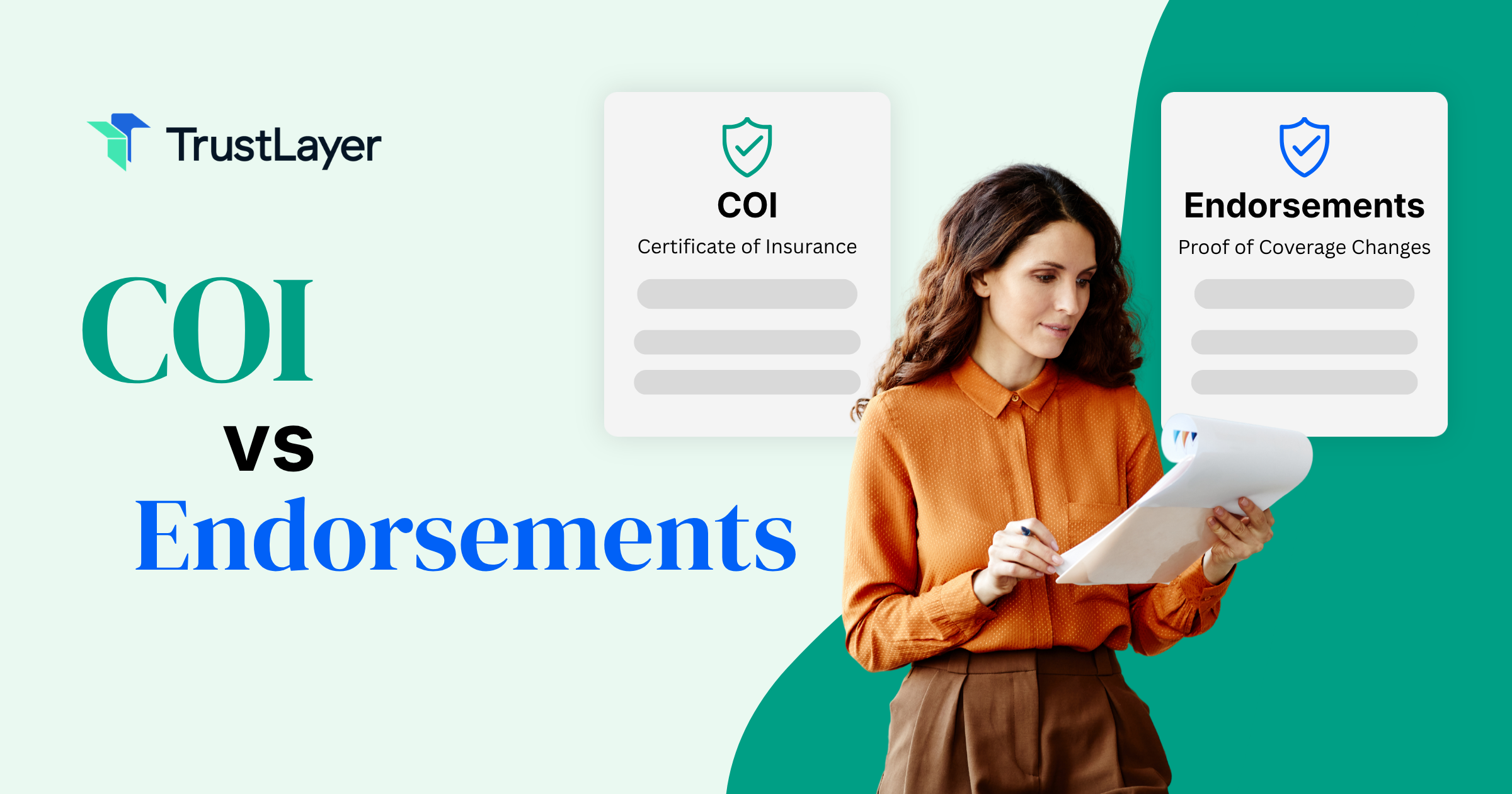
A COI that lists you as an additional insured is a statement of intent, not proof of coverage. The actual endorsement is a separate document attached to the policy. During a claim, the insurer will look at the endorsement itself, not the certificate. If the endorsement was never issued, or if it contains limiting language that narrows the coverage, you could find yourself without the protection you were counting on.
Validating endorsements means requesting copies of the actual endorsement forms, not just accepting the certificate at face value. It's an extra step that many organizations skip because it's time-consuming and awkward to ask for. But it's the step that separates real compliance from compliance theater.
Turning Claims Data into Proactive Risk Management
Claims data is a goldmine that most organizations barely touch. Every claim contains information about what went wrong, where, with which vendor, under what circumstances, and what the compliance status was at the time. Aggregated over months and years, this data reveals patterns that no single incident report can show.
The shift from reactive to proactive risk management starts with treating claims not as isolated events but as data points in a larger picture. Which vendor categories generate the most claims? Which project types have the highest frequency of compliance gaps at the time of loss? Are certain geographic regions or contract structures more prone to problems?
These questions can only be answered when claims data is systematically captured and connected to compliance records. When you can see that 40% of your claims in the past two years involved vendors whose COIs had expired within 90 days of the incident, you have something you can act on. That's not a vague concern: it's a specific, measurable risk factor that can be addressed with targeted policy changes.
Identifying High-Risk Vendor Patterns
Not all vendors carry the same risk profile, and claims data makes the differences visible. You might discover that small, single-trade subcontractors account for a disproportionate share of your uninsured losses. Or that vendors in certain specialties consistently carry policies with exclusions that conflict with your contract requirements.
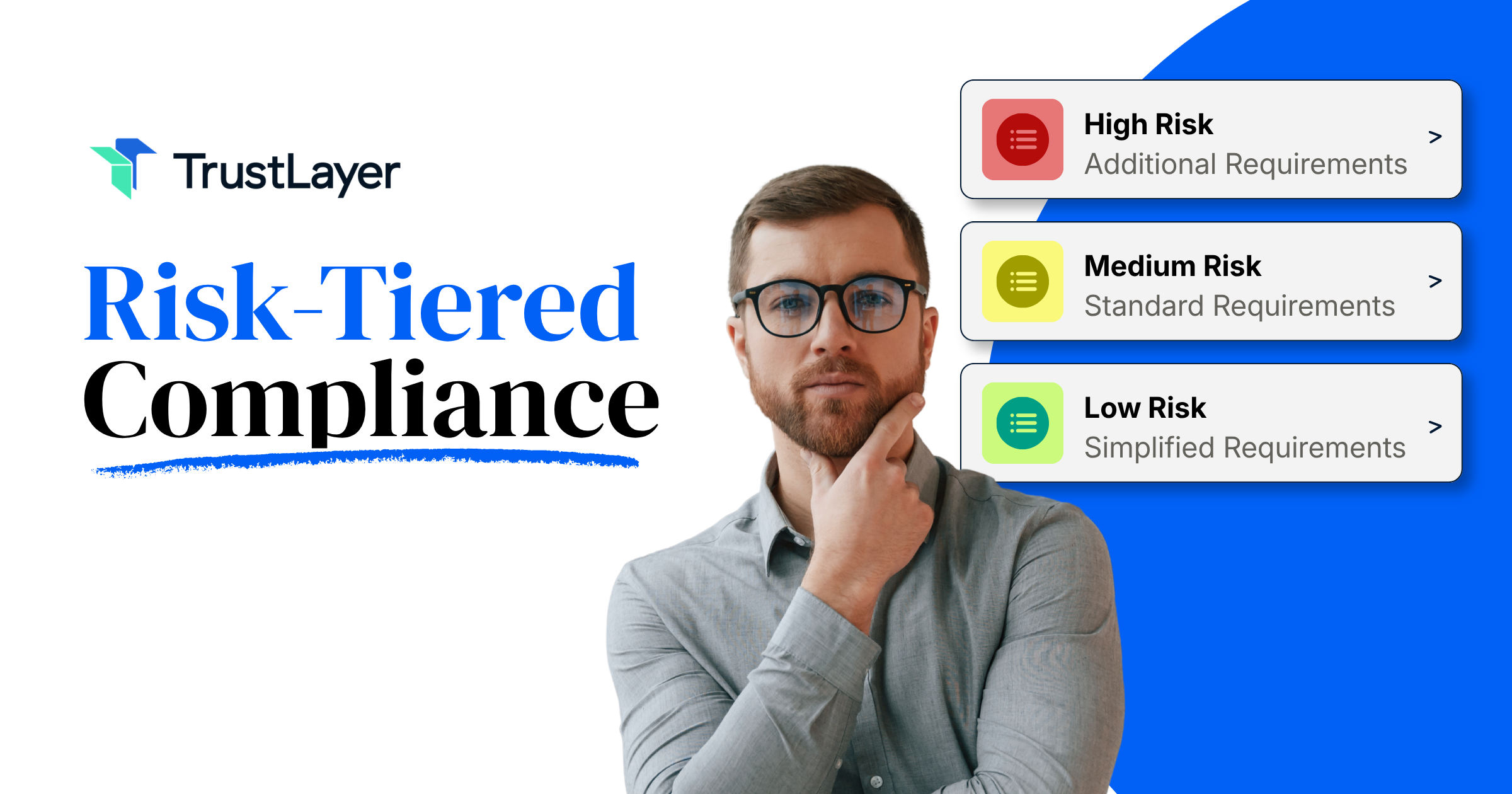
Once you've identified these patterns, you can adjust your compliance requirements accordingly. High-risk vendor categories might need more frequent certificate renewals, higher limits, or additional endorsement requirements. Low-risk categories might be able to operate with lighter-touch monitoring, freeing up your team's time for the relationships that actually need attention.
The key insight is that compliance requirements shouldn't be one-size-fits-all. A janitorial service and a structural engineering firm present very different risk profiles, and your evidence requirements should reflect that. Claims data gives you the empirical basis to make those distinctions instead of guessing.
Optimizing Your Compliance Workflow with TrustLayer
The gap between knowing what good compliance evidence looks like and actually maintaining it across hundreds of vendor relationships is where most organizations struggle. Manual processes break down at scale. Spreadsheets get stale. Emails get buried. And the people responsible for tracking compliance often have a dozen other responsibilities competing for their time.
This is where the right technology becomes essential. A purpose-built compliance tracking system doesn't just store certificates: it automates the follow-up, flags expirations before they become gaps, and connects certificate data to contract requirements so discrepancies are caught early rather than discovered during a claim.
The difference between a compliance program that works on paper and one that works in practice often comes down to whether the organization has invested in the infrastructure to maintain continuous awareness. Knowing your compliance status at any moment, across every vendor, without having to chase down documents manually: that's the standard that claims demand, even if audits let you get away with less.
Explore More TrustLayer Insights and Expert Consultations
If the patterns described in this piece sound familiar, you're not alone. Most organizations discover their compliance evidence gaps the hard way: through a claim that exposes what was missing. The smarter path is to build the systems and habits that prevent those gaps from forming in the first place.
TrustLayer has built its platform specifically for this problem, helping risk managers move from reactive document chasing to continuous compliance verification across their entire vendor ecosystem. If you're ready to stop treating compliance as a periodic exercise and start treating it as a constant state, set up a time to talk with our team about what a modern approach looks like.
Browse other TrustLayer articles for deeper dives into COI tracking, vendor risk management, and building compliance programs that hold up when it matters most. The best time to fix a compliance gap is before the next claim reveals it for you.
You might also like