Insurance Due Diligence on Commercial Loans, From Intake to Payoff
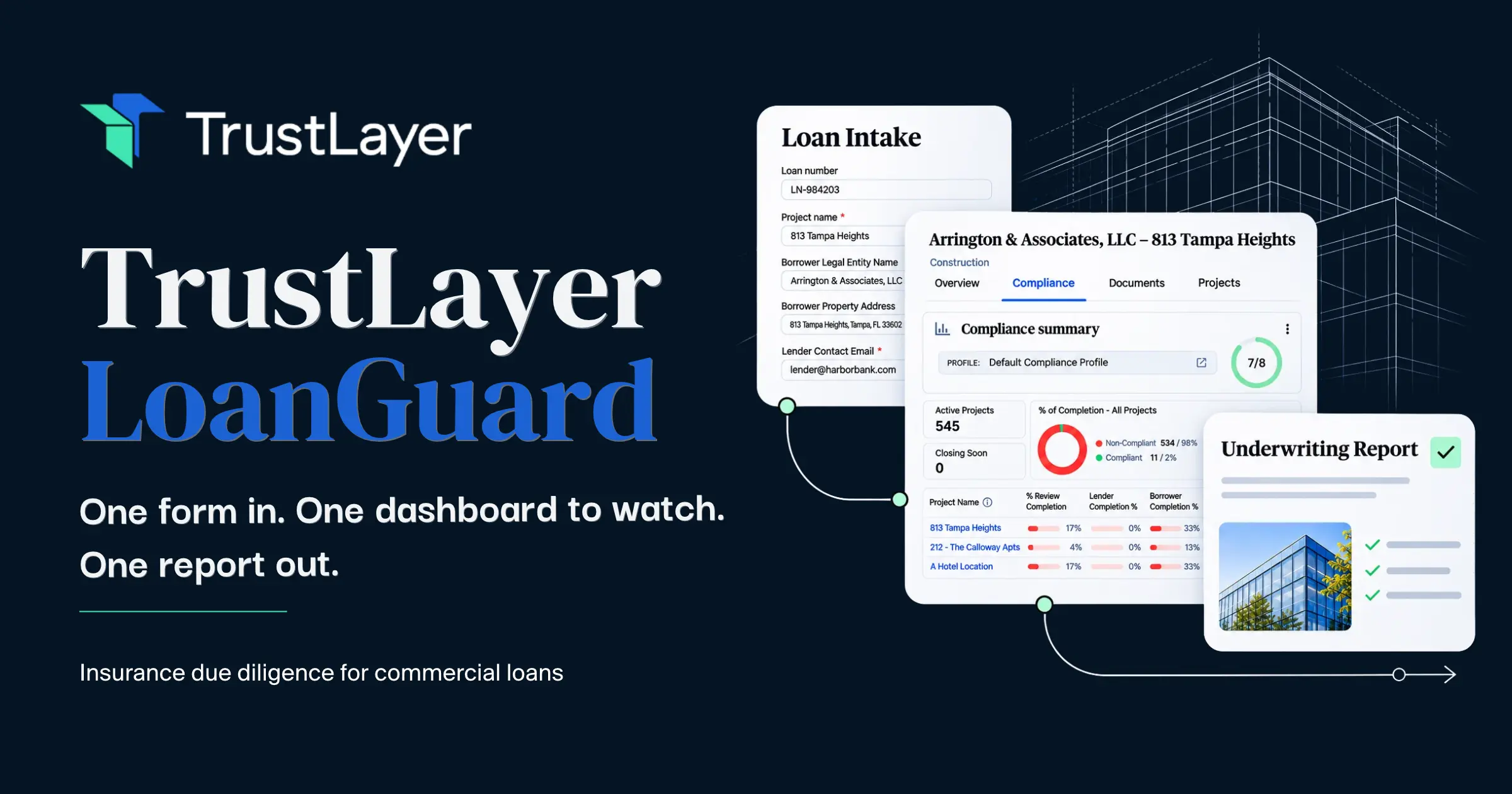
Introducing TrustLayer LoanGuard: One Form In, One Dashboard, One Report Out
Before a lender funds a commercial loan, someone has to prove the collateral behind it is properly insured. Then they have to keep proving it until the loan is paid off. That job usually falls to an insurance due-diligence firm, or to a lender's own team. And for most of them, commercial loan insurance due diligence still runs the same way it did a decade ago: on email threads, spreadsheets and phone calls.
Today we're launching TrustLayer LoanGuard to change that. LoanGuard brings the intake, insurance review, reporting and ongoing monitoring into one connected process. Instead of managing a different spreadsheet and email chain for every loan, lenders and their review teams have a clearer way to follow each deal from submission through payoff.
And there's a bigger question underneath all of this: Does the borrower's insurance actually protect the collateral securing the loan?
Why Insurance Due Diligence Is Still So Manual
Follow a typical loan and the friction shows up at every step.
A new loan arrives as an email with a few attachments. Someone on the review team retypes the borrower, the address, the loan amount and the close date into a tracker. They work out which insurance requirements apply, then start chasing certificates and policies from the borrower and their broker. Meanwhile, the lender wants to know where things stand, so they email. The reviewer stops to answer. Multiply that by every loan in the pipeline and every lender a firm works with, and status updates start to crowd out the actual review.
When the review is finally done, the reviewer builds the insurance report for the underwriting file by hand. And once the loan closes, there's rarely a reliable way to know when a policy is about to renew with lower limits or lapse. Gaps tend to surface at the worst possible moment: when there's a claim. The trouble isn't that people aren't doing the work. It's that so much of the work happens outside the actual insurance review.
A team can spend hours organizing documents, updating spreadsheets and answering status requests before getting to the question the lender needs answered. Is the collateral adequately insured? A certificate may confirm that coverage exists. It doesn't necessarily establish whether the coverage is enough for the loan.
That's the distinction between collecting insurance documentation and performing a meaningful insurance review.
Meet TrustLayer LoanGuard
LoanGuard is how TrustLayer handles insurance due diligence on commercial loans. It gives the work three things:
- An intake form where the lender submits a new loan
- Dashboards where everyone can see where each loan stands
- An insurance analysis report that goes into the underwriting file
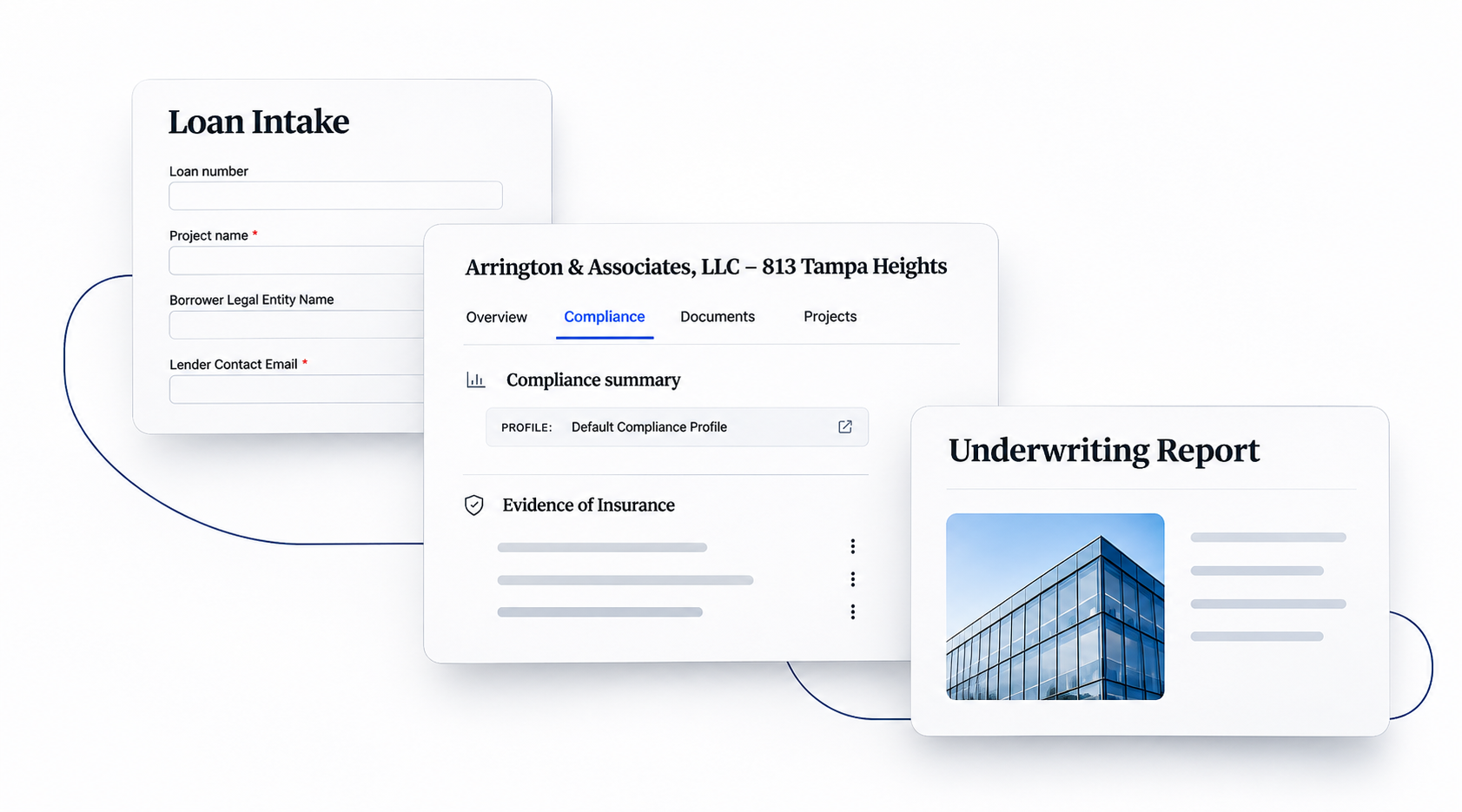
One form in, one dashboard to watch, one report out. Each lender gets its own workspace in TrustLayer, and the lender never has to log in to it. They touch two things: the form and the dashboard. The due-diligence team manages the insurance review behind the scenes. The lender can submit new business, see what's outstanding and receive the finished report without having to learn another insurance compliance system. It's a simpler way to handle a process that traditionally involves a lot of people, documents and follow-up.
How LoanGuard Works: Follow One Loan From Intake to Payoff
The easiest way to see how it works is to follow a single loan. Picture a lender about to close a construction loan on a new apartment building.
1. The Form: One Submission Starts the Review
The loan officer opens the intake form. They fill in the project, the borrower, the address and the loan type, attach the documents they have, and hit submit.
That's all the lender has to do. Instead of sending an email with attachments and waiting for someone to enter the information into another system, the lender submits the details through a structured form.
The information arrives where the review team needs it.
2. Behind the Form: The Loan Is Created Automatically
The moment the form is submitted, LoanGuard creates the loan. The officer picked Construction as the loan type, so the loan is automatically held to construction insurance requirements. The form answers fill in the loan's details, like the loan amount, target close date and address. Anything left blank that the review team always needs gets a default. The documents are filed, and the review team's project manager gets an email that a new loan is waiting.
Nobody retyped anything. For a due-diligence firm reviewing dozens or hundreds of loans, that consistency matters. Every incoming deal starts with the right loan type, the relevant requirements and the submitted documents organized together. The reviewer can begin working on the insurance instead of rebuilding the administrative foundation for another deal.
3. The Review: Check the Insurance Against the Loan
The project manager starts with the requirements already attached. Requests go to the borrower and their broker for certificates of insurance and policies, and the appraisal and other reports come from the lender. Everything is reviewed in TrustLayer, the same way TrustLayer customers review certificates of insurance every day. But commercial loan insurance due diligence needs to go beyond confirming a document exists.
Consider that apartment building. The lender needs to know whether the property is insured for its appraised value. If the deal depends on projected rental income, business income coverage may also be relevant. Construction projects introduce additional considerations involving project costs and applicable coverage terms.
A certificate alone doesn't answer all those questions. The insurance needs to be evaluated against the lender's requirements and the numbers behind the transaction. That's the difference between having insurance documentation and knowing whether the loan's collateral is adequately protected.
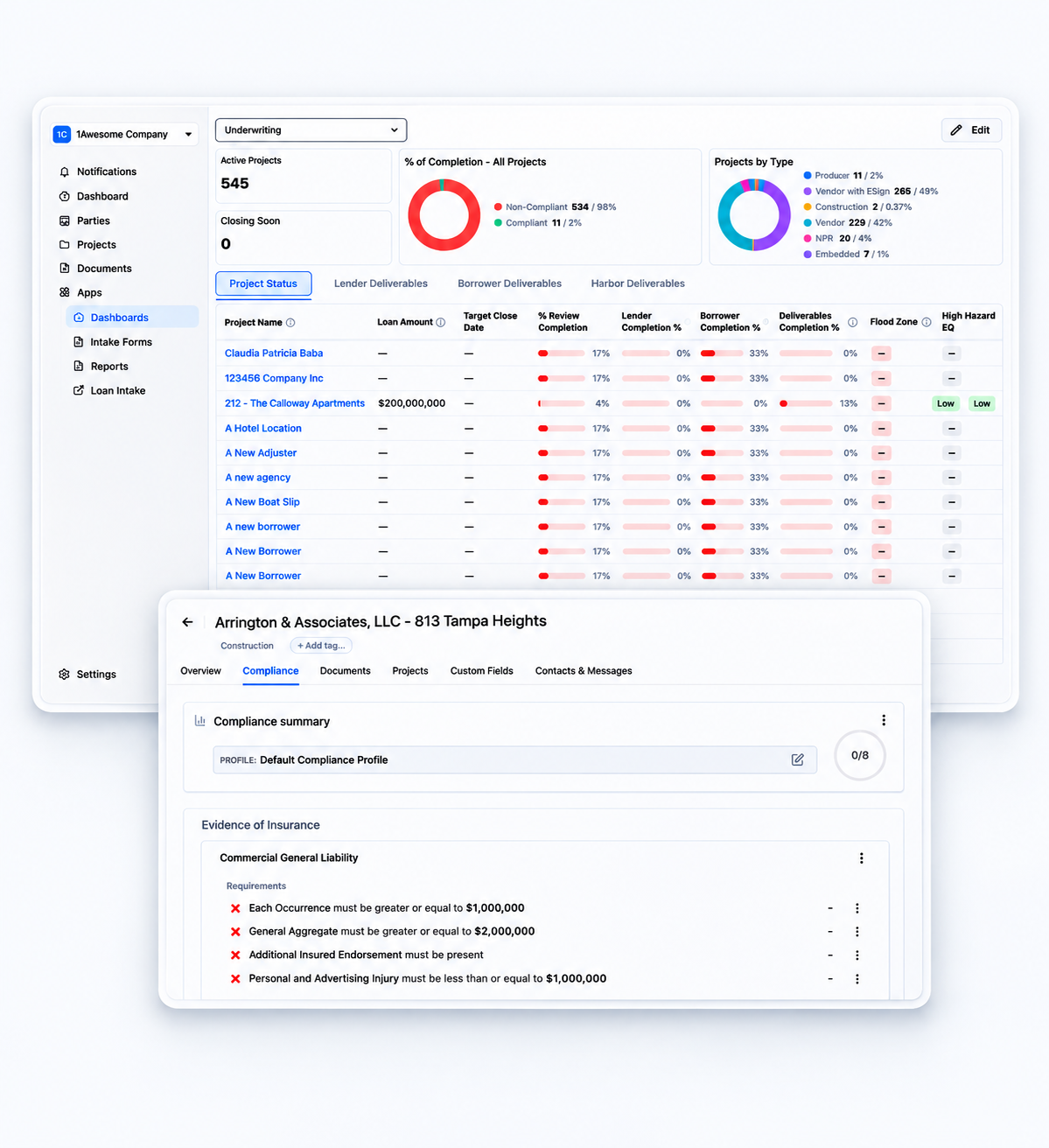
4. The Dashboard: Everyone Can See Where the Loan Stands
While the review happens, the loan officer opens their dashboard. It shows every loan they've sent over. For this one, they can see what the lender still owes, what the borrower still owes, what the review team has finished, and how compliant the loan is.
They don't have to email anyone to ask where it stands. For the lender, that means greater visibility into the review. For the due-diligence team, it means fewer interruptions from routine status questions.
The project manager can focus on obtaining missing documents, examining coverage and resolving outstanding requirements rather than repeatedly explaining the same loan's progress.
5. The Report: An Insurance Analysis for Underwriting
When the review is done, the project manager generates the insurance analysis report from the loan's data, adjusts what needs adjusting, and exports a branded PDF. The report tests whether coverage is actually enough for the deal, such as whether the collateral is insured for its appraised value and whether business income coverage matches projected income. That report goes straight into the lender's underwriting file.
This is an important distinction. The lender doesn't simply receive another collection of documents to interpret. They receive an organized insurance analysis intended to support the underwriting process. For the due-diligence firm, the report provides a consistent output that can be adapted for its lender clients.
And because the report is generated using the information already gathered during the review, the team doesn't have to rebuild the entire document from scratch for every loan.
6. After Closing: Insurance Monitoring Continues
Once the loan closes, it moves off the underwriting dashboard and onto surveillance, alongside every other closed loan. Policies coming up for renewal are flagged ahead of time, so the lender and the review team can both see what's about to lapse, for the life of every loan. And this is where the process matters long after the original underwriting decision.
Insurance can change. A policy that met the lender's requirements at closing might renew with different limits. Coverage could lapse. A document that was current twelve months ago might no longer tell the lender what they need to know. The collateral doesn't stop securing the loan when the closing documents are signed.
So the insurance review shouldn't simply stop there, either. LoanGuard keeps renewal monitoring connected to the loan throughout its life.
What Should a Commercial Loan Insurance Review Check?
A meaningful insurance review needs to look beyond whether the required documents have been collected. The actual requirements depend on the loan, collateral and lender, but there are several important questions the review may need to answer.
These aren't simply document collection questions. They connect insurance coverage to the lender's actual exposure. A construction loan might require a different review than an equipment financing arrangement. A building, a vehicle fleet and a piece of heavy machinery present different insurance considerations. The review needs to reflect what is securing the loan.
Built for the Firms Doing the Work, and Their Lenders
LoanGuard is designed to support both insurance due-diligence firms and the lenders they serve.
For Insurance Due-Diligence Firms
Every lender client gets its own workspace, every new loan arrives set up and ready to review, and every client gets a consistent, branded report. When a firm signs another lender, it stands up another workspace and does it again. Firms can also partner with TrustLayer to bring LoanGuard to more of their lender clients.
That doesn't remove the need for insurance expertise. It gives the people performing the reviews a more consistent process for managing the administrative work surrounding that expertise.
For Commercial Lenders
For lenders, including banks, debt funds, CRE and equipment lenders, LoanGuard means one form to submit a loan, one dashboard to watch it, and one report for the underwriting file. No new system to learn, and no more status-check emails. The lender has visibility into the process without taking on the review team's day-to-day responsibilities. Both sides benefit from having loan information, review progress and insurance evidence organized around the same transaction.
Any Collateral, Any Commercial Loan
LoanGuard isn't limited to real estate. Whether a loan is secured by a building, a fleet of heavy equipment or a set of vehicles, the review checks that the collateral is insured for what it's worth.
LoanGuard supports:
- Commercial real estate loans
- Construction loans
- Equipment finance loans
- Healthcare loans
- Corporate finance loans
Each loan type carries its own insurance requirements. That's important because a construction project, commercial building and equipment financing deal don't present identical risks. The collateral changes. The applicable requirements change. The documentation needed for an informed review may change. But the underlying question stays the same.
Does the borrower's insurance adequately protect the asset securing the loan?
Insurance Due Diligence From Intake to Payoff
Insurance due diligence shouldn't depend on inboxes and spreadsheets. With LoanGuard, it runs on one form in, one dashboard to watch, and one report out, from intake all the way to payoff. The lender can submit a loan and follow its progress. The review team can work from the loan's requirements, gather the necessary evidence and produce an insurance analysis report. After closing, the loan remains visible for ongoing insurance monitoring.
The point isn't simply to move the same paperwork into another system. It's to give lenders and the insurance professionals supporting them a more consistent way to answer a question that matters before closing and for every renewal after:
Is our collateral actually insured?
See LoanGuard on a Live Deal
Want to see a loan go from intake form to insurance analysis report? Book a Demo and see how TrustLayer LoanGuard supports commercial loan insurance due diligence.
Frequently Asked Questions About Commercial Loan Insurance Due Diligence
What is commercial loan insurance due diligence?
Commercial loan insurance due diligence is the process of reviewing a borrower's insurance to determine whether it satisfies the lender's requirements and adequately protects the collateral securing the loan.
The review may include insurance policies, certificates, collateral valuations, coverage terms, endorsements and other supporting documents. Ongoing monitoring helps lenders track insurance requirements after closing.
How is LoanGuard different from traditional COI tracking?
Traditional COI tracking helps teams manage certificates of insurance and associated compliance requirements.
LoanGuard applies insurance verification to commercial lending. It connects a loan's requirements and financial details with insurance documentation, review status, lender-ready reporting and post-closing monitoring.
A certificate may show that insurance exists. LoanGuard supports the additional review needed to determine whether the coverage is appropriate for the loan.
Who can use TrustLayer LoanGuard?
LoanGuard is designed for commercial lenders and insurance due-diligence firms that review borrower insurance on their behalf.
Due-diligence firms can manage lender-specific workspaces and deliver insurance analysis reports. Lenders can submit loans through an intake form and monitor progress through a dashboard without logging directly into the TrustLayer review workspace.
Does LoanGuard only support commercial real estate loans?
No. LoanGuard supports commercial real estate, construction, equipment finance, healthcare and corporate finance loans.
Collateral can include buildings, heavy equipment, vehicles and other insured assets securing a commercial loan. Insurance requirements are associated with the relevant lender and loan type.
What happens after a commercial loan closes?
After closing, LoanGuard moves the loan into ongoing surveillance.
Policies approaching renewal are flagged so the lender and due-diligence team can identify upcoming insurance requirements and continue monitoring coverage throughout the life of the loan.
This helps keep insurance verification from becoming a one-time closing activity.
You might also like