Contract-Specific Requirements: Add Specificity Without Breaking the Program
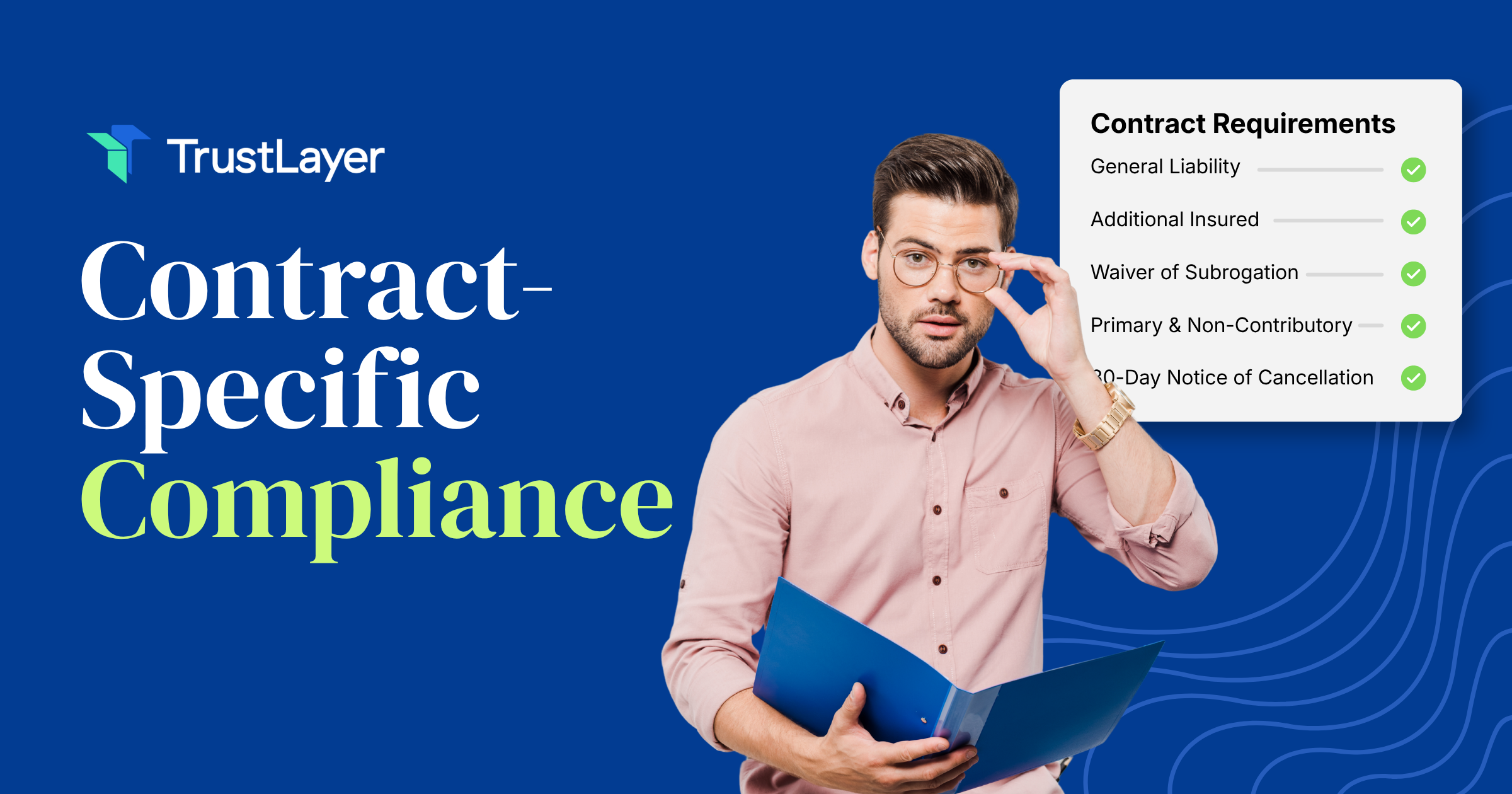
Every risk manager has faced this tension: you've built a solid insurance program with standardized requirements, and then a new contract lands on your desk that doesn't fit the mold. Maybe it's a high-rise construction project in a seismic zone, a vendor handling sensitive patient data, or a subcontractor working near an active rail line. The standard COI requirements you've set across your program suddenly feel inadequate, but layering on contract-specific requirements without a clear framework can create chaos. Vendors get confused, compliance teams drown in exceptions, and your carefully built program starts to fracture. The real skill isn't choosing between standardization and specificity: it's knowing how to add tailored requirements to individual contracts without undermining the consistency that holds your entire risk program together. That balance is what separates a risk management operation that scales from one that collapses under its own weight.
The Conflict Between Standardization and Project-Specific Risk
Most organizations start with a sensible approach: set a baseline of insurance requirements that applies across the board, then enforce it consistently. This works well until it doesn't. The problem surfaces when a single set of requirements is expected to cover everything from a janitorial services contract to a $50 million infrastructure project.
Defining the Master Service Agreement (MSA) Baseline
Your MSA baseline is the floor, not the ceiling. It typically includes general liability minimums, workers' compensation as required by state law, auto liability for vendors operating vehicles, and umbrella/excess coverage thresholds. Think of it as the default insurance posture you expect from any third party doing business with you.
A well-designed baseline captures about 80% of your risk exposure. It handles the routine: the landscaping crew, the IT consultant, the office supply vendor. The requirements are clear, the limits are reasonable, and compliance tracking stays manageable. The trouble starts when teams treat this baseline as the entire program rather than its foundation.
Why Blanket Requirements Often Fall Short
A $1 million general liability limit might be perfectly reasonable for a cleaning contractor but practically worthless for a crane operator working on a 30-story building. Blanket requirements create a false sense of security because they look uniform on paper while leaving massive gaps in actual coverage.
Here's what typically goes wrong: a project manager signs a high-risk subcontractor using the standard MSA requirements, a COI comes in showing the minimum limits, the compliance team checks the box, and everyone moves on. Six months later, a crane drops a load, and the $1 million policy evaporates before the first settlement conference. The organization had a compliance process, but it wasn't connected to the actual risk profile of the work being performed. That's the fundamental gap that contract-specific requirements are designed to close.
Leveraging Endorsements to Add Specificity
Endorsements are where your insurance program shifts from generic to precise. Rather than rewriting your entire MSA for every new project, you use endorsements to modify or extend coverage on a contract-by-contract basis. This keeps your baseline intact while allowing you to address the unique exposures of specific engagements.
Project-Specific Aggregate Limits
One of the most common and most important endorsements is a per-project aggregate. Standard commercial general liability policies typically carry a general aggregate that applies across all of a contractor's work. If your subcontractor is running five projects simultaneously and burns through their aggregate on someone else's job, your project is left exposed.
A per-project aggregate endorsement dedicates a separate aggregate limit to your specific contract. For high-value or high-risk engagements, this is non-negotiable. You should be requiring it on any project where the potential loss exceeds the vendor's standard per-occurrence limit, or where the vendor's other work creates meaningful aggregate erosion risk. The cost to the vendor is usually modest: a small additional premium: but the protection it provides to your organization is substantial.
Naming Additional Insureds for Unique Ventures
Joint ventures, multi-party developments, and projects involving special-purpose entities often require additional insured status for parties beyond the standard contract holder. Getting this right matters enormously because a generic "additional insured" endorsement may not extend coverage to the specific entity that needs it.
Be precise about which entities need to be named. Specify the endorsement form you require (ISO CG 20 10, CG 20 37, or their equivalents) and confirm that coverage extends to both ongoing and completed operations. A COI listing your company as an additional insured is like a car with an engine but no wheels: it looks right on the surface, but it won't get you anywhere when you actually need it. The endorsement itself, attached to the policy, is what provides real protection.
Maintaining Scalability in Compliance Tracking
Adding contract-specific requirements is the easy part. Tracking compliance across dozens or hundreds of contracts, each with their own unique insurance specifications, is where programs break down. The organizations that succeed here share a common trait: they build systems that can handle complexity without requiring a proportional increase in human effort.
Avoiding Manual Verification Bottlenecks
Picture a risk analyst with 200 active vendor files, 40 of which have contract-specific requirements that differ from the baseline. Each COI renewal cycle, that analyst has to remember which contracts require per-project aggregates, which need pollution liability, which demand professional liability with specific retroactive dates, and which require waiver of subrogation endorsements. That's not a compliance program: that's a fire drill waiting to happen.
The bottleneck isn't the analyst's competence. It's the architecture of the process. When contract-specific requirements live in spreadsheets, email threads, or the memories of individual team members, you've created fragmented visibility that hides coverage gaps until a claim forces them into the open. Centralizing your requirement definitions in a single system of record is the first step toward making specificity sustainable.
Automating Tiered Requirement Workflows
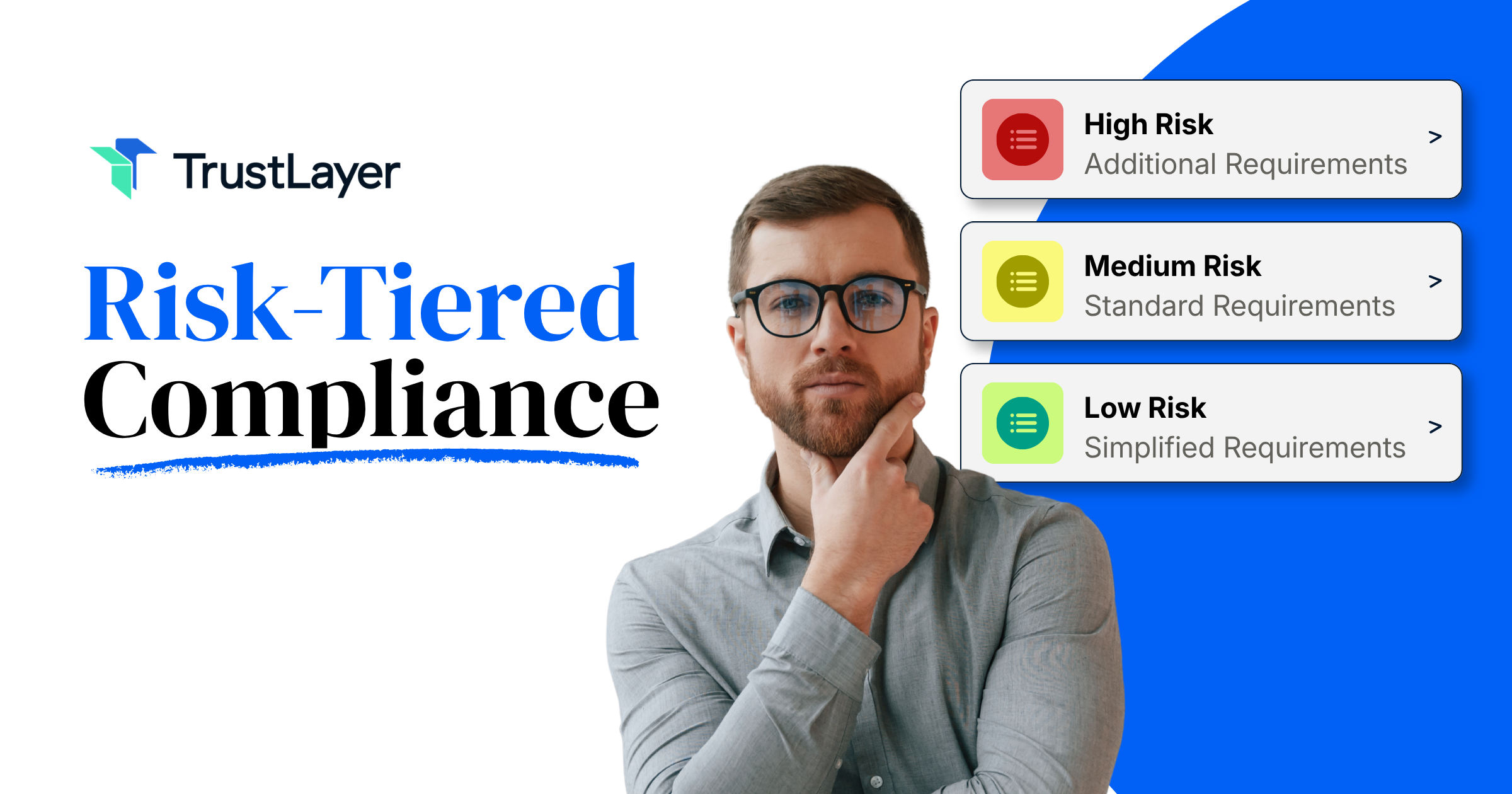
The most effective approach I've seen is a tiered model where contracts are classified by risk level, and each tier triggers a predefined set of requirements. Tier 1 might be your standard MSA baseline. Tier 2 adds professional liability and higher limits. Tier 3 includes everything in Tier 2 plus per-project aggregates, pollution coverage, and specific endorsement forms.
This does two things. First, it centralizes control at the strategic level: your risk team defines what each tier requires. Second, it decentralizes execution: project managers or procurement teams simply assign the appropriate tier to each contract, and the compliance workflow adjusts automatically. You're not asking field teams to interpret insurance policy language. You're asking them to answer a simpler question: "How risky is this engagement?" The system handles the rest.
A tiered model also makes it possible to run asynchronous compliance workflows for routine contracts (Tier 1) while reserving synchronous, hands-on review for high-risk engagements (Tier 3). This prevents the administrative burden of specificity from slowing down your entire vendor onboarding process.
Communicating Changes to Vendors and Subcontractors
You can design the most sophisticated tiered requirement system in the world, and it will fail if your vendors don't understand what's being asked of them. Communication breakdowns are the single biggest source of compliance delays, and they get worse as requirements become more specific.
The mistake most organizations make is burying contract-specific insurance requirements in a 40-page subcontract and expecting the vendor's insurance agent to find them. That agent is handling hundreds of COI requests per week. If your requirements aren't clear, specific, and easy to locate, they'll default to issuing a standard certificate and hope nobody notices.
What works: a standalone insurance requirements exhibit, attached to the contract but formatted as its own document. List each coverage type, the required limit, any required endorsements by form number, and the entities that need to be named as additional insureds. Make it a single page if you can. The clearer you are upfront, the fewer rounds of back-and-forth you'll endure during the compliance process.
Timing matters too. Don't wait until the contract is signed and work is about to begin before communicating insurance requirements. Build insurance discussions into the procurement process early enough that vendors can work with their brokers to secure the necessary coverage or endorsements before the project timeline is at risk. A vendor who learns about a per-project aggregate requirement two days before mobilization is going to push back, and your project team is going to pressure you to grant a waiver. Neither outcome serves your program.
Mitigating Legal Friction Through Clear Documentation
The intersection of insurance requirements and contract law is where ambiguity becomes expensive. When a claim occurs, the first question isn't "Did we have a COI on file?" It's "Did the contract clearly require the coverage that would have responded to this loss, and can we prove the vendor was obligated to maintain it?"
Vague contract language like "Vendor shall maintain adequate insurance" is an invitation for coverage disputes. Courts have interpreted "adequate" in wildly different ways depending on jurisdiction, and your definition of adequate almost certainly differs from your vendor's. Specific language eliminates this ambiguity: state the coverage type, the minimum limit, the required endorsements, and the duration of coverage (including any completed operations tail).
Your contract-specific requirements should be documented in at least three places: the contract itself, the insurance requirements exhibit, and your compliance tracking system. This creates a clear audit trail that connects the contractual obligation to the compliance verification. If you ever need to demonstrate that a vendor was required to carry specific coverage and failed to do so, you want that chain of documentation to be airtight.
One often-overlooked element: indemnification clauses and insurance requirements need to align. If your contract includes a broad-form indemnification provision but your insurance requirements don't include additional insured coverage for the indemnified parties, you've created a gap. The indemnification clause gives you a contractual right to recover losses, but without the insurance backing, that right is only as good as the vendor's balance sheet. For a small subcontractor, that might mean the right is practically worthless.
Optimize Your Risk Program with TrustLayer Experts
The ability to add specificity to individual contracts without breaking your broader program is what separates mature risk management operations from those running on hope and spreadsheets. The principles are straightforward: build a strong baseline, create a tiered system for adding requirements, communicate clearly with vendors, document everything, and track compliance in a centralized system that gives you continuous awareness rather than periodic snapshots.
What makes this hard isn't the concept: it's the execution. Managing hundreds of vendor relationships, each with potentially unique insurance requirements, demands infrastructure that most manual processes can't support. The organizations that do this well have moved beyond the fire drill model of pulling files before an audit and toward a constant state of compliance visibility.
If you're looking to build that kind of infrastructure, TrustLayer was designed specifically for this problem: helping risk teams track COIs, manage vendor compliance documents, and maintain oversight across complex, multi-tiered requirement structures. Set up a time to talk with our team to see how it fits into your program. And if you want to keep sharpening your approach, check out the other articles on the TrustLayer blog for practical guidance on everything from endorsement verification to vendor onboarding workflows.
You might also like

.png)