Split Compliance Workflows: See What’s Blocking Work (and Fix It)
.png)
Every operations or risk manager has lived this moment: a project stalls, a vendor can't start work, and when you trace the delay back to its source, you find a compliance document stuck in someone's inbox. Maybe it's a certificate of insurance waiting for manual review. Maybe it's an approval request that bounced between three departments before landing in a dead-end folder. The work itself is ready. The people are ready. But a fractured compliance process is holding everything hostage. Splitting your compliance workflows into visible, manageable stages is the single most effective way to identify what's actually blocking work and fix it before delays compound into real financial damage. The problem isn't that compliance is hard. The problem is that most organizations can't see where things are stuck until it's already too late. That invisible friction - scattered across email threads, shared drives, and disconnected spreadsheets - is costing companies weeks of productive time every quarter.
The Hidden Costs of Siloed Compliance Workflows
Most organizations don't set out to build fragmented compliance systems. It happens gradually. One team adopts a tracking spreadsheet. Another uses email chains. A third relies on a shared drive with naming conventions that only two people understand. Over time, you end up with a compliance process that technically works but is practically worthless as a system of record.
The real cost isn't the software or the hours spent chasing documents. It's the invisible tax on every project timeline, every vendor relationship, and every risk decision made with incomplete information. A 2025 survey by Deloitte found that mid-market companies lose an average of 12 to 15 business days per quarter to compliance-related delays. That's not a rounding error: it's nearly a full month of lost productivity every year.
Bottlenecks in Vendor Onboarding
Vendor onboarding is where siloed workflows cause the most visible pain. A new subcontractor needs to provide proof of insurance, safety certifications, and licensing documentation before they can start work. In a fragmented system, those documents might be collected by procurement, reviewed by risk management, and approved by a project manager, with no shared visibility into where each item stands.
The result? A vendor submits their certificate of insurance on Monday, but the risk team doesn't see it until Thursday because it's sitting in a procurement coordinator's inbox. By the time the COI is reviewed and a coverage gap is flagged, it's the following week. The vendor's crew was supposed to start on Tuesday. Now you're paying for idle equipment and rescheduling other trades around the delay.
This isn't a hypothetical. It's the default experience for organizations that haven't centralized their compliance intake. The bottleneck isn't the vendor's responsiveness: it's the internal handoff between teams that don't share a common workflow.
The Risk of Fragmented Data Silos
Beyond delays, fragmented data creates a more dangerous problem: false confidence. When compliance data lives in disconnected systems, it's easy for a project team to believe a vendor is fully compliant based on a document they reviewed six months ago. But insurance policies expire, endorsements change, and coverage limits get adjusted. If nobody is tracking those changes in a single, current system, you're operating on stale information.
Think of it like a car that looks fine from the outside but has no engine. The COI is in the file, the box is checked, and everyone assumes the coverage is there. Then a claim happens, and you discover the policy lapsed two months ago. That gap between perceived compliance and actual compliance is where the real financial exposure lives. Fragmented visibility between project teams, site managers, and central risk management is the primary failure mode that hides coverage gaps until a claim forces them into the open.
Identifying Common Blockers in Your Pipeline
Before you can fix a broken compliance workflow, you need to see where it breaks. Most organizations have never mapped their compliance process end to end. They know the starting point (a vendor submits documents) and the end point (someone marks them as approved), but the steps in between are a mystery. That middle ground is where blockers hide.
The most effective approach is to split your compliance workflow into discrete stages and measure how long documents spend in each one. When you can see that COIs spend an average of four days in "pending review" but only two hours in "approval," you know exactly where to focus your effort.
Manual Document Verification Delays
Manual verification is the single biggest time sink in most compliance pipelines. Someone receives a certificate of insurance, opens it, cross-references the coverage limits against contract requirements, checks the effective dates, verifies the additional insured endorsements, and then either approves it or sends it back with a request for corrections.
That process takes 15 to 30 minutes per document when done carefully. Multiply that by 200 vendors, and you've got a full-time job that most organizations spread across multiple people who also have other responsibilities. The documents pile up. The urgent ones get handled first. The routine ones wait. And those routine ones are often the ones that expire without anyone noticing.
The fix here isn't just "work faster." It's recognizing that manual verification doesn't need to be the default for every document. High-risk vendors or complex coverage requirements might warrant a human review. But routine COI checks for standard coverage limits can and should be automated, freeing your team to focus on the exceptions that actually require judgment.
Communication Gaps Between Teams
The other major blocker is the space between teams. Compliance workflows typically cross at least three functional boundaries: the team that collects documents, the team that reviews them, and the team that needs the vendor on-site. Each handoff is an opportunity for information to get lost, delayed, or misinterpreted.
A common pattern: the risk team flags a coverage gap and sends an email to the vendor's broker. The broker responds with an updated COI three days later. The risk team reviews it and approves it, but never notifies the project manager who's been waiting to schedule the vendor. The project manager calls the risk team two days later to ask about the status. That's five days of delay caused entirely by a communication gap, not by any actual compliance issue.
The distinction between synchronous and asynchronous communication matters here. High-risk or time-sensitive compliance items need synchronous handling: real-time alerts, immediate review, and instant notification when status changes. Routine items can follow an asynchronous pattern where delays are acceptable because the work isn't blocked. Most organizations treat everything the same way, which means either everything is urgent (and nothing gets prioritized) or everything waits in the same queue.
Strategies for Unifying Split Workflows
Fixing fragmented compliance workflows isn't about buying a single tool and hoping it solves everything. It requires rethinking how compliance work flows through your organization. The goal is to centralize control while decentralizing execution: your risk team sets the standards and maintains oversight, but project managers and site leads handle the day-to-day collection and tracking that would otherwise create administrative bottlenecks at the center.
This governance model works because it matches how organizations actually operate. The people closest to the work know which vendors are critical and which documents are missing. The risk team knows what coverage is required and what gaps are unacceptable. Connecting those two perspectives in a shared workflow is what turns compliance from a periodic fire drill into a continuous, sustainable practice.
Centralizing Certificate of Insurance Management
COI management is the ideal starting point for unifying compliance workflows because it touches every vendor relationship and follows a predictable pattern. Every vendor needs one. Every policy has an expiration date. Every contract specifies minimum coverage requirements. These are exactly the kind of structured, repeatable processes that benefit most from centralization.
Centralizing doesn't mean one person handles every COI. It means every COI flows through a single system of record, regardless of who collects it or which project it's associated with. When a project manager in Denver and a site supervisor in Atlanta are both tracking their vendors' insurance in the same place, the risk team can see the entire portfolio at a glance. Expired policies become visible immediately, not during the next quarterly audit.
The shift from periodic reporting to continuous awareness is fundamental. Instead of running a report once a month to check compliance rates, your team should be able to see the current status at any moment. That's not compliance theater for auditors: it's operational intelligence that prevents real problems.
Automating Compliance Status Alerts
Automation is most valuable not in replacing human judgment but in eliminating the need for humans to remember things. Nobody should be manually tracking expiration dates across hundreds of vendor policies. Nobody should be sending reminder emails one at a time. Nobody should be checking a spreadsheet every morning to see if anything changed overnight.
Effective compliance automation handles three things:
- Expiration tracking: automatic alerts when a policy is approaching its renewal date, sent to both the internal team and the vendor
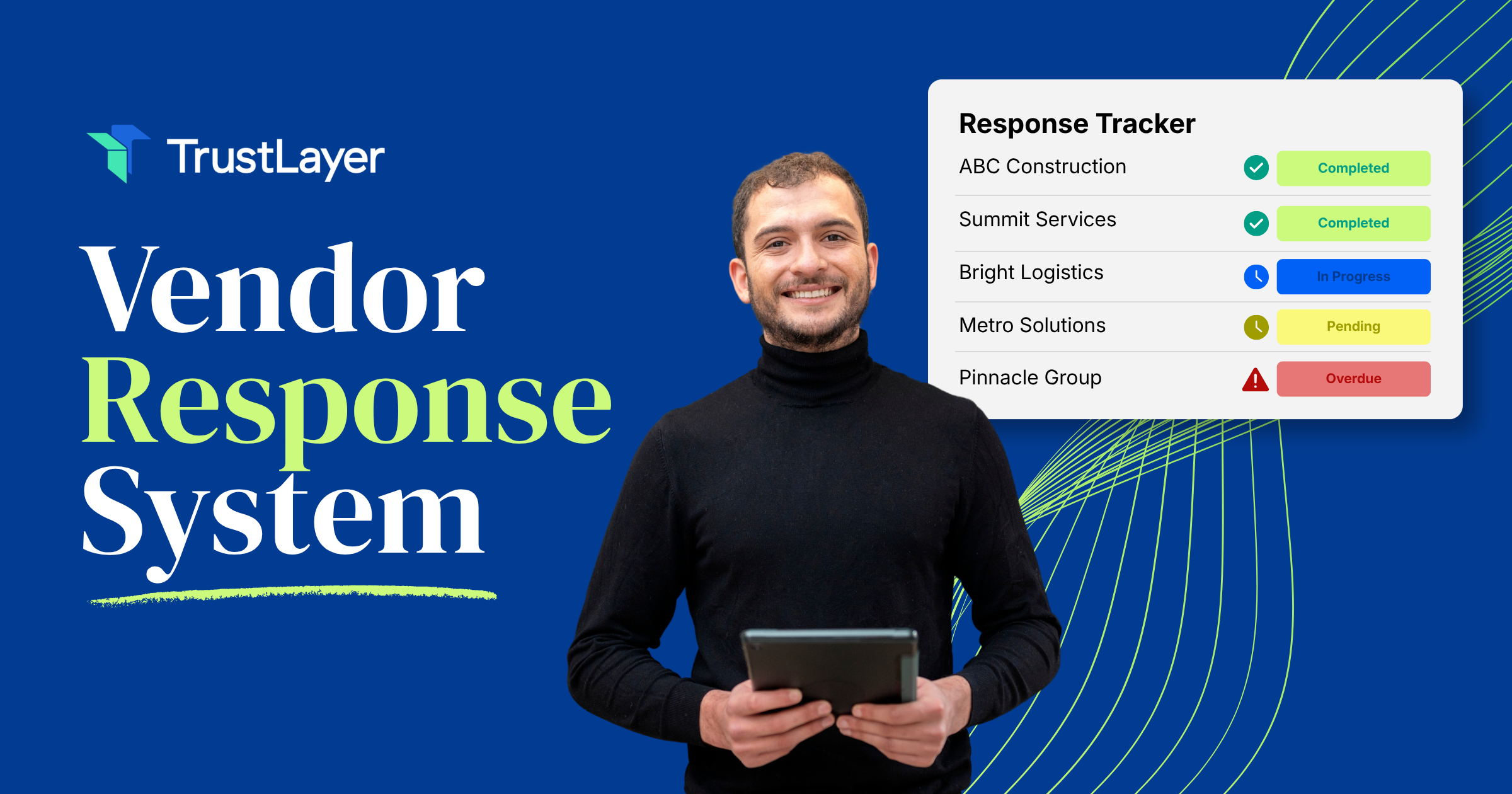
- Status changes: instant notifications when a document is submitted, reviewed, approved, or flagged for issues
- Escalation: automatic routing to a manager or risk lead when a compliance item has been unresolved for a defined period
The key is connecting these alerts to the people who can actually act on them. An expiration notice that goes only to a central compliance inbox is barely better than no notice at all. The project manager who needs that vendor on-site next week needs to see it too.
Leveraging Technology to Gain Real-Time Visibility
Real-time visibility is the difference between managing compliance proactively and discovering problems after they've already caused damage. The shift from "we'll check during the next audit" to "we can see it right now" changes how teams make decisions, how quickly vendors get cleared, and how confidently you can tell a client that every contractor on their project is properly insured.
Dashboards that show compliance status across your entire vendor portfolio aren't a luxury: they're a baseline requirement for any organization managing more than a handful of vendors. The information needs to be current, accurate, and accessible to everyone who makes decisions based on it. A project manager shouldn't need to call the risk team to find out if a vendor is cleared to work. That information should be visible in the same system where they manage their project schedule.
The technology choices matter less than the architecture. Whether you're using a purpose-built compliance platform or connecting existing tools through integrations, the goal is the same: a single source of truth that updates in real time and is accessible to everyone who needs it. The organizations that get this right stop treating compliance as a checkpoint and start treating it as a continuous signal that informs operational decisions. Automated dashboards shift the institutional mindset from periodic reporting to constant awareness, and that shift is what separates organizations that manage risk from those that merely document it.
Optimizing Operations for Scalable Growth
Here's the uncomfortable truth about compliance workflows: they either scale with your business or they become the constraint that limits your growth. An organization managing 50 vendors with spreadsheets and email might be doing fine. The same organization at 500 vendors is drowning. And the transition from manageable to unmanageable happens faster than most people expect.
The organizations that handle growth well are the ones that built their compliance infrastructure before they needed it. They established clear workflows, automated the repetitive tasks, and created visibility across teams while they were still small enough to make those changes without disrupting operations. The ones that wait until they're already overwhelmed end up making expensive, rushed decisions under pressure.
Scalable compliance operations share a few characteristics. They separate strategic oversight from tactical execution, so adding new vendors or projects doesn't require more headcount on the risk team. They use automation for routine tasks and reserve human attention for exceptions and judgment calls. And they maintain a single system of record that grows with the organization rather than fragmenting into project-specific silos.
The goal isn't perfection. It's building a system where compliance status is always visible, blockers are identified quickly, and the people who can fix problems are notified automatically. That foundation supports growth whether you're adding 10 vendors or 1,000.
Next Steps: Explore Resources and Expert Consultation
The gap between knowing your compliance workflows are broken and actually fixing them is smaller than most organizations think. Start by mapping your current process: where do documents enter the system, who touches them, how long does each step take, and where do things stall? That map will reveal your biggest blockers faster than any technology evaluation.
Once you can see where work is getting stuck, prioritize the fixes that remove the most friction. Usually that means centralizing COI management, automating expiration tracking, and creating shared visibility between the teams that collect, review, and depend on compliance documents. These aren't multi-year transformation projects. They're practical changes that produce measurable results within weeks.
If you're looking for a platform built specifically for this problem, TrustLayer has helped hundreds of thousands of companies automate the collection, storage, and verification of certificates of insurance and other compliance documents. It's worth exploring their resources and other articles on the TrustLayer blog to see how other risk teams have tackled these exact challenges. And if you want to talk through your specific situation, set up a time to talk with their team - they're people who genuinely care about helping risk managers build something better than the status quo.
You might also like