Configurable Compliance: Why One Checklist Is Not Enough

A single compliance checklist applied uniformly across every vendor, contractor, and partner relationship is an expensive illusion. It looks like due diligence on paper, but it crumbles the moment a claim hits, and you discover that your "compliant" subcontractor in Texas had coverage requirements designed for a project in Ohio. The reality is that configurable compliance isn't a nice-to-have anymore: it's the only way to match your risk management program to the actual risks your business faces. And if you're still relying on one static list of requirements, you're leaving gaps that won't become visible until they're already costing you money.
The Limitations of a Static Compliance Checklist
Think of a universal compliance checklist like a one-size-fits-all hard hat. Sure, it technically fits on every head, but it protects some people poorly and others not at all. A single checklist assumes that every vendor relationship carries the same risk profile, requires the same insurance thresholds, and operates under the same regulatory framework. That assumption is wrong roughly 100% of the time.
The problem compounds as organizations grow. A company with 50 vendors might get away with a standardized checklist for a while. A company managing 500 or 5,000 vendor relationships across multiple states, industries, and project types? That checklist becomes practically worthless: a document that exists to make someone feel better about compliance without actually delivering it.
The Risk of Overlooking Industry-Specific Nuances
A roofing contractor working at height has a fundamentally different risk profile than an IT consultant accessing your network remotely. Yet static checklists frequently apply identical general liability minimums and identical additional insured requirements to both. The roofing contractor might need $2 million in general liability, workers' comp with specific waiver-of-subrogation language, and umbrella coverage. The IT consultant might need cyber liability and professional errors and omissions coverage that never appears on a general construction checklist.
Industry-specific nuances extend beyond coverage types. Endorsement language, policy exclusions, and certificate holder requirements all vary by trade and sector. When your checklist doesn't account for these differences, you end up either over-requiring coverage from low-risk vendors (creating friction and delays) or under-requiring it from high-risk ones (creating real exposure).
Why Manual Tracking Leads to Coverage Gaps
Manual compliance tracking- spreadsheets, email chains, filing cabinets full of certificates of insurance- creates a false sense of security. Someone collects a COI at the start of a contract, files it, and checks a box. Six months later, that policy expires. Nobody notices. The vendor keeps working. Your organization keeps carrying the risk.
This isn't hypothetical. It happens constantly. A 2025 survey by the Risk Management Society found that nearly 40% of organizations discovered expired or insufficient coverage only after an incident triggered a claim review. Manual tracking also makes it nearly impossible to catch mid-term policy changes, cancellations, or endorsement modifications. You're essentially flying blind between collection dates, performing what amounts to compliance theater rather than actual risk management.
The Shift Toward Configurable Risk Management
The move toward configurable compliance frameworks reflects a broader shift in how organizations think about risk. Rather than treating compliance as a binary pass/fail exercise, forward-thinking risk managers are building systems that adjust requirements based on the actual risk each relationship presents.
This means different vendors get different requirement sets. A janitorial service provider working in your lobby after hours doesn't need the same coverage profile as a crane operator on your construction site. Configurable compliance acknowledges this reality and builds it into the process from the start, rather than trying to paper over it with a universal checklist.
Adapting to Diverse Vendor and Contractor Profiles
Configuring compliance requirements by vendor type isn't just about insurance minimums. It's about the entire documentation package: what you require, when you require it, and how you verify it. A high-risk electrical subcontractor might need pre-qualification documentation, specific safety certifications, proof of apprenticeship programs, and higher coverage limits. A low-risk office supply vendor might need only a basic COI and a W-9.
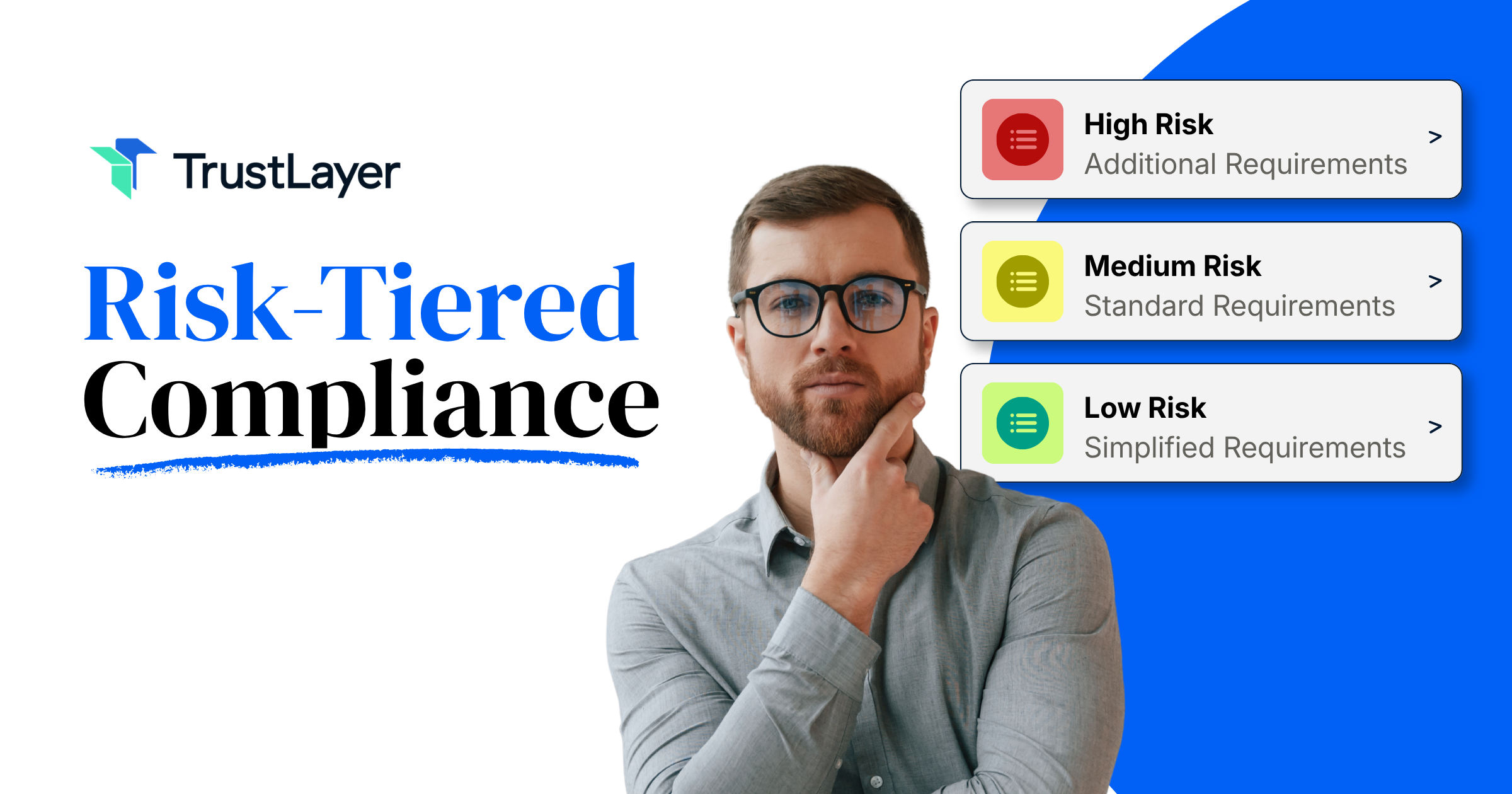
The key is building a tiered system that categorizes vendors by risk level and assigns appropriate requirements to each tier. This reduces unnecessary administrative burden on low-risk relationships while ensuring high-risk ones receive the scrutiny they deserve. Without this kind of structure, risk teams either apply maximum requirements to everyone (grinding operations to a halt) or apply minimum requirements to everyone (leaving the organization exposed).
Dynamic Requirements for Regional and Local Regulations
Regulatory requirements aren't static, and they aren't uniform. A contractor working in California faces different workers' compensation requirements than one in Florida. New York has specific additional insured endorsement requirements that differ from those in Illinois. And these rules change: sometimes annually, sometimes more frequently.
A static checklist can't keep up. By the time you update your universal requirements document for a regulatory change in one state, you've likely missed changes in three others. Configurable compliance systems allow you to set region-specific requirements that update as regulations evolve, ensuring that your vendor in Sacramento meets California standards. In contrast, your vendor in Miami meets Florida standards, without requiring your team to manually track every legislative update across every jurisdiction where you operate.
Key Benefits of Customizable Compliance Workflows
Customizable workflows do more than reduce risk exposure. They fundamentally change the relationship between your compliance team and the rest of the organization. When requirements are tailored and reasonable, vendors comply faster. When verification is automated, your team spends less time chasing paperwork and more time on strategic risk assessment.
The shift from a static checklist to a configurable system is like moving from a fire drill mentality to a constant state of awareness. Instead of scrambling before audits or after incidents, your organization maintains continuous visibility into its compliance posture.
Reducing Administrative Friction and Bottlenecks
One of the biggest complaints from operations teams about compliance programs is that they slow everything down. And they're often right. When every vendor, regardless of risk level, has to jump through the same hoops, onboarding timelines stretch from days to weeks. Projects stall waiting for paperwork. Procurement teams start viewing compliance as an obstacle rather than a safeguard.
Configurable workflows fix this by right-sizing requirements. Low-risk vendors move through a streamlined process. High-risk vendors go through a more thorough review. The result is faster onboarding overall, fewer bottlenecks, and a compliance program that operations teams actually support rather than resent. This model also supports the governance principle of centralizing control at the strategic level while decentralizing execution to site or project leads who understand their specific vendor relationships.
Enhancing Accuracy with Automated Verification
Manual COI review is prone to human error. Even experienced risk analysts can miss a coverage gap, an incorrect additional insured listing, or an endorsement that doesn't match your requirements. When you're processing hundreds or thousands of certificates, the error rate climbs quickly.
Automated verification tools compare submitted documentation against your configured requirements in real time. They flag discrepancies, identify expired policies, and alert your team to coverage gaps before they become problems. This shifts your program from periodic, reactive reviews to continuous, proactive monitoring. Your team stops asking "were we compliant last quarter?" and starts knowing the answer at any given moment.
How to Build a Scalable Compliance Framework
Building a compliance framework that scales requires thinking beyond your current vendor count. The system you design today needs to handle twice as many vendors next year without doubling your compliance staff. That means standardizing your processes while keeping your requirements flexible: a combination that sounds contradictory but works when you approach it with the right structure.
Start with your risk categories and work outward. Define what "high risk," "medium risk," and "low risk" mean for your organization. Map your existing vendors into those categories. Then build requirement sets for each tier. This foundation makes everything else easier, from onboarding new vendors to auditing existing ones.
Categorizing Risk Tiers Across Your Supply Chain
Risk tiering isn't a one-time exercise. It requires clear criteria and regular reassessment. Consider these factors when building your tiers:
- Nature of the work performed (physical labor vs. professional services vs. product supply)
- Access to your facilities, systems, or sensitive data
- Contract value and duration
- History of claims or incidents
- Regulatory environment governing the work
A three-tier system works for most organizations, though some with complex supply chains may need four or five. The goal is granularity without complexity: enough tiers to differentiate risk meaningfully, but not so many that the system becomes unmanageable. Each tier should have clearly documented requirements that are easy for both your team and your vendors to understand.
Integrating Real-Time Insurance Data
Static COI collection is like taking a photograph of a moving target. It captures a single moment in time, but the underlying reality changes constantly. Policies get canceled. Coverage limits change. Endorsements are added or removed. Without real-time data, you're making decisions based on outdated information.
Real-time insurance data integration connects your compliance system to live policy information, giving you visibility into changes as they happen rather than weeks or months after the fact. This eliminates the fragmented visibility that plagues organizations relying on periodic manual reviews. When a vendor's policy lapses, you know immediately: not when someone happens to pull the file for an audit. This kind of continuous awareness is what separates organizations that manage risk from organizations that merely document it.
Future-Proofing Your Business Against Evolving Risks
Risk doesn't stand still, and neither should your compliance program. New regulations emerge every year. Insurance markets shift, creating coverage gaps that didn't exist before. Emerging risks like AI liability, climate-related exposures, and evolving cyber threats require new types of coverage that your 2023 checklist never anticipated.
A configurable compliance framework gives you the ability to add new requirement categories, adjust coverage thresholds, and respond to regulatory changes without rebuilding your entire system. It's the difference between renovating a room and demolishing the house. When OSHA updates silica exposure standards or a state passes new contractor licensing requirements, you update the relevant tier's requirements, and the system pushes those changes to affected vendors automatically.
Future-proofing also means building a data foundation that supports better decision-making over time. Every compliance interaction generates data: response times, common deficiencies, expiration patterns, vendor compliance rates by tier. That data, when captured and analyzed, tells you where your program is working and where it needs attention. It transforms compliance from a cost center into a source of business intelligence that informs procurement decisions, contract negotiations, and risk transfer strategies.
Organizations that treat compliance as a living system rather than a static document are the ones that avoid the expensive surprises. They don't discover gaps during claims. They don't scramble before audits. They operate with the kind of continuous awareness that turns risk management from a reactive function into a strategic advantage.
Take the Next Step Toward Smarter Compliance
The case against a single, static compliance checklist is clear: it can't account for the diversity of risks, regulations, and vendor profiles that modern organizations face. Configurable compliance frameworks match your requirements to your actual risk exposure, reduce administrative drag, and give your team real-time visibility instead of outdated snapshots.
The organizations getting this right aren't doing it with bigger spreadsheets or more staff. They're building systems that flex with their business, catch gaps before they become claims, and treat compliance as continuous practice rather than periodic performance. If your current approach still relies on one checklist applied uniformly across every relationship, you're carrying more risk than you realize.
If you're ready to move beyond static checklists and build a compliance program that actually reflects your risk profile, TrustLayer can help. Their platform is purpose-built for modern risk managers who need to automate COI tracking, verification, and vendor compliance at scale. Set up a time to talk with their team and see what configurable compliance looks like in practice. And while you're at it, check out other TrustLayer articles for more insights on building smarter risk management programs.
You might also like

.png)