Hurricane Readiness Checklist for Risk Teams

The 2025 Atlantic hurricane season reminded us all how quickly a "watch" becomes a "warning" and then a full-blown operational crisis. For risk teams, the window between a storm's formation and landfall is brutally short, and the difference between a controlled response and organizational chaos comes down to preparation done months in advance. If your team is still relying on last year's plan, or worse, improvising when the National Hurricane Center issues its first advisory, you're already behind. A solid hurricane readiness checklist built specifically for risk teams isn't a nice-to-have: it's the difference between a company that recovers in weeks and one that bleeds cash for months. This guide lays out the specific steps, from insurance audits to supply chain contingencies, that separate teams who are genuinely ready from those performing what amounts to seasonal compliance theater.
Assessing Vulnerabilities and Insurance Coverage
Before you can protect anything, you need to know exactly what you're exposed to and whether your insurance program will actually respond the way you think it will. Most risk teams assume their coverage is adequate because they renewed the same program last year. That assumption gets expensive fast when a Category 3 storm makes landfall, and you discover your business interruption coverage has a 72-hour waiting period or your flood sublimit hasn't kept pace with property values.
The real work here starts with a gap analysis: mapping every physical location, revenue stream, and critical dependency against your current policy portfolio. Think about it less as a paperwork exercise and more as stress-testing your financial safety net before you actually need it.
Reviewing Property and Business Interruption Policies
Pull your property policies and read them. Not the declarations page, not the summary your broker sent over: the actual policy forms. You're looking for several specific things: whether flood is included or requires a separate NFIP or private flood policy, whether your business interruption coverage includes "contingent" BI for losses caused by damage to suppliers or customers, and whether your policy's valuation basis reflects 2026 replacement costs rather than values set during a softer market.
Business interruption coverage deserves particular scrutiny. Many policies cover lost income only when physical damage triggers the loss. If a mandatory evacuation order shuts you down but your building is untouched, some policies won't pay. Others have "civil authority" extensions, but these often carry tight time limits of two to four weeks. Know exactly what triggers your coverage and for how long.
Evaluating Deductibles and Named Storm Sub-limits
Here's where risk teams frequently get blindsided. Named storm deductibles are typically expressed as a percentage of total insured value, not a flat dollar amount. A 5% named storm deductible on a $20 million property means your first $1 million in losses comes out of pocket. That's a number your CFO needs to know before the storm, not after.
Check whether your deductible applies per occurrence or per location. Review any aggregate sublimits for wind and flood. And pay close attention to how "named storm" is defined in your policy: some trigger on the National Weather Service naming, others on specific wind speeds. These distinctions matter enormously when you're filing a claim, and the adjuster is parsing language.
Operational Continuity and Facility Hardening
Insurance pays claims after the fact. Operational continuity planning keeps you functional during and immediately after the storm. These are two entirely different problems, and risk teams need to own both.
The goal isn't to hurricane-proof every building you occupy. That's neither practical nor cost-effective. The goal is to identify which facilities, systems, and processes are truly critical, then protect those with enough redundancy that a three-to-seven-day disruption doesn't cascade into a three-month recovery.
Physical Asset Protection Strategies
Start with a tiered approach to your physical footprint. Tier 1 facilities are those where a loss would immediately halt revenue or endanger life: data centers, manufacturing floors, hospitals. Tier 2 facilities are important but recoverable within days: regional offices, secondary warehouses. Tier 3 facilities are everything else.
For Tier 1 facilities, you should have specific hardening measures documented and tested:
- Impact-rated window protection or pre-positioned plywood cut to fit
- Backup generator capacity tested under load, not just started up quarterly
- Fuel contracts that guarantee delivery priority during emergencies
- Elevation or relocation of critical equipment above historical flood levels
- Pre-negotiated contracts with emergency restoration vendors
Tier 2 and 3 facilities need lighter-touch plans: securing loose equipment, backing up on-site records, and establishing clear criteria for when to close and evacuate versus shelter in place.
Critical Data Backup and IT Systems Redundancy
If your primary data center sits in a hurricane-prone zone and your backup is in the same metro area, you don't have a backup: you have a second target. Geographic diversity in IT infrastructure is non-negotiable for organizations with Gulf Coast, Southeast, or Mid-Atlantic exposure.
Cloud-based systems have made this easier than it was a decade ago, but "we're in the cloud" isn't a complete answer. You need to verify that your cloud provider's regional availability zones aren't both vulnerable to the same storm. Test your failover procedures at least annually, and make sure your recovery time objectives are realistic. A 4-hour RTO means nothing if the team responsible for executing it can't get to a working internet connection for 48 hours.
Supply Chain and Third-Party Risk Management
Your own facilities might survive the storm perfectly, but if your key supplier's warehouse in Houston floods, you're still in trouble. Third-party risk is where hurricanes expose the most dangerous blind spots, because the failures happen outside your direct control and often outside your visibility.
Verifying Vendor COIs and Compliance Status
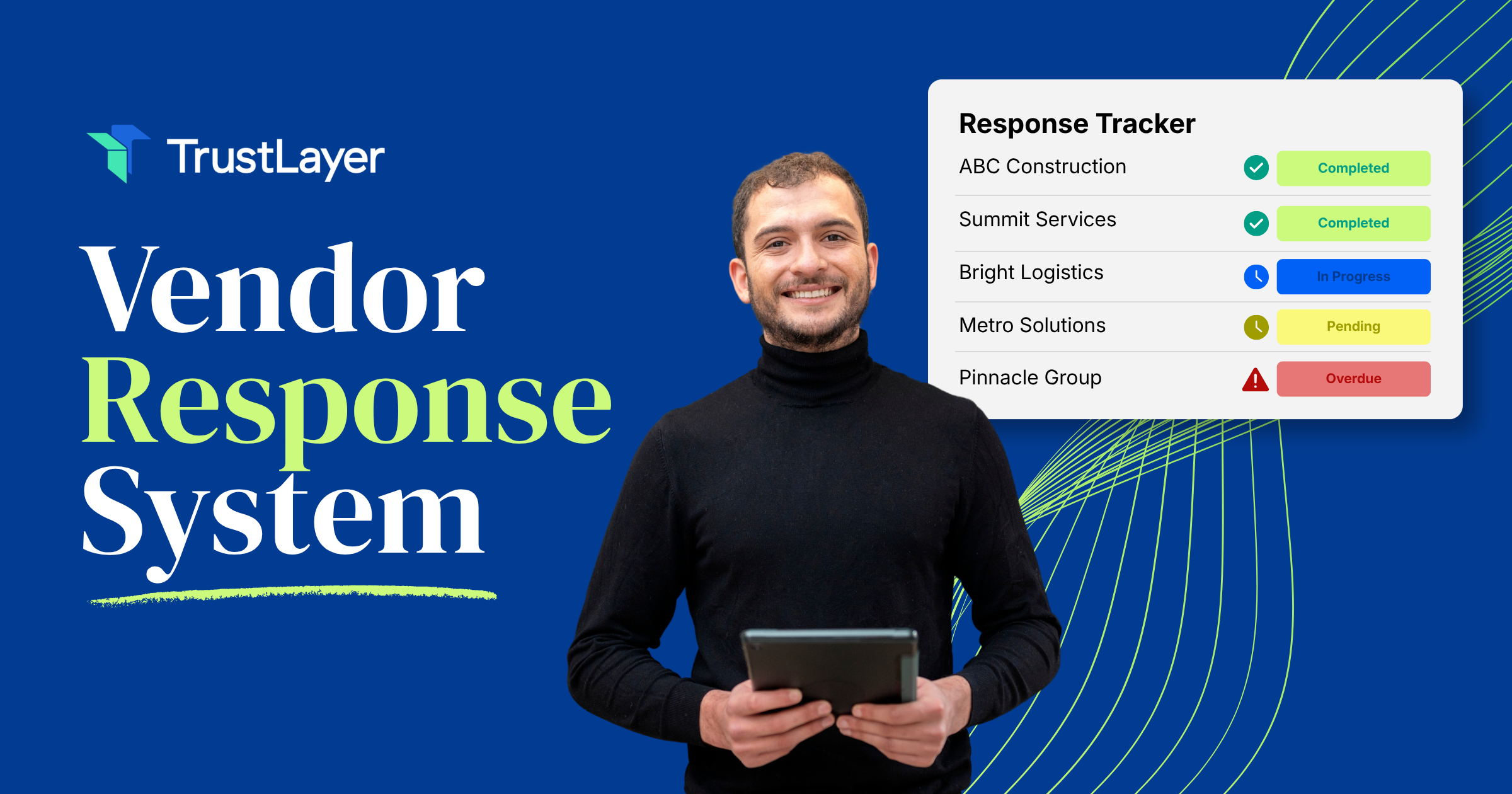
A certificate of insurance sitting in a filing cabinet from when you onboarded a vendor three years ago is practically worthless. Policies lapse, coverage limits change, and endorsements get dropped at renewal. Before hurricane season, risk teams should be verifying that every critical vendor's COI reflects current, active coverage with adequate limits.
This is where fragmented visibility between procurement, operations, and risk management creates real danger. The project manager who hired the contractor might not know whether their general liability policy includes wind damage. The site lead might assume someone at corporate verified the sub's coverage. Nobody actually checked, and the gap stays hidden until a claim occurs.
Prioritize verification for vendors in three categories: those physically located in hurricane zones, those providing services critical to your post-storm recovery (restoration contractors, emergency generators, temporary staffing), and those whose failure would halt your own operations.
Identifying Alternative Suppliers in Low-Risk Zones
Single-source dependencies in hurricane corridors are a risk you can quantify and mitigate before storm season. Map your critical supply chains geographically and ask a simple question: if this supplier went offline for 30 days, what happens to us?
For any answer that includes "significant revenue loss" or "inability to serve customers," you need a pre-qualified alternative supplier in a low-risk geography. Pre-qualified means you've already completed due diligence, negotiated baseline terms, and confirmed they have the capacity to absorb your volume on short notice. A list of names and phone numbers isn't a contingency plan. A signed standby agreement with pricing terms and lead times is.
Emergency Communication and Response Protocols
Plans are only as good as the people executing them, and people can only execute what they know about. Downed cell towers don't usually cause communication failures during hurricanes: they're caused by unclear authority, untested notification systems, and assumptions about who's responsible for what.
Establishing a Crisis Management Command Chain
Every organization needs a hurricane-specific incident command structure that answers three questions without ambiguity: Who makes the call to activate the emergency plan? Who has authority to spend money during the response? Who communicates with external stakeholders: media, regulators, customers, and insurers?
Document this chain with names, roles, and at least three contact methods per person (cell, personal email, satellite phone, or secondary device). Include alternates for every position. The person designated as incident commander might be on vacation in Europe when the storm hits, or their own home might be in the evacuation zone. Your plan needs to function regardless of who's personally affected.
Run a tabletop exercise at least once before June 1. Not a PowerPoint presentation where everyone nods along: an actual scenario-based drill where you simulate decisions under time pressure. You'll find the gaps in your plan fast.
Employee Safety Tracking and Notification Procedures
Accounting for every employee during and after a hurricane is both a moral obligation and a practical necessity. You can't begin recovery operations if you don't know which team members are safe, displaced, or unable to work.
Mass notification systems need to work when local infrastructure doesn't. That means:
- SMS-based alerts that don't depend on email servers or corporate VPN
- A check-in mechanism employees can use from any device, even a borrowed phone
- Pre-established rally points or virtual check-in windows for teams in affected areas
- Clear guidance distributed before the storm about when and how to report status
Don't forget remote employees. The shift to distributed work means your "Houston office" might include 40 people who work from home across a 100-mile radius. Each of them needs the same communication and safety protocols as on-site staff.
Post-Storm Recovery and Claims Documentation
The 48 hours immediately after a storm passes are the most consequential for your eventual insurance recovery. What you document, how you document it, and how quickly you engage your carrier will directly affect the size and speed of your claim payment.
Standardizing Damage Assessment Procedures
Ad hoc damage reports, a few cell phone photos, and an email to the broker are a recipe for underpaid claims. Risk teams should have a standardized damage assessment template ready to deploy the moment conditions are safe.
That template should capture date- and time-stamped photographs of all damage from multiple angles, video walkthroughs of affected areas, an inventory of damaged or destroyed equipment with serial numbers and approximate replacement values, documentation of any emergency protective measures taken (boarding up, water extraction, temporary repairs), and a log of all related expenses from the moment the storm was forecast.
Assign specific people to damage assessment roles before the storm. They should know the template, have the tools (waterproof cameras, printed forms as backup), and understand that their documentation will be the foundation of a six- or seven-figure insurance claim.
Expediting the Insurance Claims Submission Process
File your notice of loss immediately: don't wait until you have a complete damage picture. Most policies require "prompt" notice, and delay can give carriers grounds to complicate the process. A preliminary notice that says "we sustained wind and water damage to our facility at 123 Main Street, full assessment underway" is sufficient to start the clock.
Engage a public adjuster or forensic accountant early if the loss is significant. Your carrier will send their own adjuster, and that person works for the insurance company, not for you. Having your own expert ensures your claim reflects the full scope of loss, including business interruption, extra expense, and contingent losses that are easy to undercount.
Keep meticulous records of every communication with your carrier, every expense related to the loss, and every temporary measure you take to mitigate further damage. Mitigation expenses are typically covered under most property policies, but only if you can prove them.
Enhance Your Resilience with TrustLayer Resources
A hurricane readiness checklist for risk teams is only as strong as the systems supporting it. The insurance verification piece alone, making sure every vendor COI is current, every policy is active, and every coverage gap is visible before the storm, can consume weeks of manual effort if you're chasing paper certificates and playing phone tag with brokers.
The risk teams that handle hurricane season best aren't the ones with the thickest binders. They're the ones who've moved from periodic, fire-drill compliance checks to continuous awareness of their insurance and vendor risk posture. They know, at any given moment, which vendors are compliant and which have gaps, because they've built systems that track this automatically rather than relying on spreadsheets that go stale the day they're created.
If your team is still managing certificates of insurance manually, TrustLayer has built a better approach to collecting, verifying, and tracking compliance documents across your entire vendor network. It's worth exploring their resources and other articles on risk management best practices. And if you want to see how automated COI tracking could fit into your hurricane preparedness workflow, set up a time to talk with their team: ideally well before the next storm starts spinning.
You might also like