Subcontractor Compliance: Prevent Mid-Project Coverage Lapses
Picture a commercial build in month seven. The drywall crew has been on site since spring, the paperwork looked clean at kickoff, and nobody has thought about their insurance since. Then a worker falls from a scaffold, the claim goes to the carrier, and the answer comes back: the policy expired six weeks ago. The certificate in your file still says "active," but it's now practically worthless.
This happens more often than most general contractors and property owners want to admit. The certificate of insurance (COI) you collected at onboarding is a snapshot, not a guarantee. Policies get canceled for nonpayment, renewals get delayed, and carriers change terms between one project phase and the next. Effective subcontractor compliance means preventing mid-project coverage lapses rather than discovering them after something goes wrong.
What follows is a practical look at why these gaps open up, where most programs break down, and what a sustainable monitoring approach actually looks like.
The High Cost of Mid-Project Insurance Lapses
When a subcontractor's coverage lapses and an incident occurs, the liability doesn't vanish. It moves upstream. The general contractor, the developer, or the owner suddenly becomes the most solvent party in the room, and the injured worker's attorney knows it.
The direct costs are easy to picture: defense fees, settlements, and medical bills that should have landed on someone else's policy. The indirect costs are often worse. A significant claim against your general liability or workers' comp policy can raise premiums at your next renewal and make you a less attractive risk to carriers for years.
Then there's the project itself. A serious incident can trigger stop-work orders, owner disputes, and delays that ripple across every trade on site. Lenders and owners may withhold payments while the situation is sorted out. Your relationship with the client takes a hit even if the lapse was technically the sub's fault.
The uncomfortable truth is that a file full of expired COIs creates an expensive illusion of protection. Everyone believes risk has been transferred. On paper, it has. In reality, the moment a policy terminates, that transfer evaporates, and nobody on your team gets a notice. You find out at the worst possible time.
Common Causes of Subcontractor Non-Compliance
Most lapses aren't caused by bad actors. They result from ordinary business friction combined with weak oversight. The usual culprits look something like this:
- Nonpayment cancellations. Small subcontractors often run on tight cash flow. A missed premium payment can lead to cancellation, and the sub may not realize it, or may hope to fix it before anyone notices.
- Renewals that fall between the cracks. A policy renews midway through a 14-month project. The sub's broker issues a new certificate, but nobody sends it to you.
- Changed policy terms. The renewed policy carries lower limits, drops an additional insured endorsement, or adds exclusions that conflict with your contract.
- Onboarding shortcuts. A project manager under schedule pressure lets a crew start before reviewing documents, intending to follow up later.
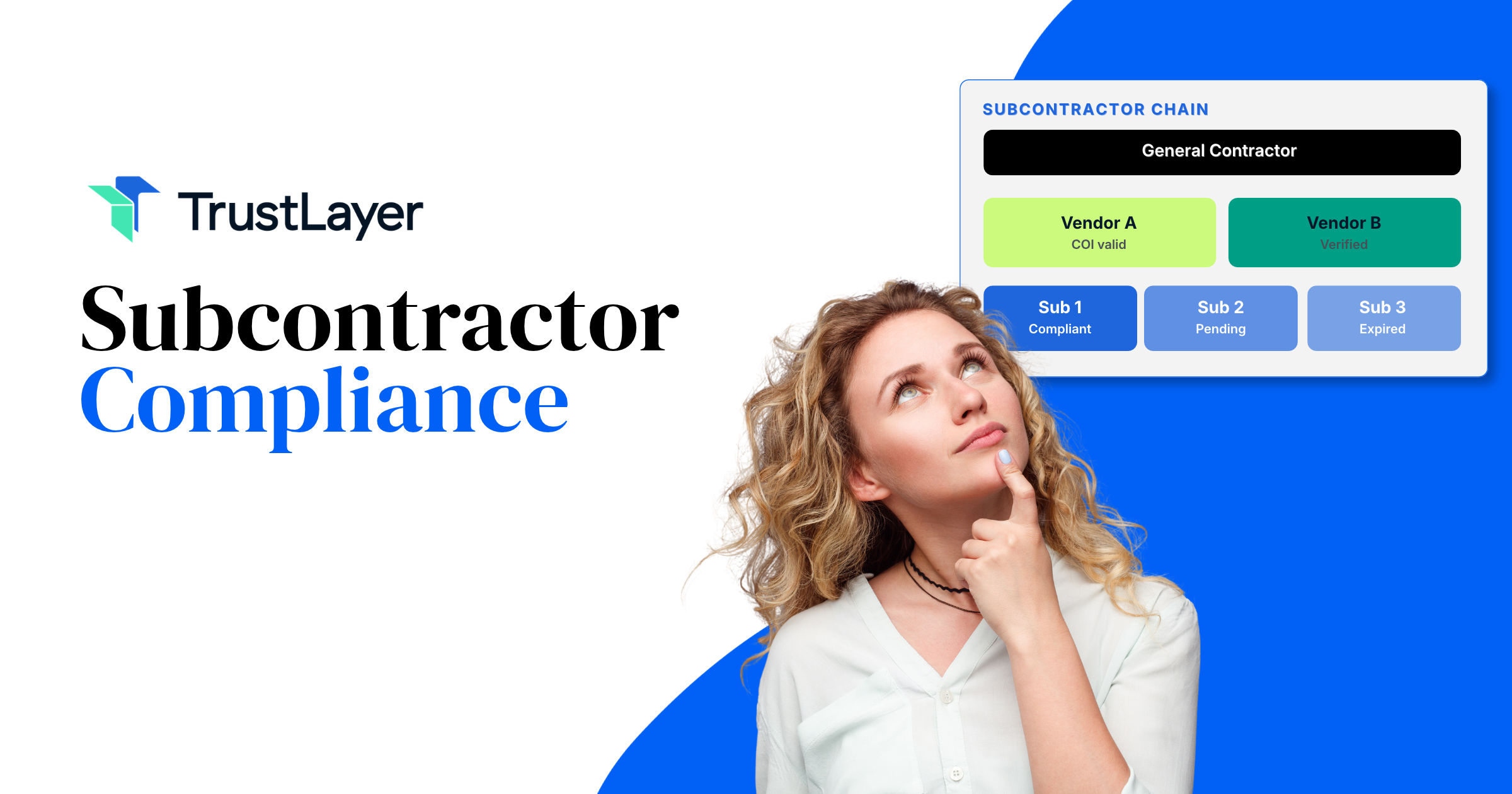
- Lower-tier subs. Your subcontractor hires their own subcontractor, and that second-tier crew's insurance never reaches anyone's desk.
The deeper problem is fragmented visibility. Project teams know who's on site. Site managers know which crews showed up this week. Risk management holds the insurance files. These groups rarely share a single view of the truth, and those data silos hide coverage gaps until a claim drags them into the open.
Critical Elements of a Compliance Monitoring Strategy
A real monitoring strategy rests on two foundations: knowing exactly what you require, and confirming that what you received actually delivers it. Skip either one and the rest of your process is decoration.
Standardizing Insurance Requirements
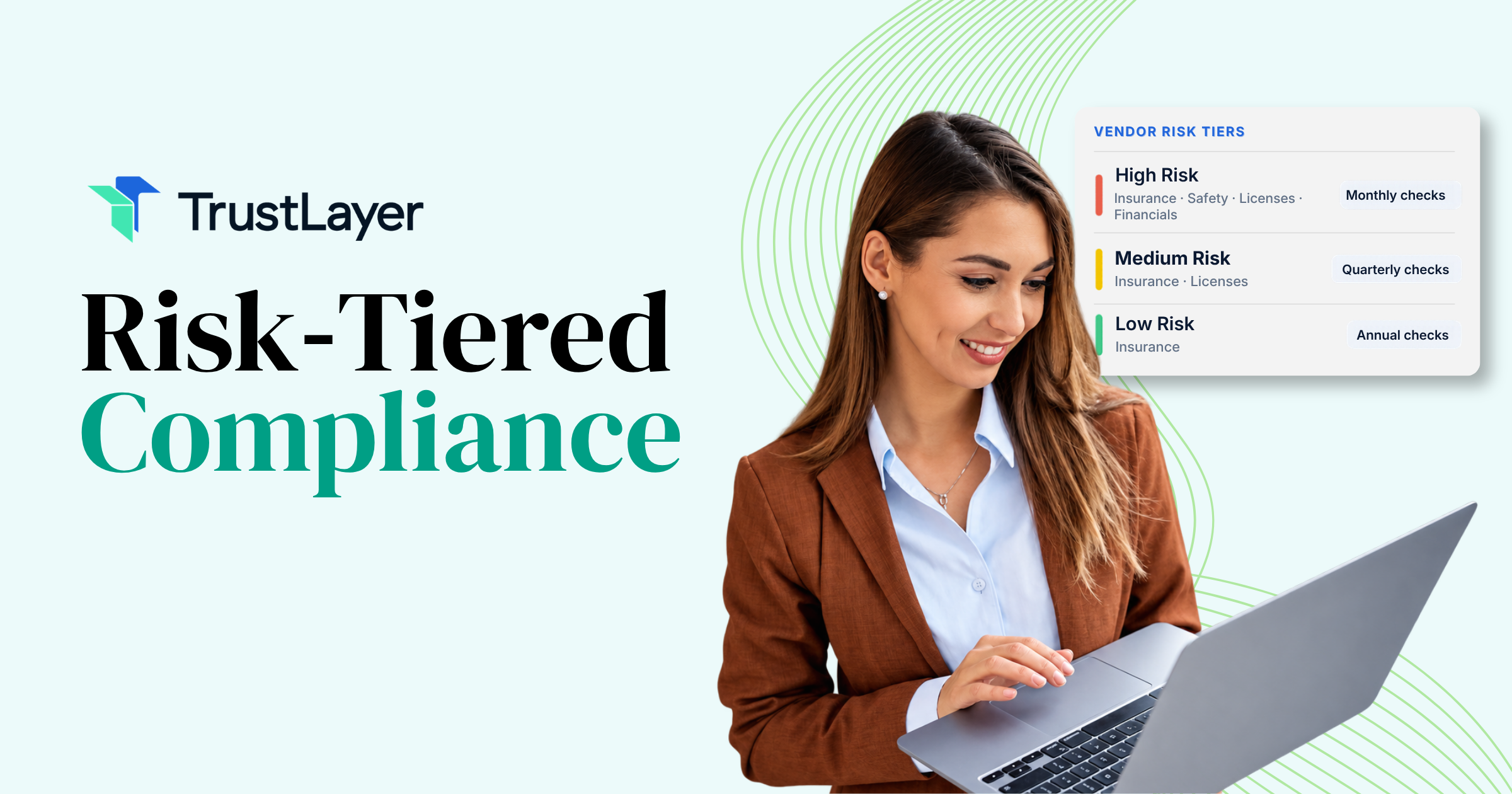
If every project manager writes their own insurance language, you'll end up with dozens of slightly different requirements and no reliable way to check against them. Standardize by trade and risk level instead. A roofing contractor working at height needs different limits and endorsements than a painter doing interior finish work.
Build tiered requirement templates that spell out minimum limits for general liability, auto, workers' compensation, and umbrella coverage, plus required endorsements such as additional insured status, waiver of subrogation, and primary and non-contributory wording. Get these reviewed by counsel and your broker, then lock them into your subcontract agreements. Consistency makes verification possible.
Verification of Certificates and Endorsements
A COI on its own is a bit like a car with a gleaming engine and no wheels. It looks like it should take you somewhere, but it won't. The certificate itself typically states that it confers no rights on the holder; the actual protection lives in the policy and its endorsements.
That's why verification must go beyond confirming a certificate exists. Check that the limits meet your template, that the named insured matches the contracting entity exactly, that the policy dates cover the full project duration, and that the required endorsements are attached rather than just referenced in the description box. A certificate that says "additional insured per written contract" without the underlying endorsement is a fundamental gap waiting to be tested.
Implementing Proactive Renewal Tracking Systems
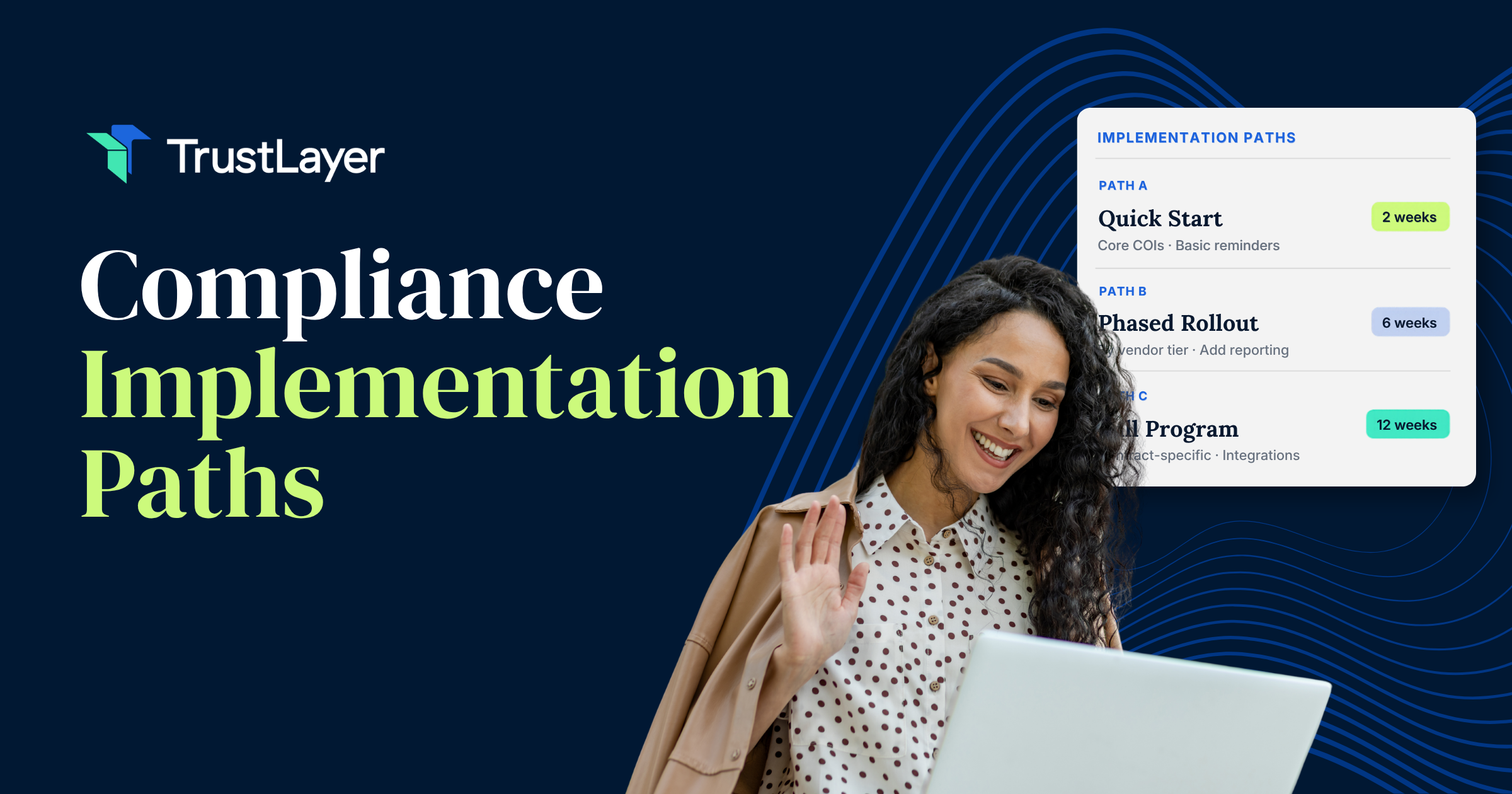
Renewal tracking is where most compliance programs quietly fail. Teams do a thorough review at onboarding, file the documents, and move on. Months later, half the policies on an active project have rolled over, and nobody has confirmed the new terms.
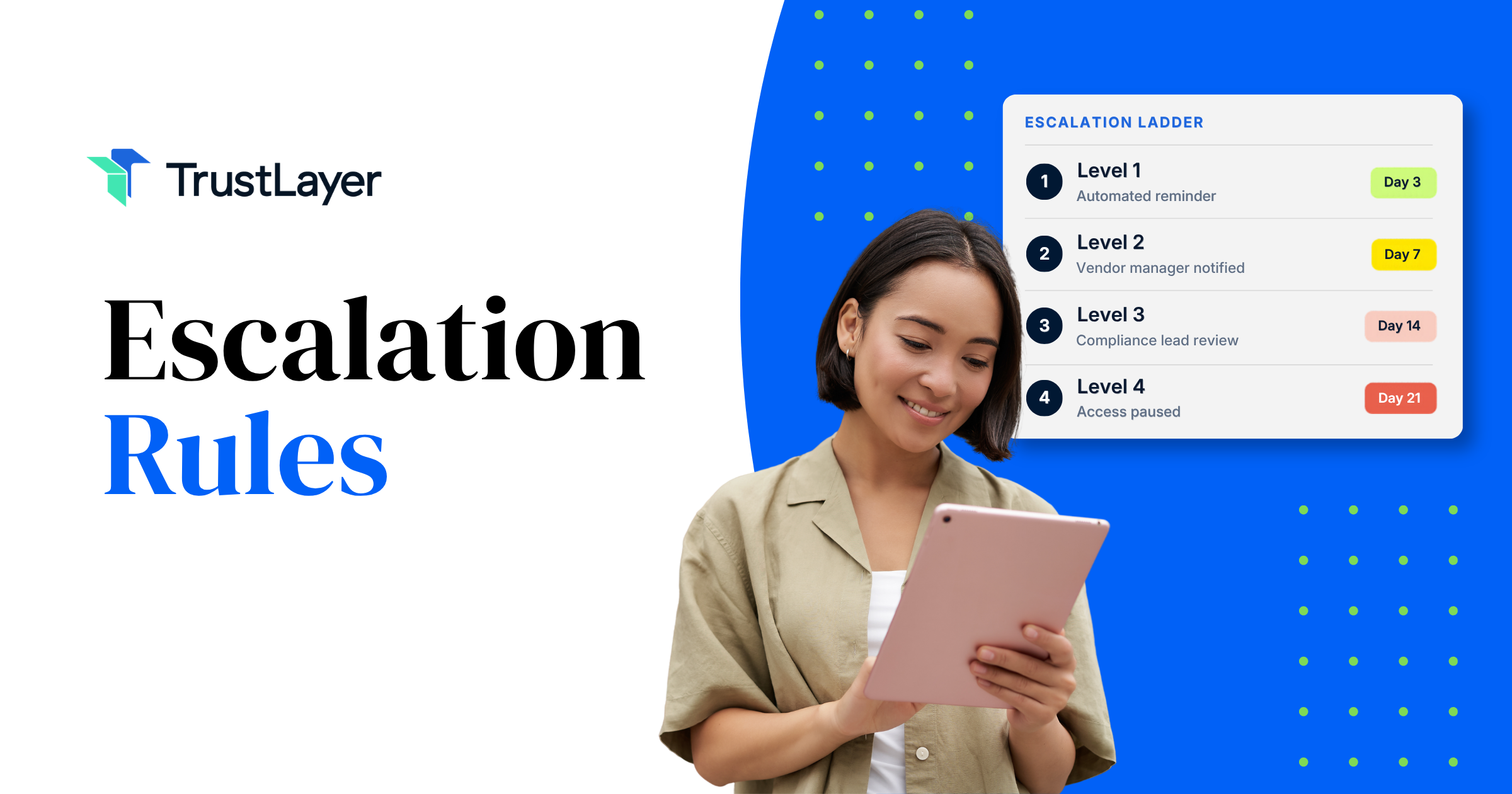
A proactive system treats every expiration date as a scheduled event, not a surprise. Here's a practical sequence that works for most contractors:
- Capture every expiration date at intake. Record each policy separately, since a sub's GL and workers' comp rarely renew on the same day.
- Start outreach 30 to 60 days before expiration. Contact both the subcontractor and their broker; the broker is usually the faster route to an updated certificate.
- Escalate at 15 days. If nothing has arrived, the project manager should get involved, because they hold the leverage of the working relationship.
- Define a hard stop. Decide in advance what happens on expiration day: site access suspended, payments held, or both.
- Re-verify, don't just re-file. Review every renewal against your requirements as if it were a brand-new submission.
The shift here is from fire drill to constant state. Instead of scrambling before an owner audit or after an incident, compliance becomes a routine, predictable practice that runs in the background of every project.
Closing the Gap Between Field Work and Risk Management
The person who decides whether a crew starts work on Monday usually isn't the one who reviewed their insurance. That disconnect is where lapses turn into losses. Closing it requires a governance model that centralizes control while decentralizing execution.
Risk teams should own the standards: requirement templates, definitions of compliant and non-compliant, and escalation rules. Project and site leads should own day-to-day enforcement because they have eyes on the ground. If you push everything to a central risk desk, you create a bottleneck that field teams will route around. Push everything to the field, and standards drift project by project.
Automated Alerts and Notifications
Alerts are only useful if they reach the person who can act on them. A risk manager getting an expiration warning for a crew they've never met isn't much help. The superintendent who controls site access needs to know too.
Think carefully about which situations require a synchronous response and which can run asynchronously. For high-risk or regulated work, such as crane operations or hazardous materials handling, make coverage confirmation a hard gate: no proof, no start. For routine, lower-risk trades, an asynchronous pattern often makes more sense, where work proceeds while the updated certificate is chased, because stalling the schedule may do more damage than a brief documentation delay. Make that call deliberately, in writing, before the pressure is on.
Streamlining the Subcontractor Experience
Subcontractors aren't trying to frustrate you. Many of them are juggling requirements from a dozen GCs, each with different forms, inboxes, and deadlines. When your process is confusing, compliance drops.
Give subs a single, clear set of requirements at bid time, not after award. Tell them exactly what endorsements you need and include sample wording their broker can reference. Accept documents directly from brokers. Respond quickly when something is deficient and explain precisely what needs to change. A sub who understands your process on the first project will be far easier to manage on the fifth.
Mitigating Financial Risk Through Contractual Protections
Tracking catches problems. Your contract determines what you can do about them. Without solid contractual language, even a perfectly run monitoring program leaves you with limited options when a sub falls out of compliance.
Start with clear insurance clauses that require continuous coverage for the full duration of the work, plus any completed operations period your counsel recommends. Require subcontractors to notify you of cancellation or material change, rather than relying on the carrier to do so, since many standard certificates don't obligate the insurer to notify certificate holders.
Pair those requirements with real consequences. Common protections include:
- The right to withhold payment while a subcontractor is out of compliance
- The right to suspend site access until current documentation is verified
- The right to purchase coverage on the sub's behalf and back-charge the cost
- Indemnification and hold harmless provisions, drafted to be enforceable in your state
- Flow-down clauses requiring your subs to impose the same terms on their lower-tier subcontractors
Indemnity language has limits, and anti-indemnity statutes vary widely by jurisdiction, so have a construction-law attorney review your templates. A strong contract won't stop a lapse, but it determines whether a lapse becomes your financial problem or stays the subcontractor's.
Leveraging Technology for Continuous Compliance Monitoring
Spreadsheets and shared inboxes can track insurance, technically. They just don't do it well at any meaningful scale. Once you're managing more than a handful of subcontractors across multiple projects, manual tracking becomes the weak link, and every expiration date depends on someone remembering to look.
The real value of purpose-built compliance tools is a mindset shift. Periodic reporting tells you where you stood last quarter. Continuous awareness tells you where you stand right now, on every project, for every sub. That's the difference between doing compliance theater for an owner audit and genuinely knowing your exposure at any moment.
For leadership, the conversation should center on business impact and program effectiveness, not document counts. Useful metrics include:
- Percentage of active subcontractors fully compliant on a given day
- Average time from deficiency notice to corrected documentation
- Number of crews that started work before verification was complete
- Renewals confirmed before expiration versus after
These numbers tell executives whether risk transfer is actually working. They also reveal which projects, teams, or trades consistently struggle, so you can fix process problems instead of chasing individual certificates. Technology won't replace judgment, but it gives your team the clear, current view that turns good intentions into reliable coverage.
Enhance Your Risk Management Strategy with TrustLayer
Mid-project lapses rarely come from one dramatic failure. They come from small gaps: a missed renewal, an endorsement nobody checked, a crew that started before the paperwork cleared, and a field team that never talked to risk management. Preventing them takes standardized requirements, real verification, disciplined renewal tracking, enforceable contracts, and a shared view of compliance across every project.
The organizations that get this right treat insurance compliance as an ongoing practice rather than an onboarding chore. If you're ready to build the structural foundation for smarter automation and stronger risk management, TrustLayer is worth a close look as a COI tracking partner built for modern risk managers. Set up a time to talk with our insurance experts to see how it could fit your subcontractor program.
Want to keep sharpening your approach? Browse the other articles on the TrustLayer blog for more practical guidance on vendor risk, certificates of insurance, and compliance strategy. The best time to find a coverage gap is long before anyone files a claim.
You might also like